Americas
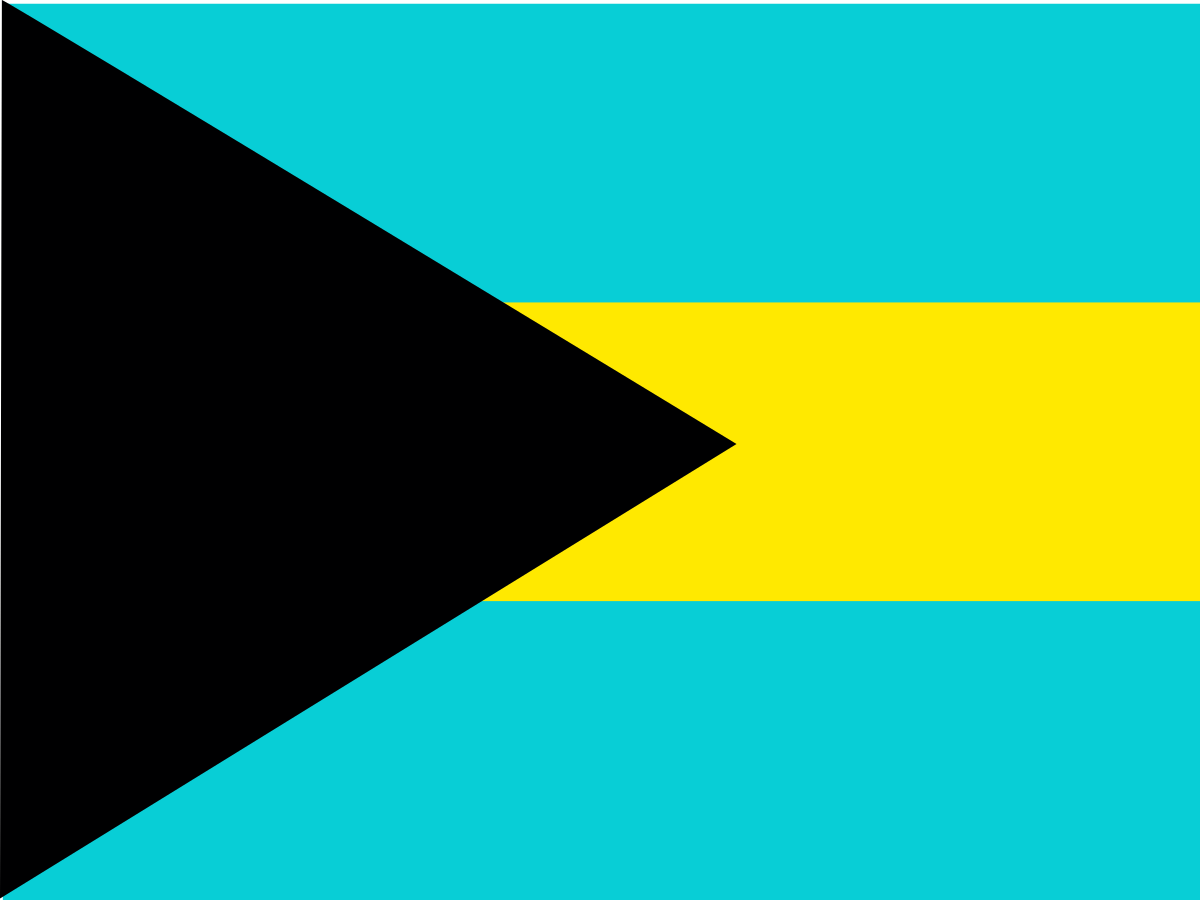
Bahamas Flag
The Bahamas is an island country in the Atlantic Ocean, famous for turquoise waters, coral reefs and hundreds of islands and cays. Its distinctive flag combines aquamarine, gold and black in a bold design representing the sea, land and strength of the Bahamian people.
Capital
Nassau
Continent
Americas
Population
400 thousand
Development indicators
GDP per capita
$27,600
USD per year (approx. 2023)
Human Development Index
0.820
Very High development
World Bank income classification
High Income (HIC)
HIC
🌡️ Climate: Tropical
Flag symbolism
Aquamarine represents the sea, gold stands for the sandy beaches, and black symbolises the unity and strength of the Bahamian people.
triangle
Did you know?
The Bahamas is an archipelago of more than 700 islands and cays, although only a fraction are inhabited. Its islands stretch across a large area of the western Atlantic.
Test your knowledge
Think you know your world flags? Try the FlagAtlas daily challenge, speed quiz, or explore all Americas flags.
📚 Revising for GCSE Geography? Visit our free revision page →
About the Bahamas
The Bahamas is an archipelago of more than 700 islands and cays in the western Atlantic Ocean. Only a relatively small number of the islands are permanently inhabited, with New Providence and Grand Bahama containing much of the country's population.
Nassau, on New Providence, is the capital and largest city. The Bahamas is an independent Commonwealth country with a service-based economy strongly connected to tourism, financial services and international trade.
CapitalNassau
RegionCaribbean / Atlantic
PopulationAbout 400,000
AreaAbout 13,900 km²
CurrencyBahamian dollar
Official languageEnglish
The flag of the Bahamas
The national flag has three horizontal bands of aquamarine, gold and aquamarine. A black equilateral triangle sits at the hoist, pointing towards the centre of the flag.
A flag built around sea, land and people.
The aquamarine bands represent the surrounding sea, the gold band represents the sun and natural resources of the land, and the black triangle represents the strength and unity of the Bahamian people.
The flag was adopted on 10 July 1973, the day the Bahamas became independent from the United Kingdom. Its strong geometric design makes it particularly recognisable among Caribbean flags.
What do the colours on the Bahamas flag mean?
Aquamarine represents the sea surrounding the islands. Gold represents the sun and the natural resources of the land. Black represents the strength and unity of the people of the Bahamas.
The colours therefore connect the country's natural environment with the people who live on the islands. The black triangle also points towards the centre of the flag, giving the design a strong sense of direction.
What does the black triangle mean?
The black triangle is positioned at the hoist, the side of the flag attached to the flagpole. It represents the strength and unity of the Bahamian people and points towards the gold band.
Its shape also gives the flag a distinctive appearance. Unlike many national flags that use a simple coat of arms or emblem, the Bahamas uses a large geometric symbol as the central element of its design.
A short history of the Bahamas
The islands were inhabited by Lucayan Taíno people before European arrival. Christopher Columbus made landfall in the Bahamas in 1492, traditionally identified with Guanahani, although the exact island remains debated.
European contact brought dramatic changes to the islands. The Indigenous Lucayan population was devastated by disease, enslavement and forced removal during the early colonial period.
The Bahamas later became a British colony and developed connections with trade, shipping and the wider Atlantic world. During the eighteenth century, the islands also became associated with pirates, who used the shallow waters and numerous islands as bases.
The Bahamas became internally self-governing before achieving full independence from the United Kingdom on 10 July 1973.
The Bahamas flag history
The current flag was created during the period leading to independence and replaced earlier British colonial flags.
Pre-colonial periodThe Lucayan Taíno people inhabited the islands before European arrival.
1492 — Columbus arrivesChristopher Columbus reached the islands during his first voyage across the Atlantic.
18th century — British colonyThe Bahamas developed as a British colonial possession and an important Atlantic trading location.
1964 — self-governmentThe Bahamas gained internal self-government while remaining associated with Britain.
1973 — independenceThe Bahamas became an independent country and adopted its current national flag.
TodayThe aquamarine, gold and black flag remains a major symbol of Bahamian national identity.
Geography of the Bahamas
The Bahamas stretches across a large area of shallow seas and limestone islands. The landscape is generally low-lying, with beaches, mangroves, wetlands, pine forests and coral reefs.
The main islands
New Providence is home to Nassau and much of the country's population. Grand Bahama is another major population centre and includes the city of Freeport. Other important islands include Abaco, Eleuthera, Exuma, Andros and Long Island.
Andros is the largest island in the Bahamas and contains extensive wetlands and a major barrier reef system.
The sea and coral reefs
The sea is central to life in the Bahamas, which is reflected directly in the aquamarine colour of the national flag. The country's shallow waters contain extensive coral reefs, seagrass habitats and mangrove ecosystems.
These environments support a wide range of marine life and are also important to tourism, fishing and coastal protection. Protecting them is an important environmental challenge for the islands.
People, language and culture
English is the official language of the Bahamas, while Bahamian English and Creole-influenced varieties are commonly heard in everyday life.
Bahamian culture has African, Caribbean, British and American influences. Music and festivals are particularly important, with Junkanoo being one of the country's best-known cultural celebrations.
Cricket has historical roots in the British colonial period, while basketball and athletics are also popular. Seafood, conch and other Caribbean foods feature strongly in local cuisine.
Junkanoo
Junkanoo is a colourful Bahamian street parade traditionally held around Christmas and New Year. It features elaborate costumes, music, dancing and large groups moving through the streets.
The festival is an important expression of Bahamian cultural identity and has roots connected with African traditions and the history of enslaved people in the Atlantic world.
The Bahamas and tourism
Tourism is the backbone of the Bahamian economy. Visitors are attracted by the country's beaches, clear water, coral reefs, boating, diving, fishing and warm climate.
Cruise tourism is particularly important, while Nassau, Paradise Island and Grand Bahama are among the country's best-known visitor destinations. The sector also creates challenges because the economy is highly exposed to changes in international travel and severe weather.
The Bahamas and hurricanes
The Bahamas lies in the Atlantic hurricane belt and can be affected by tropical storms and hurricanes, particularly between June and November.
Major storms can damage homes, infrastructure, tourism facilities and natural environments. Building resilience and protecting coastal communities are therefore important national priorities.
The Bahamas today
The Bahamas is a sovereign parliamentary constitutional monarchy and a member of the Commonwealth. The King is the country's head of state and is represented in the Bahamas by a Governor-General, while the elected government is led by the Prime Minister.
The country uses the Bahamian dollar, which is maintained at parity with the United States dollar. Its close economic and geographical relationship with the United States is reflected in trade, tourism and travel.
Why is the Bahamas flag so distinctive?
The flag combines a large black triangle with three broad horizontal bands, creating a design that is simple enough to recognise at a distance while still carrying several layers of meaning.
It also avoids a detailed coat of arms, instead using colour and geometry to represent the country's sea, land and people. This makes it a particularly good example of a modern national flag using simple visual symbolism.
Explore the Bahamas on FlagAtlas
Continue exploring the Bahamas and the world's flags with these FlagAtlas resources.