Asia
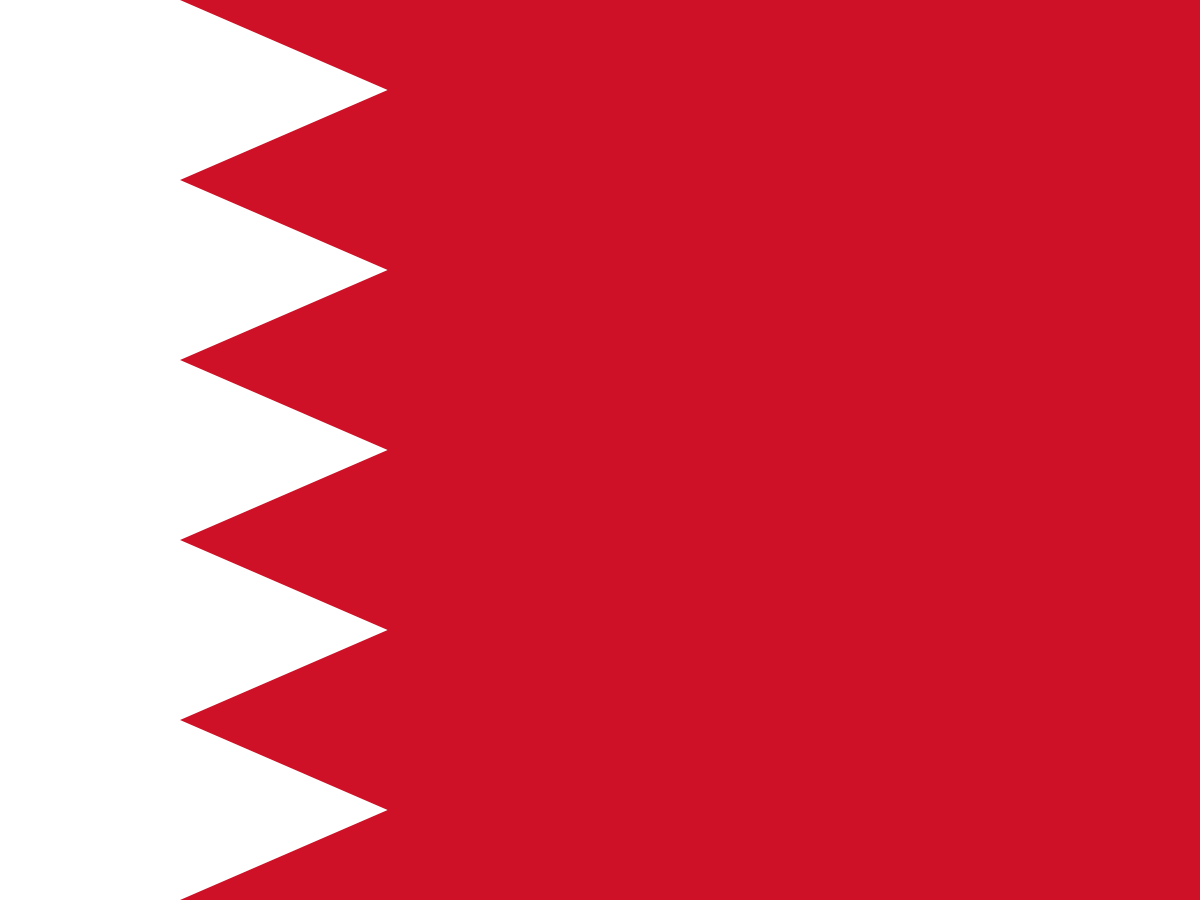
Bahrain Flag
Bahrain is a small island country in the Persian Gulf, known for its long history of pearling, trade and maritime connections. Its national flag combines red and white with a distinctive five-pointed serrated edge.
Capital
Manama
Continent
Asia
Population
1.7 million
Development indicators
GDP per capita
$26,100
USD per year (approx. 2023)
Human Development Index
0.888
Very High development
World Bank income classification
High Income (HIC)
HIC
🌡️ Climate: Arid / Hot desert
Flag symbolism
The Bahraini flag is red and white, separated by a serrated line with five points. Red is a traditional colour associated with Arab identity, white represents peace, and the five points are traditionally associated with the Five Pillars of Islam.
Did you know?
Bahrain is the smallest country in Asia.
Test your knowledge
Think you know your world flags? Try the FlagAtlas daily challenge, speed quiz, or explore all Asia flags.
📚 Revising for GCSE Geography? Visit our free revision page →
About Bahrain
Bahrain is a small island country in the Persian Gulf, east of Saudi Arabia and west of Qatar. Its main island is connected to surrounding islands and Saudi Arabia by causeways and bridges.
Manama is the capital and largest city. Despite its small size, Bahrain has played an important role in Gulf trade and maritime history and has developed a diversified modern economy.
CapitalManama
RegionWestern Asia / Gulf
PopulationAbout 1.7m
AreaAbout 780 km²
CurrencyBahraini dinar
Official languageArabic
The flag of Bahrain
Bahrain's flag consists of a red field with a white band along the hoist. The two colours are separated by a distinctive serrated line containing five points.
The five points are the key feature.
The five points are traditionally associated with the Five Pillars of Islam. The serrated edge makes Bahrain's flag visually similar to the flag of neighbouring Qatar, although the colours and proportions are different.
Red is a traditional colour associated with Arab identity, while white represents peace. The present design developed from earlier Bahraini flags and was formally standardised in the modern period.
What do the five points on Bahrain's flag mean?
The five points of the white serrated band are traditionally linked to the Five Pillars of Islam: the declaration of faith, prayer, almsgiving, fasting during Ramadan and pilgrimage to Mecca.
The five-point design gives Bahrain's flag a direct connection with Islamic tradition while also making it instantly recognisable.
Why does Bahrain's flag look like Qatar's?
Bahrain and Qatar are neighbouring Gulf states whose flags share a red-and-white colour scheme and a serrated division. Their designs have historical connections to the flags used by Gulf Arab communities.
Modern Bahrain uses a bright red field and five serrations, while Qatar uses a much darker maroon field and nine serrations. The number of points and colours therefore distinguish the two flags.
A short history of Bahrain
Bahrain has a long history as a trading and maritime centre in the Gulf. The ancient Dilmun civilisation flourished in the region thousands of years ago and Bahrain is often identified with the heartland of Dilmun.
Over subsequent centuries the islands came under the influence of several regional powers and developed strong connections with Arabia and the wider Gulf. Pearling became especially important to the economy and society of Bahrain.
In the nineteenth century Bahrain entered into a series of agreements with Britain that increased British influence over its foreign affairs. Bahrain became fully independent on 15 August 1971.
The discovery and development of oil transformed Bahrain's economy during the twentieth century and helped accelerate modernisation.
Bahrain's flag history
The red and white colours have a long history in Bahraini and Gulf flags. The modern serrated design developed from earlier versions as Bahrain's political status changed.
Ancient DilmunBahrain was a major centre of trade in the ancient Gulf.
19th century — British treatiesBahrain entered agreements that brought it under growing British influence.
1932 — oil discoveredBahrain became the first Gulf state to discover oil, beginning a major economic transformation.
1971 — independenceBahrain became independent from Britain on 15 August.
2002 — Kingdom of BahrainBahrain adopted its present constitutional framework and became a constitutional monarchy.
TodayThe red-and-white flag remains a central national symbol.
Geography of Bahrain
Bahrain is an archipelago in the Persian Gulf. The landscape is generally low and dry, with sandy areas, rocky ground and developed coastal zones.
Where is Bahrain?
Bahrain lies off the eastern coast of Saudi Arabia and is connected to Saudi Arabia by the King Fahd Causeway. Qatar lies to the south-east across the Gulf.
The country has no land border with Qatar and is separated from it by the waters of the Gulf.
The ancient Dilmun civilisation
Dilmun was an important Bronze Age trading civilisation centred around the Gulf. Bahrain is widely associated with Dilmun because of the archaeological remains found across the islands.
Its position allowed merchants to connect Mesopotamia with Oman and other parts of the ancient trading world. Archaeological sites, burial mounds and temples provide evidence of Bahrain's early importance.
Bahrain and pearl diving
For centuries, pearl diving was one of Bahrain's most important industries. Divers worked in the Gulf waters during the pearling season, while merchants and craftspeople supported a wider economy built around the trade.
The pearling tradition remains an important part of Bahraini heritage. The decline of the traditional pearl industry was accelerated by the development of cultured pearls and the discovery of oil.
Oil and Bahrain's economy
Bahrain was the first Gulf state to discover oil, with commercial production beginning in the 1930s. Oil revenues helped fund infrastructure, education and wider economic development.
Today Bahrain has worked to diversify beyond hydrocarbons. Financial services, manufacturing, tourism, logistics and other services are important parts of the economy.
People, language and culture
Arabic is the official language, while English is widely used in business, education and tourism. Bahrain's population includes both Bahraini citizens and a large expatriate community.
Bahraini culture combines Arab and Islamic traditions with the country's long maritime history. Traditional crafts, music, food, pearling heritage and religious celebrations remain important elements of cultural life.
Religion in Bahrain
Islam is the dominant religion in Bahrain, and the country's flag symbolism reflects this heritage through the five points traditionally associated with the Five Pillars of Islam.
Bahrain has a diverse religious landscape within its Muslim population, alongside smaller Christian, Hindu and other communities.
Formula 1 and modern Bahrain
Bahrain became the first Middle Eastern country to host a Formula 1 Grand Prix in 2004. The Bahrain International Circuit has since become one of the country's best-known modern sporting venues.
International sport and events form part of Bahrain's wider effort to develop tourism and diversify its economy.
Bahrain today
Bahrain is a constitutional monarchy. Manama is the country's political, financial and cultural centre and is home to modern business districts alongside historic markets and neighbourhoods.
The country remains closely connected to the wider Gulf region through trade, transport and political relationships, while its small size gives it a distinctive identity among the Gulf states.
Why is Bahrain important despite being so small?
Bahrain's strategic location helped make it a major trading centre long before the modern oil economy. Its position between the Gulf, Arabia and the ancient trading networks of Mesopotamia gave the islands importance far beyond their physical size.
Today its financial sector, industrial base, transport links and cultural heritage continue that tradition of regional connectivity.
Explore Bahrain on FlagAtlas
Continue exploring Bahrain and the world's flags with these FlagAtlas resources.