Americas
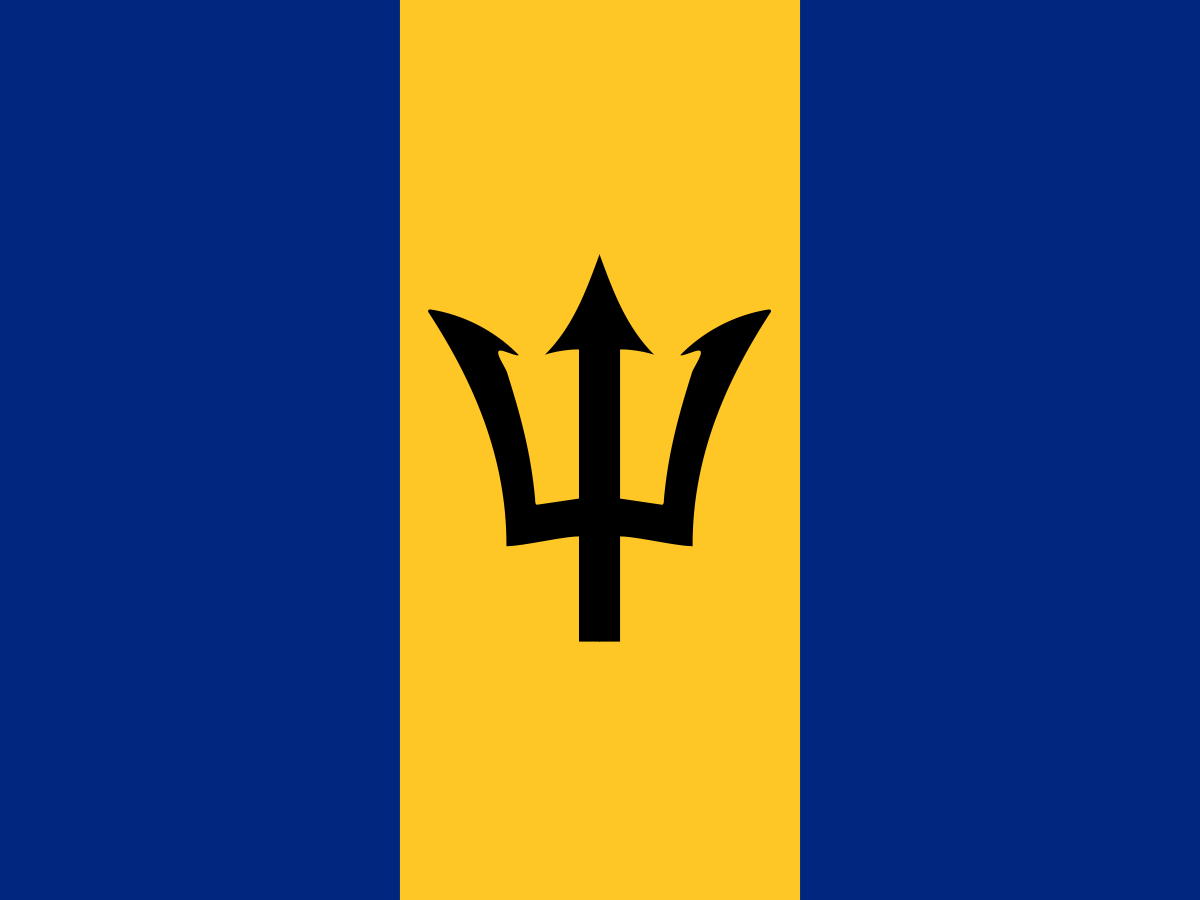
Barbados Flag
Barbados is an island country in the eastern Caribbean, known for its beaches, coral landscapes, cricket tradition and distinctive national identity. Its blue, gold and black flag features a broken trident that symbolises independence.
Capital
Bridgetown
Continent
Americas
Population
288 thousand
Development indicators
GDP per capita
$18,200
USD per year (approx. 2023)
Human Development Index
0.814
Very High development
World Bank income classification
High Income (HIC)
HIC
🌡️ Climate: Tropical
Flag symbolism
Blue represents the sea and sky, gold stands for the sand. The black trident is the Broken Trident — the handle is missing, symbolising the break from Britain and colonial rule.
trident
Did you know?
Barbados became a republic in 2021, removing the British monarch as head of state.
Test your knowledge
Think you know your world flags? Try the FlagAtlas daily challenge, speed quiz, or explore all Americas flags.
📚 Revising for GCSE Geography? Visit our free revision page →
About Barbados
Barbados is an island country in the eastern Caribbean and the easternmost island in the Caribbean island chain. Unlike many neighbouring islands, Barbados is largely made from coral limestone and has a relatively gentle landscape.
Bridgetown is the capital and largest city. Barbados has a strong British and Caribbean heritage and became a republic in 2021 while remaining a member of the Commonwealth.
CapitalBridgetown
RegionCaribbean
PopulationAbout 300,000
AreaAbout 430 km²
CurrencyBarbados dollar
Official languageEnglish
The flag of Barbados
The Barbadian flag has three vertical panels: ultramarine at the hoist, gold in the centre and ultramarine at the fly. A black broken trident is placed in the centre of the gold panel.
The broken trident is the key symbol.
The trident is associated with the traditional symbol of the sea god Neptune. The broken shaft represents Barbados breaking with its colonial past and becoming an independent nation.
The flag was officially adopted on 30 November 1966, when Barbados became independent from Britain.
What do the colours on Barbados' flag mean?
Ultramarine represents the sea and sky surrounding Barbados. Gold represents the sand of the island's beaches.
The colours reflect Barbados' physical environment while the black trident provides the historical and political symbolism.
What does the broken trident mean?
The black trident is based on the traditional trident associated with Neptune, the Roman god of the sea. On Barbados' flag, the shaft of the trident is deliberately missing.
The missing handle symbolises the break from colonial rule. It is therefore both a reference to the island's connection with the sea and a symbol of national independence.
A short history of Barbados
Barbados was inhabited by Indigenous peoples before European settlement. The island became an English colony in the seventeenth century and developed a plantation economy based heavily on sugar.
African people were forcibly brought to Barbados under slavery and became the majority of the population. Their descendants form a central part of modern Barbadian society and culture.
Barbados gradually developed greater self-government before becoming fully independent from Britain on 30 November 1966. The country later became a republic on 30 November 2021.
Barbados' flag history
The current flag was created for independence and replaced the British colonial symbols that had previously represented the island.
Pre-colonial periodIndigenous peoples lived on Barbados before European settlement.
1627 — English settlementBarbados became an English colony and developed a plantation economy.
18th–19th centuries — sugar eraSugar production became central to the island's economy, relying heavily on enslaved African labour.
1834 — emancipationSlavery was abolished in the British Empire, followed by a period of social and economic change.
1966 — independenceBarbados became independent and adopted its blue, gold and black national flag.
2021 — republicBarbados became a republic, replacing the British monarch as head of state.
Geography of Barbados
Barbados is relatively flat compared with many volcanic Caribbean islands. Much of the island is made of coral limestone, with rolling hills rising towards the centre and east.
The coast
Barbados is surrounded by the Atlantic Ocean and Caribbean waters. Its coastline includes sandy beaches, rocky cliffs and coral formations.
The island's position makes it particularly exposed to Atlantic tropical weather systems, although it lies further east than many other Caribbean islands.
Bridgetown
Bridgetown is Barbados' capital, largest city and main commercial centre. Its historic core reflects centuries of British colonial and Caribbean history.
Historic Bridgetown and its Garrison were designated a UNESCO World Heritage Site because of their importance to the development of the British Atlantic world and Caribbean history.
The sugar industry
Sugar shaped Barbados for centuries. The plantation economy generated great wealth for colonial landowners while depending on the forced labour of enslaved Africans.
Although sugar remains part of the agricultural landscape, its importance to the wider economy has declined as Barbados has diversified into tourism, services and other industries.
People, language and culture
English is the official language, while Bajan, a local English-based speech variety, is widely used in everyday conversation.
Barbadian culture combines African, British and wider Caribbean influences. Music, cricket, festivals, food and the island's strong storytelling tradition are important parts of national life.
Crop Over
Crop Over is one of Barbados' best-known festivals. It grew from celebrations marking the end of the sugar harvest and has developed into a major modern festival featuring music, costumes, performances and the Grand Kadooment parade.
The festival reflects the island's agricultural history while also showcasing contemporary Barbadian culture.
Cricket in Barbados
Cricket has a particularly strong place in Barbadian culture. The island has produced many internationally recognised players and has a long history within West Indies cricket.
Kensington Oval in Bridgetown is one of the Caribbean's best-known cricket grounds and has hosted major international matches.
Tourism and the economy
Tourism is one of the most important parts of Barbados' economy. Visitors are attracted by beaches, heritage sites, food, festivals, sailing and the island's warm climate.
Financial services, business services, manufacturing and agriculture also contribute to the economy, helping Barbados remain less dependent on a single industry.
Barbados becomes a republic
On 30 November 2021, Barbados became a republic and replaced the British monarch as its head of state. The change marked another stage in the country's constitutional development after independence in 1966.
The move did not remove Barbados from the Commonwealth. The country remains a member of the organisation.
Barbados today
Modern Barbados is a parliamentary republic with a strong Caribbean identity and long-standing connections to Britain and the wider Commonwealth.
The national flag remains a concise visual expression of that identity: the sea and sky in blue, the island's beaches in gold, and the broken trident representing the move away from colonial rule.
Why is Barbados' flag so recognisable?
The design is deliberately simple: three vertical panels and one strong central symbol. The black broken trident provides an immediate focal point without requiring a detailed coat of arms.
It is also a good example of a flag where the symbolism is closely connected to the country's geography and political history.
Explore Barbados on FlagAtlas
Continue exploring Barbados and the world's flags with these FlagAtlas resources.