Europe
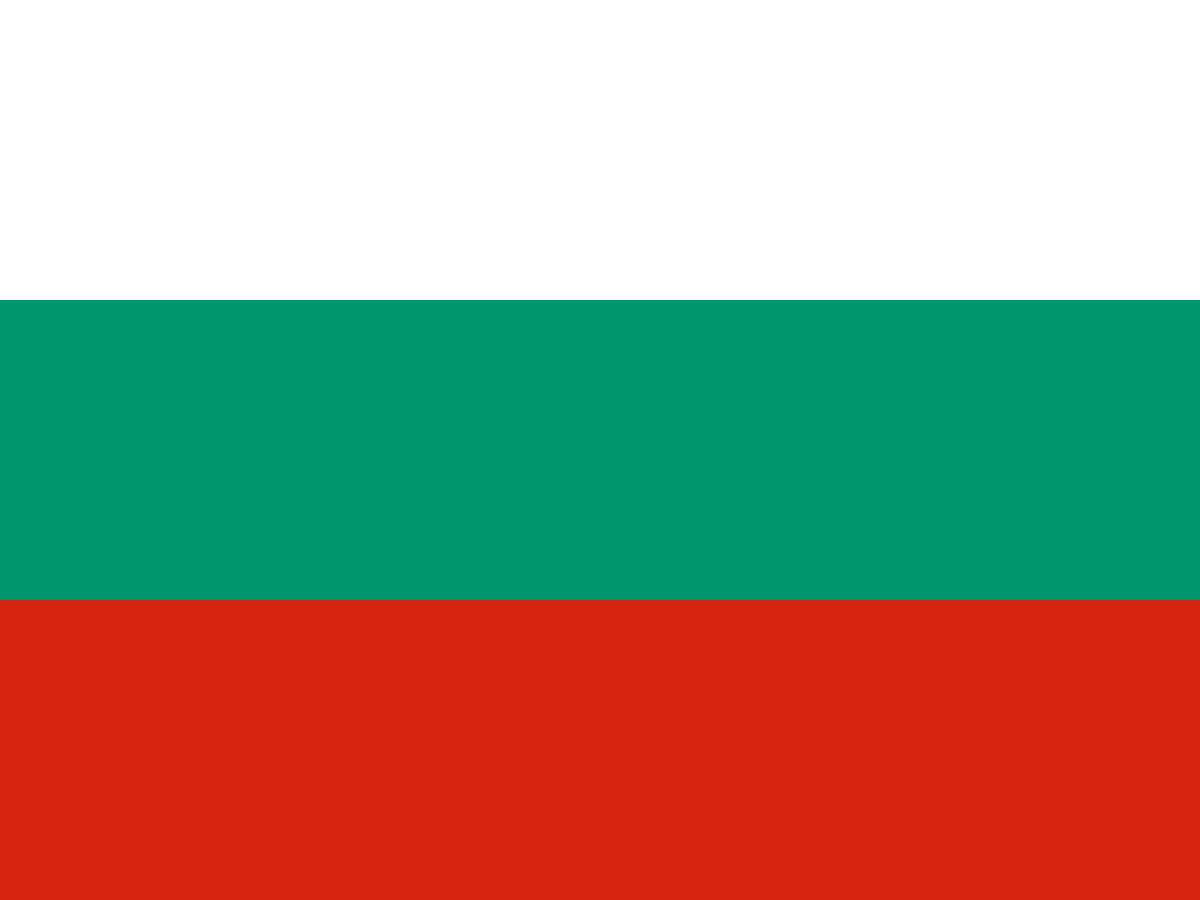
Bulgaria Flag
Bulgaria is a country in southeastern Europe with a long history stretching from ancient Thrace through the medieval Bulgarian empires, Ottoman rule and the modern republic. Its simple white, green and red tricolour is one of the most recognisable flags in the Balkans.
Capital
Sofia
Continent
Europe
Population
7.0 million
Development indicators
GDP per capita
$15,100
USD per year (approx. 2023)
Human Development Index
0.796
High development
World Bank income classification
Upper-Middle Income (UMIC)
UMIC
🌡️ Climate: Temperate continental
Flag symbolism
White is traditionally associated with peace and freedom, green with Bulgaria's fertile land and agriculture, and red with the courage and sacrifice associated with the country's struggle for independence.
tricolore
Did you know?
Bulgaria is the oldest country in Europe that has never changed its name since it was founded in 681 AD.
Test your knowledge
Think you know your world flags? Try the FlagAtlas daily challenge, speed quiz, or explore all Europe flags.
📚 Revising for GCSE Geography? Visit our free revision page →
About Bulgaria
Bulgaria is a country in southeastern Europe, occupying the eastern part of the Balkan Peninsula. It borders Romania, Serbia, North Macedonia, Greece and Turkey and has a coastline on the Black Sea.
Sofia is the capital and largest city. Bulgaria combines ancient archaeological sites, medieval monuments, Orthodox Christian traditions, Black Sea resorts and a varied landscape of mountains, forests and fertile plains.
CapitalSofia
RegionSoutheastern Europe
PopulationAbout 6.4 million
Area110,994 km²
CurrencyBulgarian lev
Official languageBulgarian
The flag of Bulgaria
Bulgaria's flag has three equal horizontal bands: white at the top, green in the middle and red at the bottom. The current design dates from the country's independence era and is one of Europe's simplest national flags.
The Bulgarian tricolour is a deliberately simple national symbol.
Unlike some neighbouring flags, it does not contain a coat of arms, stars, crosses or other central emblem.
The plain tricolour is the national flag. A version featuring the national coat of arms may be used for official state purposes.
What do the colours on Bulgaria's flag mean?
White is traditionally associated with peace and freedom. Green represents the country's fertile land, agriculture and natural environment. Red is associated with courage, sacrifice and the struggles connected with Bulgarian independence.
The colours also have a strong historical connection with Bulgaria's nineteenth-century national revival and liberation from Ottoman rule.
Why does Bulgaria's flag look similar to Hungary's?
Bulgaria and Hungary both use white, green and red in their flags, but the order is different. Bulgaria's bands run white–green–red, while Hungary uses red–white–green.
This is a useful example of how national flags can share colours because of wider European historical traditions while still having distinct arrangements and meanings.
A short history of Bulgaria
The region of modern Bulgaria has been inhabited since prehistoric times and was home to the ancient Thracians. It later became part of the Roman and Byzantine worlds.
The First Bulgarian Empire emerged in the seventh century and became a major power in southeastern Europe. The Second Bulgarian Empire later restored Bulgarian political power before the region came under Ottoman rule in the late fourteenth century.
The Bulgarian National Revival gathered momentum during the eighteenth and nineteenth centuries. Bulgaria became an autonomous principality in 1878 and declared full independence in 1908.
The twentieth century included monarchy, war, communist rule and eventually democratic government after 1989. Bulgaria joined NATO in 2004 and the European Union in 2007.
Bulgaria's flag history
The modern tricolour is closely connected with Bulgaria's nineteenth-century national revival. Its design was inspired by the desire for a distinctive Bulgarian national identity.
681 — First Bulgarian EmpireThe Bulgarian state was recognised as a major power in the Balkans.
10th century — Golden AgeUnder Tsar Simeon I, Bulgaria became a major cultural and political centre.
1396 — Ottoman ruleBulgarian territories were incorporated into the Ottoman Empire.
1878 — autonomyThe Treaty of Berlin created an autonomous Principality of Bulgaria.
1908 — independenceBulgaria declared full independence and became a kingdom.
1989 onwards — democracyCommunist rule ended and Bulgaria transitioned to a multi-party democratic system.
2007 — European UnionBulgaria joined the European Union.
The First Bulgarian Empire
The First Bulgarian Empire was founded in 681 and became one of the most important states in medieval southeastern Europe. Its territory expanded significantly under powerful rulers.
During the reign of Tsar Simeon I in the tenth century, Bulgaria experienced a major cultural flowering. The period is often called the Bulgarian Golden Age, with important developments in literature, education and Christianity.
The Cyrillic alphabet
Bulgaria played a major role in the development and spread of the Cyrillic writing tradition. Saints Cyril and Methodius developed the earlier Glagolitic script, while their disciples continued missionary and literary work in the Bulgarian lands.
The Preslav and Ohrid literary schools helped develop Old Church Slavonic literary culture, and Cyrillic later spread widely across the Slavic world.
Ottoman rule and the Bulgarian National Revival
For roughly five centuries, much of Bulgaria was under Ottoman rule. During the eighteenth and nineteenth centuries, a Bulgarian national revival developed through education, literature, churches and cultural institutions.
Figures such as Vasil Levski and Hristo Botev became important symbols of the struggle for national liberation. The April Uprising of 1876 and the Russo-Turkish War helped lead to the restoration of Bulgarian statehood.
Sofia — the capital
Sofia lies at the foot of Vitosha Mountain and has been an important settlement for thousands of years. Ancient Serdica became a significant Roman city, and archaeological remains can still be seen beneath modern Sofia.
The city is home to the Alexander Nevsky Cathedral, one of Bulgaria's most recognisable buildings, as well as government institutions, universities and museums.
Rila Monastery
Rila Monastery is one of Bulgaria's most important cultural and religious landmarks. Founded in the tenth century, it is located in the Rila Mountains and became a major centre of Bulgarian spiritual and literary life.
The monastery is a UNESCO World Heritage Site and is famous for its colourful frescoes, arcaded courtyard and mountain setting.
Bulgaria's mountains
Bulgaria has several major mountain ranges, including the Rila, Pirin, Rhodope and Balkan Mountains. The country's highest peak is Musala in the Rila range.
Mountain landscapes support forests, wildlife, hiking and winter sports. Bulgaria's varied elevations also contribute to significant differences in climate across the country.
The Black Sea coast
Bulgaria has a Black Sea coastline stretching for more than 350 kilometres. It includes sandy beaches, cliffs, wetlands and popular resorts.
Varna and Burgas are major coastal cities. Historic towns such as Nessebar combine seaside tourism with important archaeological and architectural heritage.
Bulgarian culture and traditions
Bulgarian culture includes distinctive folk music, dance, embroidery and seasonal traditions. The horo, a traditional group dance, is performed at celebrations across the country.
One famous tradition is the exchange or wearing of martenitsa, red-and-white decorations associated with the arrival of spring and good health.
Bulgarian food
Bulgarian cuisine includes dishes influenced by the wider Balkans and centuries of regional exchange. Banitsa, a pastry made with layers of filo and fillings such as cheese and eggs, is particularly well known.
Yoghurt is another famous part of Bulgarian food culture. The bacterium Lactobacillus bulgaricus was identified by a Bulgarian scientist and is associated with traditional yoghurt fermentation.
Rose Valley and rose oil
Bulgaria is one of the world's best-known producers of rose oil, particularly from the Rose Valley around Kazanlak. The country's climate and traditional cultivation methods have supported rose growing for centuries.
Rose oil is used in perfumes and cosmetics and has become an important symbol of Bulgarian agricultural heritage.
Bulgaria today
Bulgaria is a parliamentary republic and a member of the European Union, NATO and the United Nations. Sofia is the country's political and economic centre.
The country continues to balance its rich historical heritage with modern European integration, economic development, demographic change and the preservation of cultural traditions.
Why is Bulgaria's flag interesting?
Bulgaria's flag is a strong example of a simple tricolour whose meaning is connected with national revival, independence and the country's agricultural landscape.
Its lack of a central emblem also makes it visually clean and easy to reproduce, which helps explain why the design has remained so recognisable.
Explore Bulgaria on FlagAtlas
Continue exploring Bulgaria and the world's flags with these FlagAtlas resources.