Oceania
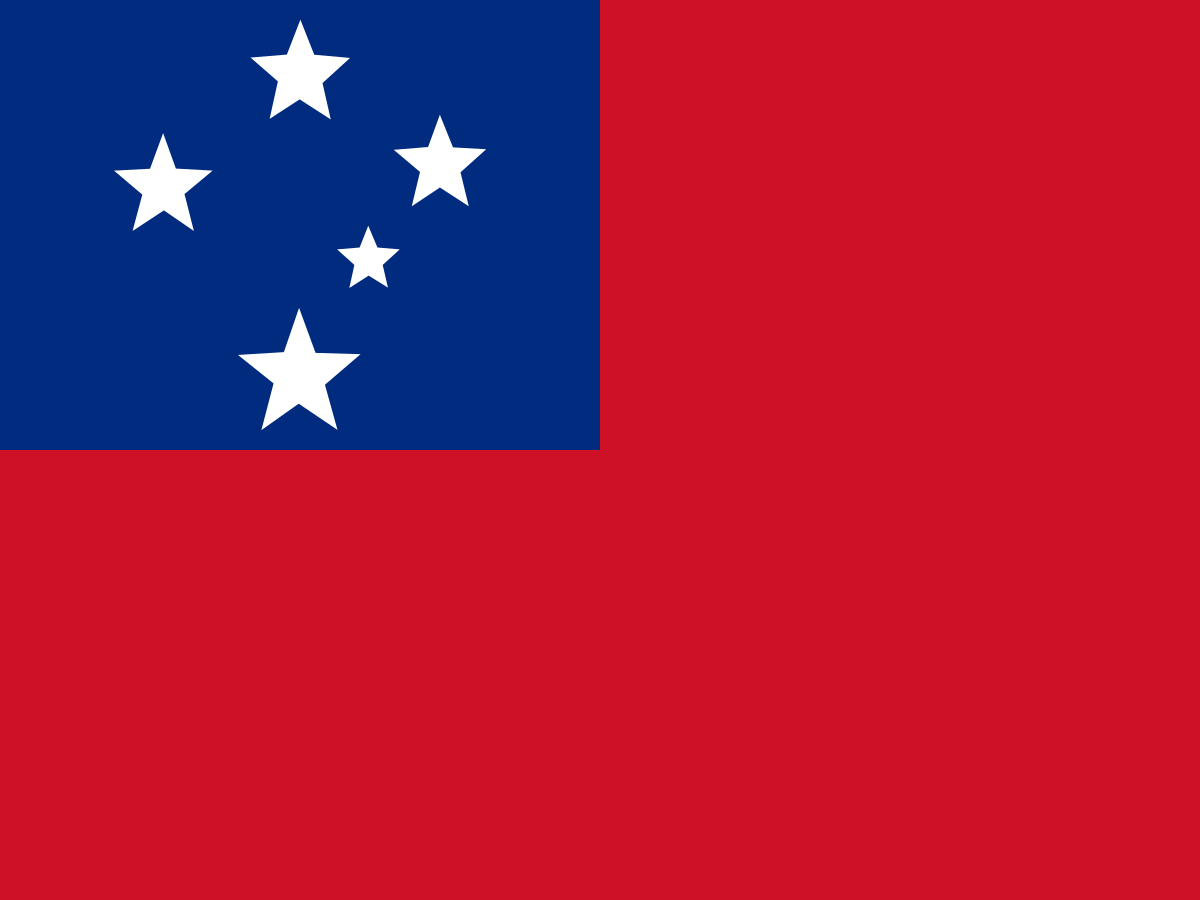
Samoa Flag
Red represents courage, white stands for purity. The Southern Cross constellation represents Samoa's location in the Pacific Ocean.
Capital
Apia
Continent
Oceania
Population
220 thousand
Development indicators
GDP per capita
$4,200
USD per year (approx. 2023)
Human Development Index
0.715
High development
World Bank income classification
Upper-Middle Income (UMIC)
UMIC
🌡️ Climate: Tropical
Flag symbolism
Red represents courage, white stands for purity. The Southern Cross constellation represents Samoa's location in the Pacific Ocean.
southern crossstars
Did you know?
Samoa was the first country in the world to welcome the new millennium — it's one of the first to see each new day.
Test your knowledge
Think you know your world flags? Try the FlagAtlas daily challenge, speed quiz, or explore all Oceania flags.
📚 Revising for GCSE Geography? Visit our free revision page →
About Samoa
Samoa is a Polynesian island country in the central South Pacific. It consists of two main islands, Upolu and Savai'i, together with several smaller islands. Samoa is known for its strong village communities, Polynesian culture, lush volcanic landscapes and beautiful coastline.
CapitalApia
RegionPolynesia
CurrencySamoan tala
LanguagesSamoan & English
Largest islandSavai'i
Independence1962
The Samoa flag
The Samoan flag has a red field with a blue canton in the upper hoist. Inside the blue canton is a group of white stars representing the Southern Cross.
Flag colours and stars
Red represents courage, blue represents freedom and white represents purity. The stars form the Southern Cross, reflecting Samoa's location in the southern Pacific.
Flag history
The current Samoan flag was adopted in 1962, when Western Samoa became independent from New Zealand. The design developed from earlier Samoan flags and retained the Southern Cross as an important symbol.
A short history
Samoa has a long Polynesian history and developed a distinctive social and political system centred on villages, families and the fa'amatai chiefly system. European contact increased from the 18th century, followed by periods of foreign administration. Germany controlled the islands from 1900, New Zealand administered Western Samoa after the First World War, and Samoa became independent in 1962.
History timeline
c. 1000 BCE–1st millennium CE — Polynesian settlementSamoa became part of the wider Polynesian world, developing its own language, traditions and social structures.
1722 — European contactDutch explorer Jacob Roggeveen became the first recorded European visitor.
1830 — Missionaries arriveJohn Williams and other missionaries helped spread Christianity through Samoa.
Late 19th century — Rival foreign interestsGermany, Britain and the United States competed for influence in Samoa.
1900 — German administrationGermany took control of the western islands, while the eastern islands became American Samoa.
1914 — New Zealand occupationNew Zealand forces took control of German Samoa during the First World War.
1918–1919 — Influenza pandemicA devastating influenza outbreak caused a very large loss of life in Samoa.
1962 — IndependenceWestern Samoa became the first Pacific island country to regain independence after European colonial rule.
1997 — Name changedThe country's official name changed from Western Samoa to Samoa.
2011 — International date line changeSamoa moved west across the International Date Line to align its working week more closely with major trading partners.
Apia
Apia is Samoa's capital and largest urban centre. It lies on the north coast of Upolu and is the country's main centre for government, commerce, education and culture.
Upolu
Upolu is Samoa's second-largest island by area but contains most of the country's population, including Apia. It is known for volcanic mountains, tropical vegetation, beaches and waterfalls.
Savai'i
Savai'i is Samoa's largest island and one of the largest volcanic islands in Polynesia. It has extensive forest, lava fields, waterfalls and traditional villages.
Geography
Samoa is made up of volcanic islands with rugged interiors and fertile coastal areas. Coral reefs and lagoons surround parts of the islands, while volcanic mountains rise towards the centre of the larger islands.
Climate
Samoa has a tropical maritime climate. Temperatures remain warm throughout the year, while rainfall is generally heavier on the windward sides of the islands. The wetter season broadly coincides with the warmer part of the year.
Cyclones
Samoa lies in a region affected by tropical cyclones. Severe storms can cause flooding, coastal damage and disruption, making disaster preparation an important part of life in the islands.
Wildlife and nature
Samoa has rich tropical ecosystems including rainforests, coral reefs and coastal habitats. Native birds include the Samoan woodhen and the tooth-billed pigeon, while surrounding waters support turtles, reef fish and other marine life.
Culture
Samoan culture is strongly shaped by fa'a Samoa, meaning the Samoan way of life. Family, village responsibilities, respect for elders, hospitality and communal activity are central to social life.
Fa'amatai
The fa'amatai system is the traditional Samoan system of chiefly leadership. Ali'i and tulāfale titles play important roles in village and family affairs.
Language
Samoan is the main language of everyday life and one of the major Polynesian languages. English is also widely used, particularly in education, government and tourism.
Religion
Christianity is an important part of Samoan society, with many people belonging to different Christian denominations. Religious life often forms part of wider village and family traditions.
Food
Traditional Samoan food includes palusami, taro, breadfruit, coconut, fish and pork. The umu, a traditional earth oven, is used to cook food for families and communal gatherings.
Tourism
Visitors are attracted by Samoa's beaches, waterfalls, volcanic landscapes, reefs, cultural experiences and relaxed island atmosphere. Tourism is an important part of the country's service economy.
Economy
Samoa's economy includes tourism, agriculture, fishing, remittances and services. Coconut products, taro and other agricultural goods are important, while remittances from Samoans living overseas are also significant.
Sport
Rugby union is particularly popular in Samoa and is a major part of national sporting identity. Samoan players have also made a significant contribution to rugby internationally.
The Pacific and New Zealand
Samoa has strong cultural, family and economic links with New Zealand, Australia and other Pacific countries. A large Samoan diaspora lives overseas, particularly in New Zealand, Australia and the United States.
Why is Samoa's flag interesting?
Samoa's flag combines a strong red field with the Southern Cross, linking the country visually to its location in the southern Pacific. The design has remained an important national symbol since independence in 1962.
Explore Samoa on FlagAtlas