Africa
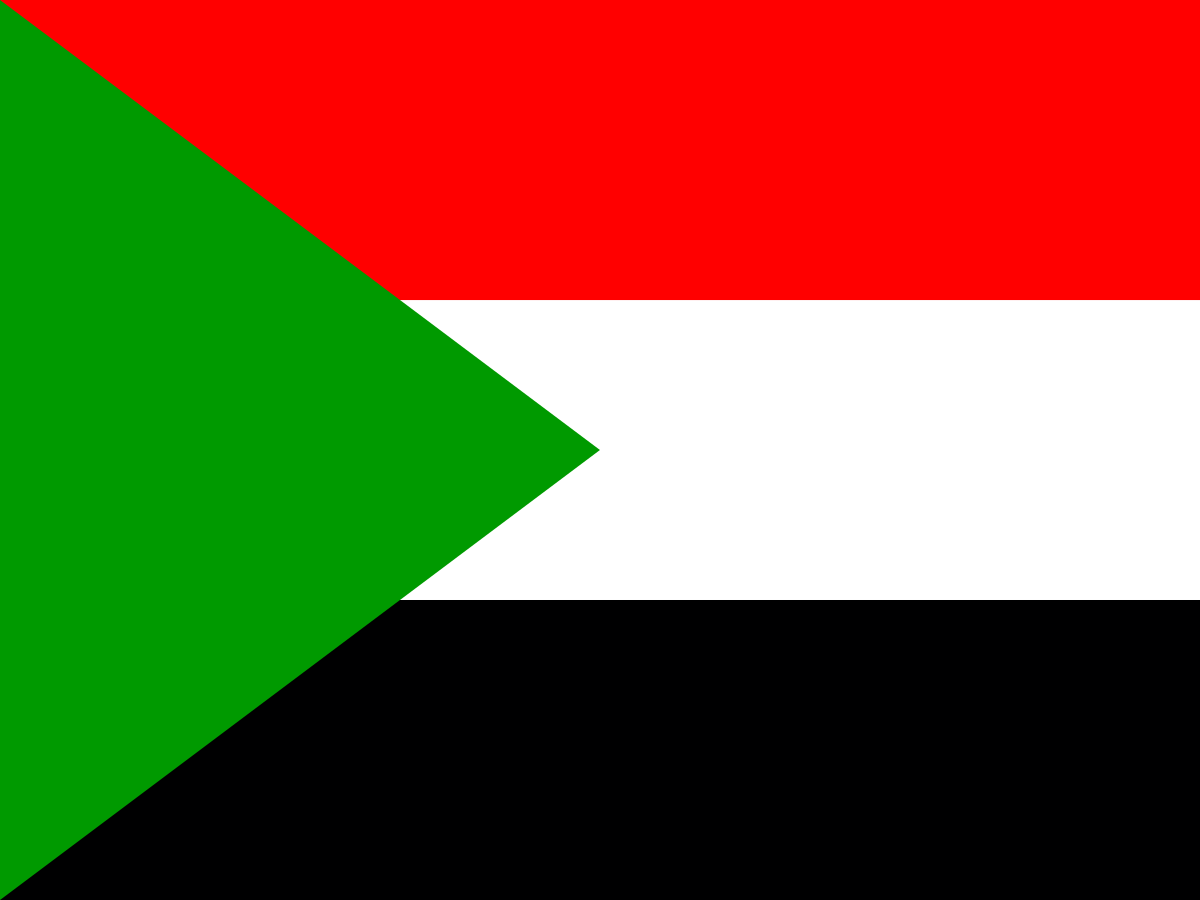
Sudan Flag
Pan-Arab and Pan-African colours. Red represents socialism and revolution, white stands for peace, black symbolises Sudan, and green represents Islam and prosperity.
Capital
Khartoum
Continent
Africa
Population
44.0 million
Development indicators
GDP per capita
$590
USD per year (approx. 2023)
Human Development Index
0.510
Low development
World Bank income classification
Low Income (LIC)
LIC
🌡️ Climate: Arid / Semi-arid
Flag symbolism
Pan-Arab and Pan-African colours. Red represents socialism and revolution, white stands for peace, black symbolises Sudan, and green represents Islam and prosperity.
pan-arab
Did you know?
Sudan has more ancient pyramids than Egypt — over 200 of them.
Test your knowledge
Think you know your world flags? Try the FlagAtlas daily challenge, speed quiz, or explore all Africa flags.
📚 Revising for GCSE Geography? Visit our free revision page →
About Sudan
Sudan is a large country in northeastern Africa, stretching from the Sahara and Sahel in the north and centre to more fertile regions around the Nile. It borders the Red Sea and has a long history connecting Africa, the Middle East and the Mediterranean world.
CapitalKhartoum
RegionNortheast Africa
CurrencySudanese pound
Official languageArabic & English
CoastlineRed Sea
Independence1 January 1956
The Sudan flag
Sudan's flag has three horizontal bands of red, white and black, with a green triangle at the hoist. It combines Pan-Arab and Pan-African colours, giving the flag a strong connection to both Sudanese and wider regional identity.
Red
The red band is associated with struggle, sacrifice and the country's revolutionary and socialist history.
White
The white represents peace, purity and hope.
Black
The black represents Sudan and its people. The colour is also connected with the country's name and its African identity.
Green
The green triangle is associated with Islam, agriculture, prosperity and the fertile land along the Nile.
Why the flag is distinctive
Sudan's flag uses the familiar Arab colours of red, white, black and green, but combines them with a bold triangular hoist design. Its colours also connect it to the wider Pan-African tradition.
A short history
Sudan's history includes ancient Nubian kingdoms, Islamic sultanates, Ottoman-Egyptian rule, the Mahdist state and British-Egyptian administration. Sudan became independent in 1956. Since independence it has experienced repeated political upheaval, civil conflict and major changes to its borders, including the independence of South Sudan in 2011.
History timeline
c. 2500 BCE–300 CE — Ancient Nubia and KushThe Nile supported powerful Nubian states south of ancient Egypt, including the Kingdom of Kush.
7th–15th centuries — Christian Nubian kingdomsChristian kingdoms including Makuria, Nobadia and Alodia developed along the Nile.
16th–19th centuries — Islamic sultanatesSeveral Muslim states developed across Sudan, including the Funj Sultanate.
1820s — Turco-Egyptian conquestEgyptian-Ottoman forces expanded southwards and established control over much of Sudan.
1881–1898 — Mahdist stateMuhammad Ahmad, known as the Mahdi, led a major uprising and established a state centred on Omdurman.
1898 — British reconquestAnglo-Egyptian forces defeated the Mahdist state at the Battle of Omdurman.
1899–1955 — Anglo-Egyptian SudanSudan was administered under an Anglo-Egyptian condominium.
1956 — IndependenceSudan became independent on 1 January 1956.
1989 — Omar al-Bashir takes powerA military coup brought Omar al-Bashir to power.
2003 — Darfur conflictA major conflict began in Darfur, causing widespread displacement and humanitarian suffering.
2011 — South Sudan independenceSouth Sudan became an independent country after a referendum.
2019 — Bashir removedMass protests led to the removal of Omar al-Bashir after nearly three decades in power.
2023 — War beginsFighting broke out between the Sudanese Armed Forces and the Rapid Support Forces, producing a severe humanitarian crisis.
TodaySudan remains affected by conflict, displacement and humanitarian need while retaining enormous historical, cultural and geographical importance.
Khartoum
Khartoum lies at the meeting point of the White Nile and Blue Nile. The wider capital area includes Omdurman and Khartoum North and has historically been Sudan's political centre.
Omdurman
Omdurman lies across the Nile from Khartoum and became the centre of the Mahdist state. The city remains one of Sudan's largest urban areas.
The Nile
The Nile is central to Sudanese life. The White Nile and Blue Nile meet at Khartoum before the river flows north towards Egypt and the Mediterranean.
Red Sea coast
Sudan has a coastline on the Red Sea, including coral reefs and important ports such as Port Sudan. The coast also supports fishing and marine ecosystems.
Climate
Sudan contains several climate zones, from desert in the north to semi-arid Sahelian regions and wetter savanna areas further south. Rainfall generally increases towards the south.
Nubian pyramids
Sudan contains more than 200 ancient pyramids, many associated with the kingdoms of Kush and Meroë. The pyramids of Meroë are among the country's best-known archaeological sites.
Meroë
The ancient city of Meroë was a major centre of the Kingdom of Kush. Its royal cemetery contains distinctive Nubian pyramids and is a UNESCO World Heritage site.
Wildlife
Sudan's varied environments support gazelles, antelope, elephants in some regions, crocodiles, birds and Red Sea marine life. Wildlife has been affected by habitat loss and conflict.
Agriculture
Agriculture is important to Sudan's economy and livelihoods. Major crops include sorghum, millet, wheat, sesame, cotton and gum arabic.
Gum arabic
Sudan has historically been one of the world's major producers of gum arabic, a natural product harvested from acacia trees and used in food, pharmaceuticals and industry.
Economy
Sudan's economy has historically depended on agriculture, livestock, gold, oil and trade. Conflict and political instability have severely disrupted economic activity.
Gold
Gold mining has become an important part of Sudan's economy, although the sector has also been affected by conflict and informal mining.
Food
Sudanese cuisine includes ful medames, kisra, asida, stews and grilled meats. Sorghum, millet, beans and okra are important ingredients in many dishes.
Ful medames
Ful medames is a popular Sudanese dish of cooked fava beans, often served with oil, onion, tomato, chilli and bread.
Religion
Islam is the dominant religion in Sudan. There are also Christian communities and traditional African religious practices.
Languages
Arabic is widely spoken, with many regional Arabic varieties. English is also used in education and official contexts, alongside numerous indigenous Sudanese languages.
Culture
Sudan has a rich mixture of African, Arab, Nubian and Islamic traditions. Music, poetry, storytelling, colourful dress and hospitality are important parts of cultural life.
Sport
Football is widely followed in Sudan. The country also has a long sporting tradition in athletics and other team sports.
Why is Sudan's flag interesting?
Sudan's flag combines four colours with powerful historical associations. The red, white, black and green palette links Sudan to both Arab and African identity, while the green triangle gives the design its distinctive shape.
Sudan today
Sudan is currently experiencing a major humanitarian and political crisis following the outbreak of war in 2023. Millions of people have been displaced and access to food, healthcare and other essential services has been severely disrupted. This recent history is an important part of understanding Sudan today.
Explore Sudan on FlagAtlas