Africa
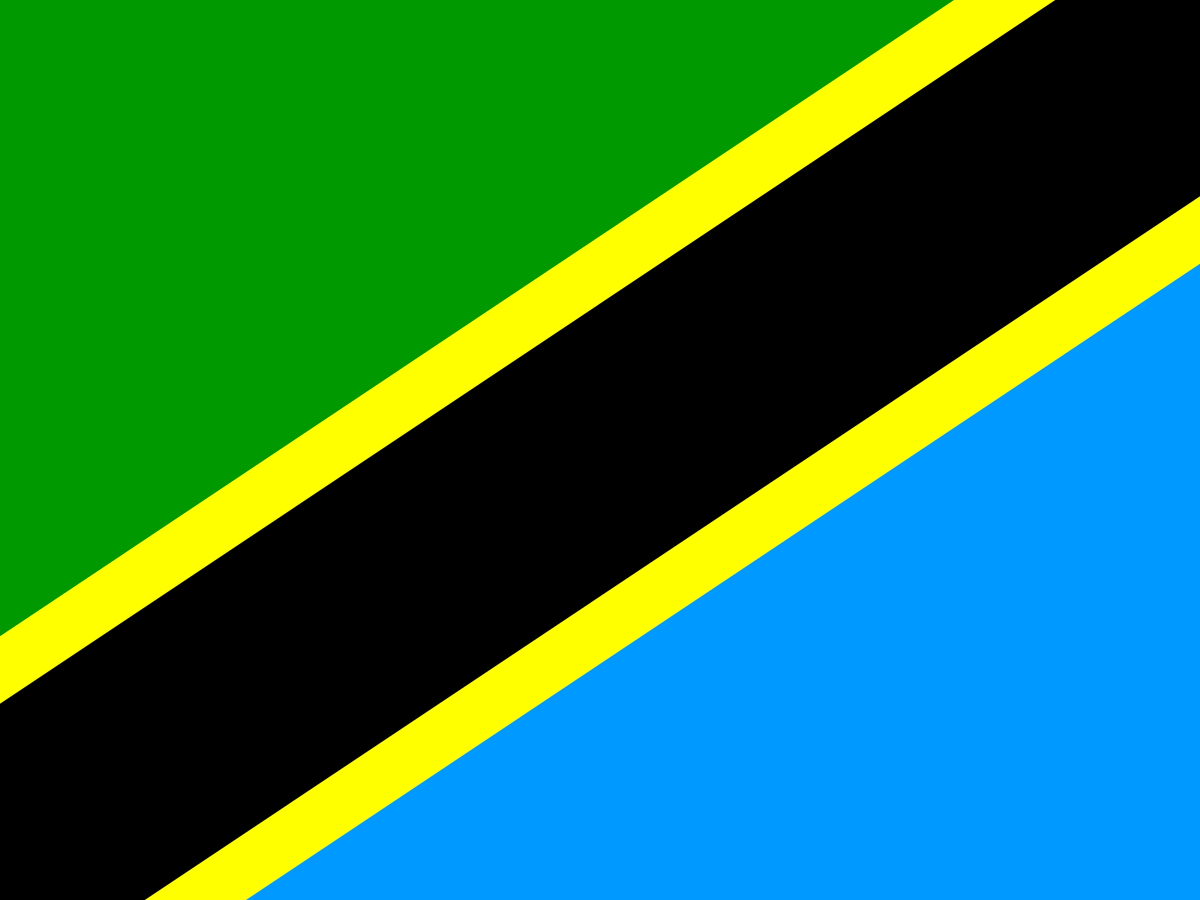
Tanzania Flag
Green represents the land, black stands for the Swahili people, blue represents the sea (from Zanzibar's flag), and yellow symbolises the mineral wealth. The diagonal stripe is a distinctive design element.
Capital
Dodoma
Continent
Africa
Population
63.0 million
Development indicators
GDP per capita
$1,120
USD per year (approx. 2023)
Human Development Index
0.532
Low development
World Bank income classification
Low Income (LIC)
LIC
🌡️ Climate: Tropical / Semi-arid
Flag symbolism
Green represents the land, black stands for the Swahili people, blue represents the sea (from Zanzibar's flag), and yellow symbolises the mineral wealth. The diagonal stripe is a distinctive design element.
diagonal
Did you know?
Tanzania has the highest number of albino people in the world.
Test your knowledge
Think you know your world flags? Try the FlagAtlas daily challenge, speed quiz, or explore all Africa flags.
📚 Revising for GCSE Geography? Visit our free revision page →
About Tanzania
Tanzania is an East African country on the Indian Ocean, formed in 1964 through the union of Tanganyika and Zanzibar. It is famous for Mount Kilimanjaro, the Serengeti, Zanzibar and some of Africa's most spectacular wildlife.
CapitalDodoma
Largest cityDar es Salaam
CurrencyTanzanian shilling
LanguagesSwahili & English
RegionEast Africa
Union1964
The Tanzanian flag
The Tanzanian flag consists of a green field, blue field and black diagonal band edged in yellow. The diagonal design combines the colours of Tanganyika and Zanzibar and has become one of Africa's most recognisable national flags.
Flag colours and symbolism
Green represents the country's vegetation and agricultural resources. Blue represents the Indian Ocean, lakes and waterways. Black represents the people of Tanzania, while yellow represents the country's mineral wealth.
Flag history
The current flag was adopted in 1964, following the union of Tanganyika and Zanzibar. Its design combines elements associated with the flags of the two territories and symbolises their new political union.
A short history
Tanzania's history includes ancient communities, powerful kingdoms and centuries of Indian Ocean trade. Tanganyika later came under German and British rule, while Zanzibar developed as an important sultanate and trading centre. Tanganyika became independent in 1961, Zanzibar in 1963, and the two united in 1964.
History timeline
Ancient era — Early settlementsCommunities developed across the region, while the East African coast became part of a wider Indian Ocean trading network.
1st millennium CE — Swahili coastCoastal towns developed strong commercial and cultural links with Arabia, Persia, India and other parts of the Indian Ocean.
19th century — Zanzibar SultanateZanzibar became a major centre of trade and the spice industry.
1880s–1918 — German East AfricaMuch of mainland Tanzania became part of German East Africa.
1919–1961 — British TanganyikaAfter the First World War, Tanganyika became a British-administered territory.
1961 — Tanganyika independenceTanganyika became independent from Britain.
1963 — Zanzibar independenceZanzibar became independent before a revolution transformed its political system in early 1964.
1964 — United Republic of TanzaniaTanganyika and Zanzibar united to create the United Republic of Tanzania.
1970s — UjamaaPresident Julius Nyerere pursued a socialist development programme based on communal villages and national self-reliance.
1990s — Multiparty politicsTanzania moved towards a multiparty political system and continued economic reforms.
Dodoma
Dodoma is Tanzania's official capital and the seat of the national government. It lies in the country's central region and became the designated capital in 1974, although Dar es Salaam remains the country's largest commercial centre.
Dar es Salaam
Dar es Salaam is Tanzania's largest city and principal commercial and port centre. Its name means 'haven of peace' in Arabic.
Zanzibar
Zanzibar is a semi-autonomous part of Tanzania in the Indian Ocean. It is famous for beaches, spice farms, coral reefs and historic Stone Town.
Stone Town
Stone Town is the historic heart of Zanzibar City. Its architecture reflects centuries of African, Arab, Persian, Indian and European influence and its old town is recognised as a UNESCO World Heritage Site.
Mount Kilimanjaro
Mount Kilimanjaro is Africa's highest mountain at 5,895 metres. Its volcanic peaks rise dramatically above the surrounding plains and make it one of Tanzania's most famous landmarks.
Serengeti National Park
The Serengeti is one of Africa's greatest wildlife areas. It is famous for the annual movement of vast numbers of wildebeest, zebra and other grazing animals and supports major predator populations.
Ngorongoro Crater
The Ngorongoro Crater is a huge volcanic caldera containing a remarkable concentration of wildlife. The surrounding Ngorongoro Conservation Area also protects important Maasai pastoral landscapes.
Wildlife
Tanzania supports some of Africa's best-known wildlife, including lions, elephants, giraffes, cheetahs, leopards, buffalo, hippos and rhinoceroses. Its protected areas are internationally important for conservation.
The Great Migration
The Great Migration sees enormous herds of wildebeest, zebra and other animals move through the Serengeti ecosystem in response to seasonal rainfall and fresh grazing. It is one of the world's most spectacular wildlife events.
Geography
Tanzania is the largest country in East Africa by area. It includes mainland Tanzania and the islands of Zanzibar, Pemba and Mafia, and borders eight countries including Kenya, Uganda, Rwanda, Burundi, the Democratic Republic of the Congo, Zambia, Malawi and Mozambique.
Climate
Tanzania has varied climates. The coast and islands are generally hot and humid, the interior is more seasonal and dry, and the mountains have much cooler conditions. Rainfall patterns vary considerably across the country.
Maasai culture
The Maasai are one of Tanzania's best-known peoples, with a distinctive pastoral culture centred on cattle, community and traditional dress. Maasai communities live across parts of northern Tanzania and southern Kenya.
Swahili
Swahili is central to Tanzanian national identity and is one of Africa's most widely spoken languages. English is also widely used in government, education, tourism and business.
Julius Nyerere
Julius Nyerere was Tanzania's first president and a major figure in African independence. He promoted national unity and the Ujamaa philosophy and remains one of Tanzania's most important historical figures.
Culture and music
Tanzania has rich traditions in music, dance, carving and textiles. Taarab music is particularly associated with Zanzibar, while modern bongo flava has become popular throughout East Africa.
Food
Tanzanian cuisine reflects African, Arab and Indian Ocean influences. Popular foods include ugali, nyama choma, pilau, chapati, samaki and mishkaki, while Zanzibar is particularly known for its spices.
Economy
Tanzania's economy includes agriculture, mining, tourism, manufacturing, construction and services. Gold is an important mineral export and tourism is a major source of foreign income.
Natural resources
Tanzania has significant mineral resources including gold, diamonds, tanzanite and other gemstones. The country is also developing its natural gas resources and has extensive agricultural land.
Why is Tanzania's flag interesting?
The Tanzanian flag is unusual because of its bold diagonal black band with yellow borders. Its colours bring together symbolism associated with both mainland Tanzania and Zanzibar following their 1964 union.
Explore Tanzania on FlagAtlas