Oceania
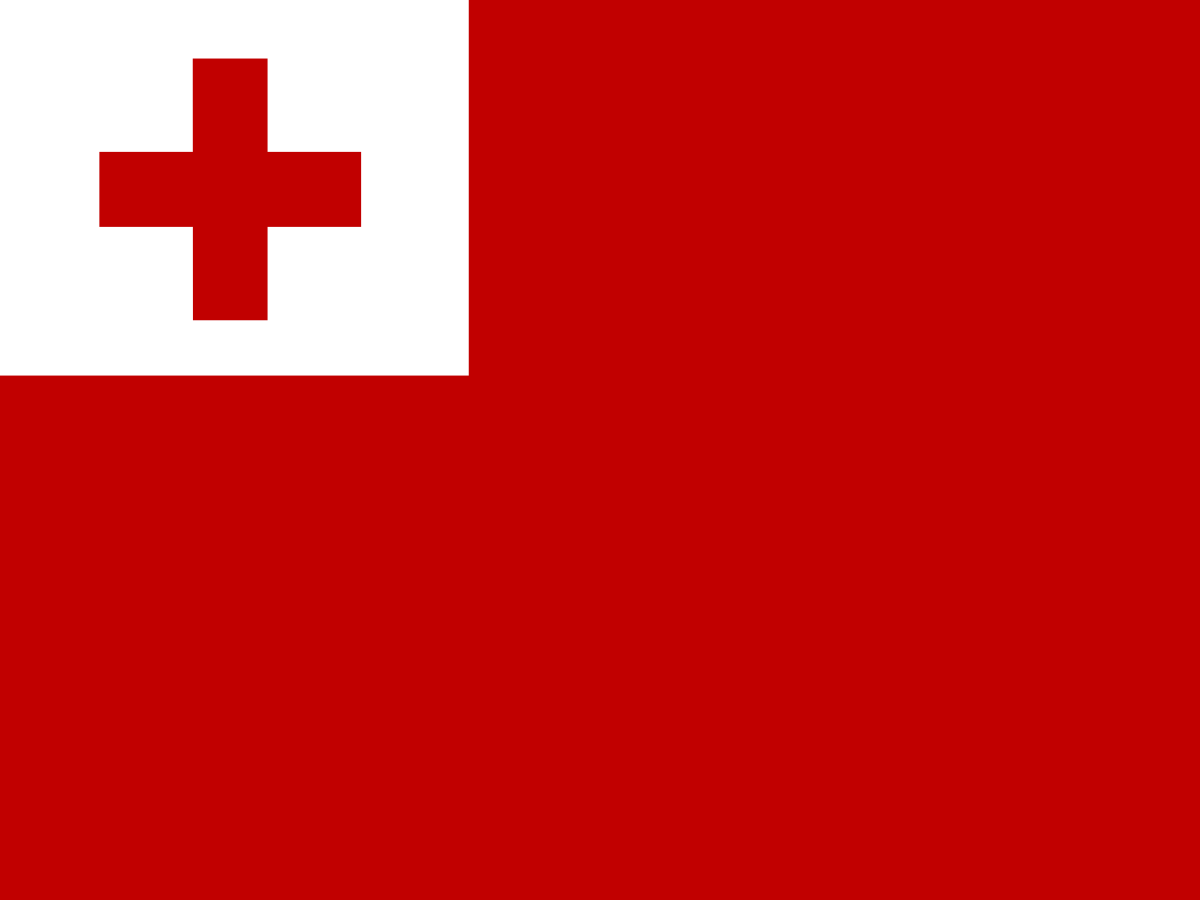
Tonga Flag
Red represents the blood of Christ. White stands for purity. The red cross represents Christianity — given by King George Tupou I who converted to Christianity.
Capital
Nuku'alofa
Continent
Oceania
Population
100 thousand
Development indicators
GDP per capita
$4,700
USD per year (approx. 2023)
Human Development Index
0.740
High development
World Bank income classification
Upper-Middle Income (UMIC)
UMIC
🌡️ Climate: Tropical
Flag symbolism
Red represents the blood of Christ. White stands for purity. The red cross represents Christianity — given by King George Tupou I who converted to Christianity.
cross
Did you know?
Tonga is the only monarchy in the Pacific and has never been fully colonised.
Test your knowledge
Think you know your world flags? Try the FlagAtlas daily challenge, speed quiz, or explore all Oceania flags.
📚 Revising for GCSE Geography? Visit our free revision page →
About Tonga
Tonga is a Polynesian kingdom in the South Pacific Ocean, made up of more than 170 islands, although only a small number are inhabited. It is famous for its coral islands, traditional Polynesian culture, humpback whales and the fact that it is one of the world's few remaining monarchies.
CapitalNuku'alofa
RegionPolynesia
CurrencyPaʻanga
LanguageTongan & English
GovernmentConstitutional monarchy
Independence1970
The Tonga flag
The Tongan flag has a red field with a white canton in the upper hoist. Inside the canton is a prominent red cross, making the design strongly associated with Christianity and the country's history.
Flag colours and symbolism
Red represents the blood of Jesus Christ, while white represents purity. The red cross reflects the importance of Christianity in Tongan society.
Flag history
Tonga's current flag dates from the 19th century and is associated with King George Tupou I and the country's adoption of Christianity. A similar design was used before the modern constitutional period, although its precise legal history has changed over time.
A short history
Tonga has a long Polynesian history and developed powerful chiefly traditions and maritime connections across the Pacific. Christian missionaries arrived in the 19th century, followed by the unification of Tonga under George Tupou I. Tonga became a British-protected state but retained its monarchy and internal self-government, becoming fully independent in 1970.
History timeline
Ancient Polynesia — SettlementTongans developed communities across the islands and built strong maritime links with other parts of Polynesia.
12th–13th centuries — Tuʻi Tonga EmpireThe Tuʻi Tonga dynasty became a major regional power, extending influence across parts of the southwest Pacific.
17th–18th centuries — European contactEuropean explorers visited the islands, although Tonga retained its own political structures.
1820s–1840s — Christian conversionChristianity spread rapidly and became deeply integrated into Tongan society.
1845 — George Tupou ITaufaʻahau united Tonga and became King George Tupou I, laying the foundations of the modern Tongan state.
1875 — ConstitutionTonga adopted a constitution and established a modern constitutional monarchy.
1900 — British protected stateTonga entered into a treaty relationship with Britain while retaining its monarchy and internal administration.
1970 — Full independenceTonga ended its protected-state relationship with Britain and became fully independent.
2006 — Political reformsPro-democracy reforms led to significant changes in the balance between the monarchy and elected government.
2010 — Democratic reformsConstitutional changes gave elected representatives a greater role in choosing the government.
Nuku'alofa
Nuku'alofa is Tonga's capital and largest urban centre. It lies on the north coast of Tongatapu and is the country's political, commercial and transport hub.
Tongatapu
Tongatapu is Tonga's largest and most populous island and the centre of national government. Much of the island is low-lying and made up of uplifted coral limestone.
The Haʻamonga ʻa Maui
The Haʻamonga ʻa Maui is a huge trilithon of coral limestone on Tongatapu. It is one of Tonga's best-known archaeological monuments and is traditionally linked with the ancient Tuʻi Tonga dynasty.
Geography
Tonga consists of a long chain of islands and islets spread across the South Pacific. The islands include volcanic islands and low coral atolls, and the country lies east of Fiji and west of Samoa.
Climate
Tonga has a tropical maritime climate. Temperatures remain warm throughout the year, with a wetter season and a drier season. Tropical cyclones can affect the islands, particularly during the Southern Hemisphere summer.
Volcanoes and coral islands
Tonga sits near the Tonga-Kermadec subduction zone, one of the most active tectonic regions on Earth. The kingdom contains both volcanic islands and low-lying coral islands.
Humpback whales
Tonga is famous for its seasonal population of humpback whales. Whales migrate to the warm waters around Tonga to breed and give birth, making whale watching an important part of tourism.
Marine life
Tonga's waters support coral reefs, sea turtles, dolphins, tropical fish and other marine species. The health of these ecosystems is important to local communities and tourism.
Tongan culture
Tongan society places strong importance on family, community, respect and traditional hierarchy. Ceremonies, dance, music, weaving and elaborate feasts remain important parts of cultural life.
Language
Tongan is the main national language and is closely related to other Polynesian languages. English is also widely used, particularly in education, government and business.
Religion
Christianity is central to Tongan society, with several Christian denominations represented. Sunday is traditionally treated as a particularly important day of worship and rest.
Traditional dance and music
Traditional Tongan performance includes lakalaka, a formal group dance involving singing, movement and carefully coordinated gestures. It is an important part of national cultural heritage.
Food
Tongan food commonly includes root crops, coconut, fish, pork and taro. Traditional feasts may feature underground-oven cooking known as an umu.
Economy
Tonga's economy depends on agriculture, fishing, tourism, remittances and services. Because of its small population and remote location, overseas remittances are particularly important.
Agriculture
Important crops include coconuts, squash, taro, yams and bananas. Tonga also exports agricultural produce, although farming is vulnerable to cyclones and other extreme weather.
The monarchy
Tonga is a constitutional monarchy and one of the few remaining monarchies in the Pacific. The modern Tongan monarchy traces its roots to the unification of the islands under George Tupou I.
Why is Tonga's flag interesting?
Tonga's flag is one of the world's oldest continuously used national flags. Its simple red-and-white design and cross reflect the country's strong Christian heritage and its long history as a Polynesian kingdom.
Explore Tonga on FlagAtlas