Africa
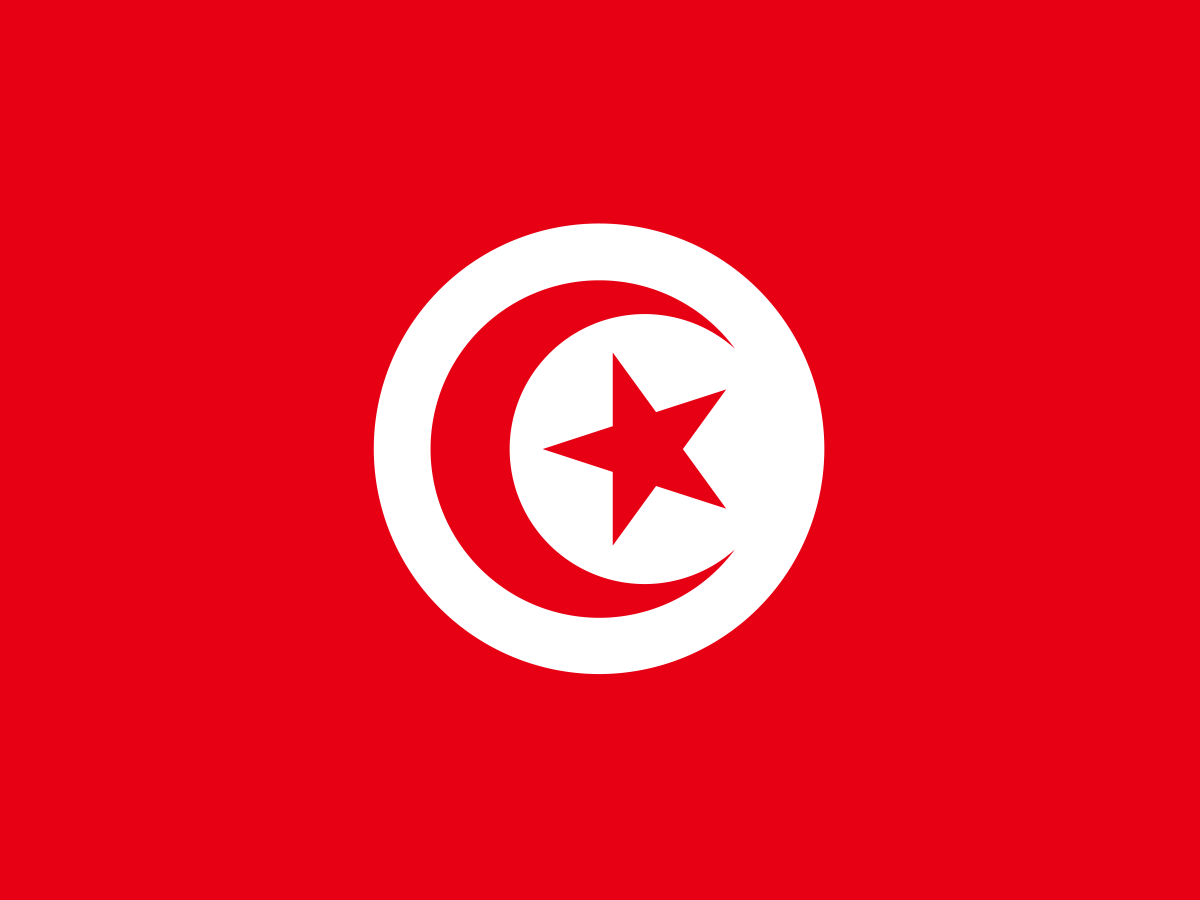
Tunisia Flag
Red and white have been Tunisia's colours for centuries. The crescent and star inside the white circle represent Islam.
Capital
Tunis
Continent
Africa
Population
12.0 million
Development indicators
GDP per capita
$3,880
USD per year (approx. 2023)
Human Development Index
0.732
High development
World Bank income classification
Lower-Middle Income (LMIC)
LMIC
🌡️ Climate: Mediterranean / Arid
Flag symbolism
Red and white have been Tunisia's colours for centuries. The crescent and star inside the white circle represent Islam.
crescentstar
Did you know?
Tunisia is the smallest country in North Africa and gave its name to the continent of Africa.
Test your knowledge
Think you know your world flags? Try the FlagAtlas daily challenge, speed quiz, or explore all Africa flags.
📚 Revising for GCSE Geography? Visit our free revision page →
About Tunisia
Tunisia is a North African country on the Mediterranean Sea, at the meeting point of Arab, Amazigh, African and Mediterranean cultures. It is known for ancient Carthage, Roman ruins, the Sahara, beaches and historic medinas.
CapitalTunis
RegionNorth Africa
CurrencyTunisian dinar
Official languageArabic
Independence1956
CoastlineMediterranean Sea
The Tunisia flag
The Tunisian flag is a red field containing a white disc near the centre. Inside the disc is a red crescent and five-pointed star, symbols strongly associated with Tunisia and the wider Islamic and Ottoman heritage of the region.
Flag colours and symbolism
Red has historical associations with the Ottoman period and is also commonly linked with sacrifice and courage. The white circle represents peace and purity. The crescent and star are traditional symbols of Islam and are prominent elements of Tunisian national identity.
Flag history
The current Tunisian flag was first adopted in the 19th century during the rule of the Husainid dynasty. It was retained after independence in 1956 and remains one of the world's most recognisable red-and-white flags.
A short history
Tunisia has been home to important civilisations for thousands of years. Ancient Carthage became a major Mediterranean power before its defeat by Rome. Tunisia later became part of the Roman, Byzantine and Islamic worlds, followed by Ottoman rule and French colonial rule before independence in 1956.
History timeline
Ancient era — Berber and Phoenician settlementIndigenous Amazigh communities lived across the region, while Phoenician settlers established trading settlements along the coast.
814 BCE — Carthage traditionally foundedCarthage developed into a major Mediterranean trading and maritime power.
264–146 BCE — Punic WarsCarthage fought Rome in three major wars before being destroyed in 146 BCE.
146 BCE — Roman AfricaThe territory became a major Roman province and an important agricultural centre of the empire.
7th century — Arab-Muslim conquestArab armies conquered the region and Islam and Arabic gradually became central to Tunisian society.
800s–900s — Aghlabid and Fatimid periodsKairouan and other cities became important centres of Islamic learning, trade and government.
1574 — Ottoman ruleTunis and the wider territory became part of the Ottoman Empire, although local rulers exercised considerable autonomy.
1881 — French protectorateFrance established a protectorate over Tunisia.
1956 — IndependenceTunisia became independent from France on 20 March 1956, with Habib Bourguiba as its first president.
1957 — RepublicThe monarchy was abolished and Tunisia became a republic.
2011 — Tunisian RevolutionPopular protests led to the departure of President Zine El Abidine Ben Ali and helped trigger the wider Arab Spring.
2014 — New constitutionTunisia adopted a new constitution following the revolution and a period of political transition.
Tunis
Tunis is Tunisia's capital and largest metropolitan centre. Its historic medina, markets and mosques sit alongside modern administrative and commercial districts.
Carthage
The ruins of ancient Carthage lie just outside Tunis. Once the centre of a powerful Phoenician-Punic civilisation, Carthage later became an important Roman city.
El Jem
El Jem is famous for its enormous Roman amphitheatre, one of the best-preserved ancient arenas in the world. It demonstrates the wealth and importance of Roman Africa.
Kairouan
Kairouan is one of the most important historic cities in the Islamic world and is regarded as one of Islam's holy cities. Its Great Mosque is a major architectural landmark.
Sahara
Southern Tunisia reaches into the Sahara Desert, with vast areas of dunes, rocky desert and oasis settlements. The town of Douz is sometimes known as a gateway to the desert.
Mediterranean coast
Tunisia has a long Mediterranean coastline with sandy beaches, rocky shores, fishing ports and popular resorts. Areas around Hammamet, Sousse, Monastir and Djerba are particularly well known.
Djerba
Djerba is a large island off Tunisia's southeastern coast. It is known for beaches, traditional villages, olive trees, distinctive architecture and a long history of Mediterranean and North African cultural exchange.
Geography
Tunisia is the northernmost country in Africa. It borders Algeria and Libya and contains Mediterranean coast, fertile northern plains, mountains, steppe and desert.
Climate
Northern Tunisia has a Mediterranean climate with wetter winters and hot, dry summers. Conditions become increasingly arid towards the south, where desert landscapes dominate.
Wildlife
Tunisia's varied habitats support Barbary sheep, gazelles, foxes, jackals, flamingos and many migratory birds. Marine habitats along the Mediterranean are also important for biodiversity.
Amazigh heritage
Tunisia has an important Amazigh (Berber) heritage, particularly visible in southern communities, traditional architecture, crafts and place names. Amazigh cultural traditions form part of Tunisia's long pre-Arab history.
Arabic and languages
Arabic is the official language, while Tunisian Arabic is widely spoken in everyday life. French remains widely used in education, business and administration, reflecting Tunisia's modern history.
Islam
Islam is the predominant religion in Tunisia, with most Muslims belonging to the Sunni tradition. Historic mosques and Islamic schools are prominent features of Tunisian cities.
Food
Tunisian cuisine combines Mediterranean, Arab and North African influences. Famous foods include couscous, brik, shakshuka, harissa, lablabi and mechouia salad. Harissa, a spicy chilli paste, is especially associated with Tunisia.
Cultural life
Tunisian culture combines North African, Arab, Amazigh, Mediterranean and Ottoman influences. Traditional crafts include pottery, carpets, embroidery and metalwork, while music includes malouf and other regional traditions.
Economy
Tunisia has a diversified economy including tourism, manufacturing, agriculture, textiles, services and phosphate mining. Its location on the Mediterranean gives it strong commercial links with Europe.
Olive oil
Tunisia is one of the world's major producers and exporters of olive oil. Olive cultivation has a very long history in the region and remains especially important in central and southern Tunisia.
Phosphate mining
Phosphate mining has historically been an important part of Tunisia's economy, particularly around the Gafsa region. Phosphate is a key raw material for fertiliser production.
The Tunisian Revolution
The 2011 Tunisian Revolution began after widespread protests over unemployment, corruption, rising living costs and political repression. The fall of Ben Ali became a major event in modern Middle Eastern and North African history and helped inspire protests elsewhere.
Why is Tunisia's flag interesting?
Tunisia's flag is distinctive for its very simple red-and-white design with a central crescent and star. Its appearance reflects both Tunisia's own dynastic history and the wider cultural heritage of the Mediterranean and Islamic world.
Explore Tunisia on FlagAtlas