Oceania
Tuvalu Flag
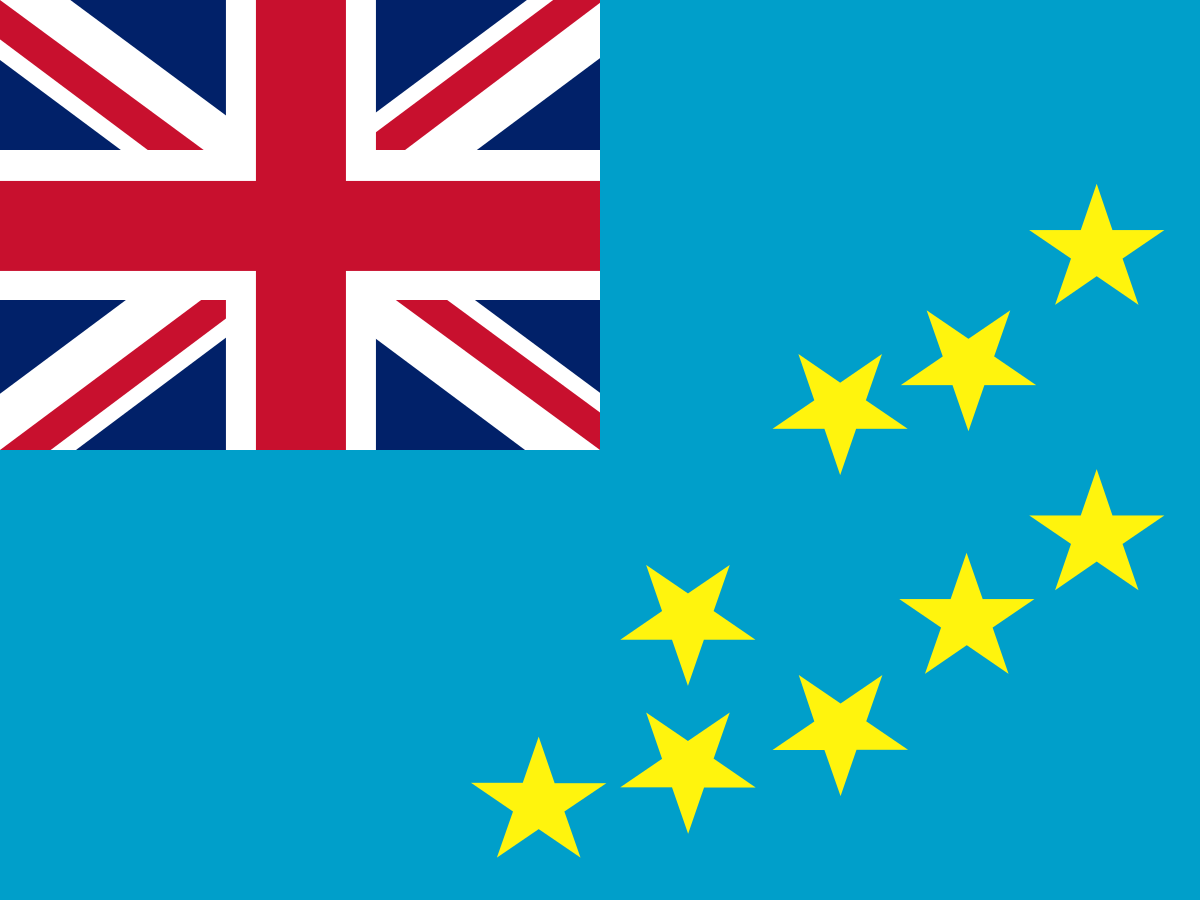
Light blue represents the Pacific Ocean. The nine stars represent the nine atolls and island groups of Tuvalu. The Union Jack reflects historical British influence.
Capital
Funafuti
Continent
Oceania
Population
11 thousand
Development indicators
GDP per capita
$4,700
USD per year (approx. 2023)
Human Development Index
0.641
Medium development
World Bank income classification
Lower-Middle Income (LMIC)
LMIC
🌡️ Climate: Tropical
Flag symbolism
Light blue represents the Pacific Ocean. The nine stars represent the nine atolls and island groups of Tuvalu. The Union Jack reflects historical British influence.
starsunion jack
Did you know?
Tuvalu is one of the most remote countries in the world and may be the first to be completely submerged by rising sea levels.
Test your knowledge
Think you know your world flags? Try the FlagAtlas daily challenge, speed quiz, or explore all Oceania flags.
📚 Revising for GCSE Geography? Visit our free revision page →
About Tuvalu
Tuvalu is a tiny Pacific island nation made up of nine low-lying atolls and reef islands. It is one of the world's smallest and most remote countries and is particularly known for its vulnerability to sea-level rise.
CapitalFunafuti
RegionOceania
CurrencyAustralian dollar
Official languagesTuvaluan & English
Independence1978
Islands / atolls9
The Tuvalu flag
The Tuvalu flag has a light-blue field with the Union Jack in the upper hoist and nine yellow stars on the fly side. The stars represent the country's nine island groups.
Flag colours and symbolism
Light blue represents the Pacific Ocean and Tuvalu's island environment. The Union Jack reflects Tuvalu's historical links with Britain. The nine yellow stars represent the nine atolls and island groups, and their arrangement broadly reflects their geographical position.
Flag history
The flag was adopted when Tuvalu became independent from Britain in 1978. It has changed during periods when Tuvalu debated its constitutional relationship with the United Kingdom, including a period in the 1990s when the Union Jack was removed, before the current design was restored.
A short history
Tuvalu's islands were settled by Polynesian peoples centuries before European contact. The islands later became part of the British colonial sphere and were administered as part of the Gilbert and Ellice Islands colony. Tuvalu separated from the colony and became independent in 1978.
History timeline
Early settlement — Polynesian communitiesThe islands were settled by Polynesian peoples who developed communities adapted to small atolls and limited freshwater and land resources.
16th–19th centuries — European contactEuropean navigators encountered the islands, followed by increasing contact with traders, missionaries and whalers.
19th century — Missionary influenceChristian missionaries became influential and Christianity became an important part of Tuvaluan society.
1892 — British protectorateThe islands became part of a British protectorate covering the Gilbert and Ellice Islands.
1916 — Colony of Gilbert and Ellice IslandsThe territory was formally organised as a British colony.
1974 — Separation from the Gilbert IslandsThe Ellice Islands voted for separate status as their Polynesian identity differed from the predominantly Micronesian Gilbert Islands.
1975 — Name TuvaluThe name Tuvalu, meaning 'eight standing together', became the official name of the separate colony.
1978 — IndependenceTuvalu became independent from the United Kingdom on 1 October 1978.
1979 — Treaty with the United StatesA treaty settled competing claims to several Pacific islands and strengthened Tuvalu's international position.
1986 — Nuclear-free constitutionTuvalu adopted a constitutional provision supporting the country's nuclear-free status.
2000 — United Nations membershipTuvalu joined the United Nations, giving the small island state a stronger voice in international diplomacy.
21st century — Climate change campaignTuvalu has become a prominent international voice on the risks that sea-level rise and climate change pose to low-lying island states.
Funafuti
Funafuti is Tuvalu's capital and main population centre. Much of the country's government, services and transport infrastructure is concentrated on the narrow Fongafale islet within Funafuti Atoll.
Funafuti Conservation Area
The Funafuti Conservation Area protects a large marine and island area containing coral reefs, lagoons, sandbanks and important marine habitats. It is important for biodiversity and local livelihoods.
The nine island groups
Tuvalu consists of nine island groups: Nanumea, Nanumaga, Niutao, Vaitupu, Nukufetau, Funafuti, Nukulaelae, Niulakita and Niutao. More precisely, the country has six true atolls and three reef islands, with Funafuti among its best-known atolls.
Geography
Tuvalu lies in the central Pacific, roughly between Hawaii and Australia. Its islands are extremely low-lying, with very little land rising above sea level. The surrounding ocean and reef systems dominate the geography.
Climate
Tuvalu has a tropical maritime climate with warm temperatures throughout the year. Rainfall is influenced by seasonal weather patterns and Pacific climate cycles such as El Niño and La Niña.
Sea-level rise
Because Tuvalu's islands are low and narrow, sea-level rise, coastal erosion, saltwater intrusion and extreme weather are major concerns. Tuvalu has therefore become one of the world's best-known advocates for stronger international climate action.
Freshwater
Freshwater is a particularly valuable resource because the islands have limited land and rely heavily on rainwater collection and shallow groundwater lenses. Saltwater intrusion can threaten these supplies during droughts and coastal flooding.
Marine life
Tuvalu's surrounding waters support coral reefs, reef fish, sea turtles, seabirds and other tropical marine life. Healthy marine ecosystems are important for food, culture and the local economy.
Tuvaluan culture
Tuvaluan culture is strongly Polynesian and closely connected to the ocean. Traditional community life includes music, dance, storytelling, communal activities and navigation traditions.
Language
Tuvaluan is the main local language, while English is also an official language and is used in government and education. Tuvaluan is closely related to other Polynesian languages.
Religion
Christianity is central to Tuvaluan society, with the majority of the population belonging to Christian denominations. Churches and religious celebrations play an important role in community life.
Food
Traditional Tuvaluan food reflects the limited resources of small islands. Important foods include coconut, taro, pulaka, breadfruit, fish and other seafood. Imported foods also form a significant part of modern diets.
Economy
Tuvalu has a small economy based on government services, fishing, remittances, overseas employment, development assistance and licensing of fishing rights. Tourism exists but is limited by the country's remote location.
The .tv domain
One of Tuvalu's best-known international assets is its .tv internet domain. The country has earned significant revenue by licensing the domain, which is popular with television, streaming and media businesses.
Fishing
Fishing is important for both food and national revenue. Tuvalu licenses foreign vessels to fish in its large exclusive economic zone, making management of marine resources an important part of economic policy.
Sport
Football is popular in Tuvalu, while traditional games and community activities remain important. Tuvalu has also competed internationally in athletics and other sports despite its very small population.
Climate diplomacy
Tuvalu has gained international attention for using diplomacy to highlight the threat posed by climate change to small island states. Its leaders have repeatedly emphasised that climate change is an issue of national survival.
Why is the flag interesting?
Tuvalu's flag is unusual because its nine stars are arranged to represent the country's nine island groups. Combined with the Union Jack and Pacific-blue background, the design tells the story of Tuvalu's geography and history at a glance.
Explore Tuvalu on FlagAtlas