๐Ÿ“œ Flag History Americas RevolutionExpansionStatehood
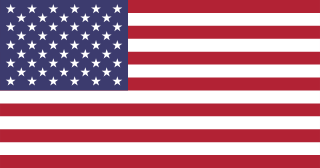
United States flag today

27 Stars and Counting

How the American flag grew with the nation

The United States flag has been officially changed 27 times โ€” more than almost any other national flag in history. But unlike most flag changes, which reflect revolution or regime change, almost every American flag change has meant the same thing: another state joined the Union. The story of the Stars and Stripes is the story of a growing nation, one star at a time.

๐Ÿ“‹ 27 major flag changes
Timeline
1775โ€“1777
Grand Union Flag 1775
The Grand Union Flag โ€” Still British
The first flag to fly over the unified American colonies was the Grand Union Flag, raised on 1 January 1776 by George Washington at Prospect Hill, Massachusetts. It carried 13 red and white stripes representing the 13 colonies, but its canton โ€” the rectangle in the top-left โ€” was the British Union Jack. This reflected the colonies' position at the time: in revolt against the British government's taxation, but not yet formally declaring independence or seeking to remove the British Crown from their flag. Independence in July 1776 made the Union Jack in the canton untenable.
14 June 1777
First Stars and Stripes 1777
The First Stars and Stripes
On 14 June 1777, the Continental Congress passed the Flag Resolution: "Resolved, That the flag of the thirteen United States be thirteen stripes, alternate red and white; that the union be thirteen stars, white in a blue field, representing a new constellation." This single sentence โ€” the entire founding document of the American flag โ€” was remarkably vague. It specified no arrangement of the stars, no proportions, no exact shades of colour. As a result, early American flags varied enormously in design. June 14 is now celebrated annually as Flag Day. The flag's colours were not officially assigned meaning until 1782, when the Secretary of Congress stated that white signified purity, red hardiness and valour, and blue vigilance and justice.
1795
US flag 15 stars 15 stripes 1795
Fifteen Stars, Fifteen Stripes โ€” The Star-Spangled Banner
When Vermont (1791) and Kentucky (1792) joined the Union, Congress decided to add both a star and a stripe for each new state. The 15-star, 15-stripe flag was adopted in 1795. This version โ€” the largest number of stripes the flag ever had โ€” is the most famous version in history: it was the flag flying over Fort McHenry in Baltimore on the night of 13โ€“14 September 1814, when British forces bombarded it during the War of 1812. Watching from a prisoner exchange ship, lawyer Francis Scott Key saw the flag still flying at dawn and wrote the poem that became the national anthem, "The Star-Spangled Banner."
4 April 1818
US flag 20 stars 1818
The Flag Act of 1818 โ€” Back to Thirteen Stripes
By 1818, five more states had joined the Union and it was clear that adding a stripe for each state would eventually produce an unrecognisable flag. Navy Captain Samuel Reid proposed the solution that has governed the flag ever since: keep the stripes permanently at 13 in honour of the original colonies, and add only stars for each new state. The Flag Act of 1818 formalised this approach. The 20-star flag with 13 stripes was adopted, and every subsequent change has involved only stars. The rule that new stars are added on the 4th of July following a state's admission has been followed ever since.
4 July 1912
US flag 48 stars 1912
The 48-Star Flag โ€” Order at Last
For the first 135 years of the Stars and Stripes, no official arrangement of the stars was ever specified, leading to enormous variety in how flags looked. In 1912, President Taft's Executive Order standardised the proportions of the flag and established the orderly rows of stars โ€” six horizontal rows of eight โ€” for the 48-star flag that followed Arizona and New Mexico joining the Union. This 48-star flag flew for 47 years through both World Wars and the Korean War, the longest-serving star count until the 50-star flag surpassed it.
4 July 1960 โ€“ present
US flag 50 stars 1960
Fifty Stars โ€” Designed by a Teenager
Alaska became the 49th state on 3 January 1959, and Hawaii became the 50th on 21 August 1959. The 50-star flag was officially adopted on 4 July 1960. Its design has a remarkable origin: in 1958, 17-year-old Robert Heft of Ohio sewed a 50-star flag for a school history project, predicting that Alaska and Hawaii would both join the Union. His teacher gave him a Bโ€“ for the project. Heft sent the flag to his congressman, who submitted it to President Eisenhower. When Hawaii was admitted and the 50-star flag was needed, Heft's design was chosen from 1,500 submissions. His teacher upgraded his grade to an A. The 50-star flag has now flown for over 65 years โ€” longer than any other version.
๐Ÿ’ก
Did you know?
The shortest-lived official US flag was the 49-star version (after Alaska joined but before Hawaii), which flew for exactly one year โ€” from 4 July 1959 to 4 July 1960.