Home › Territories & Regions › England
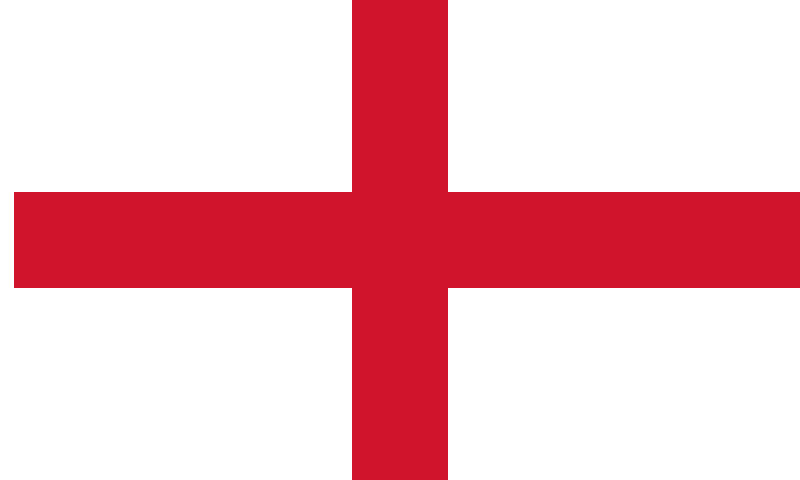
Flag of England
A red cross on a white field — the St George's Cross, England's national flag.
The flag of England is the St George's Cross: a bold red cross that reaches all four edges of a white flag. It's one of the most recognisable flags in the world, flown at English sporting events, on St George's Day, and from buildings and homes across the country. England is one of the four nations that make up the United Kingdom, alongside Scotland, Wales and Northern Ireland.
The St George's Cross
The cross takes its name from Saint George, the patron saint of England. The red-cross-on-white emblem has been associated with England since the Middle Ages, when it was worn by English soldiers, and it went on to become the country's national flag. When England and Scotland's crowns were united, the St George's Cross was combined with Scotland's Saint Andrew's Cross — and later Ireland's Saint Patrick's Cross — to form the Union Flag of the United Kingdom.
England flag colours
The England flag uses just two colours — a red cross on a white background. These are the approximate shades if you're recreating it:
England flag facts
Frequently asked questions
What does the flag of England look like?
It's a red cross on a white background — the St George's Cross. The upright red cross reaches all four edges of the flag.
What do the colours mean?
The design is the St George's Cross, the emblem of Saint George, England's patron saint, associated with the country since the Middle Ages. The red cross sits on a white field.
Is the England flag the same as the UK flag?
No. The England flag is the red St George's Cross. The UK's Union Jack combines the crosses of Saint George (England), Saint Andrew (Scotland) and Saint Patrick (Ireland).
When is St George's Day?
England's national day is 23 April, when the St George's Cross is widely flown.