About Eswatini
Eswatini is a small, landlocked country in southern Africa, bordered by South Africa and Mozambique. It was known internationally as Swaziland until its name was changed to Eswatini in 2018.
The country has a distinctive mix of mountains, grasslands, forests and river valleys. Mbabane is the administrative capital, while Lobamba is the traditional and legislative capital.
Administrative capitalMbabane
Traditional / legislative capitalLobamba
RegionSouthern Africa
PopulationAbout 1.2 million
Currencylilangeni
Highest pointEmlembe
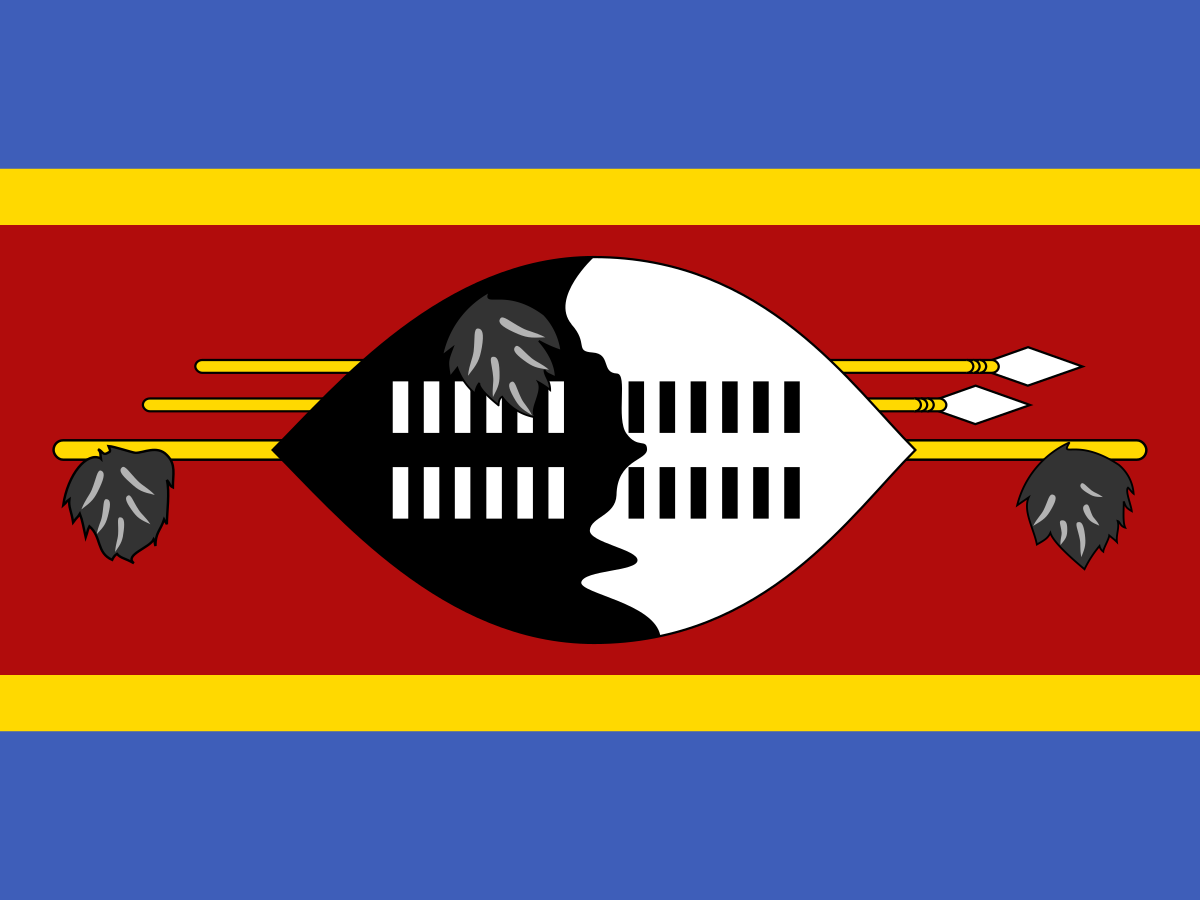
The flag of Eswatini
The Eswatini flag has horizontal bands of blue, red and yellow, with the red central band containing a traditional Nguni shield, two spears and a staff decorated with tassels.
The flag is strongly connected to Eswatini's warrior traditions and national identity.
The shield, spears and staff represent protection, while the colours have traditional meanings connected with peace, resources and the country's history of conflict.
The current flag was adopted in 1967, shortly before independence from Britain in 1968.
What do the colours mean?
Blue represents peace and stability. Yellow represents the country's mineral and other natural resources. Red represents past battles and the struggles of the Swazi people.
The colours combine peaceful national identity with reminders of the country's history and resources.
The Nguni shield
The large shield at the centre of the flag is a traditional Nguni ox-hide warrior's shield. It is shown with two spears and a staff, reflecting the military traditions of the Swazi people.
The shield is one of the most recognisable symbols of Eswatini and gives the flag a very distinctive appearance compared with most national flags.
The spears and staff
The two spears and the staff beside the shield are traditional symbols associated with defence and authority. They reinforce the idea that the shield protects the nation.
The staff is decorated with tassels, adding another traditional element to the emblem.
A short history of Eswatini
The Swazi nation developed in southern Africa during the eighteenth and nineteenth centuries, with the royal line of the Dlamini dynasty becoming central to the kingdom.
Eswatini later came under British protection and became an independent kingdom in 1968. The country retained its monarchy after independence.
Flag history timeline
19th centuryThe Swazi kingdom developed under the Dlamini royal dynasty and expanded its political influence.
1906Swaziland became a British protectorate.
1967 — flag adoptedThe current blue, red and yellow design with shield, spears and staff was introduced.
1968 — independenceSwaziland became independent from Britain.
1973Political parties were banned and the monarchy became increasingly centralised.
2018 — name changedKing Mswati III announced the country's English name would change from Swaziland to Eswatini.
The name change to Eswatini
In 2018, King Mswati III announced that the country's official English name would change from Swaziland to Eswatini. The name means roughly "land of the Swazi".
The change was intended to reflect the country's own name and reduce confusion with Switzerland.
The Swazi monarchy
Eswatini is one of the world's few remaining absolute monarchies. The king is the country's head of state, while the traditional system of chiefs and royal structures remains important.
King Mswati III has been monarch since 1986. The monarchy plays a central role in national ceremonies and cultural life.
Umhlanga — Reed Dance
The Umhlanga, or Reed Dance, is one of Eswatini's best-known cultural ceremonies. Thousands of young women take part in a multi-day celebration that includes dancing, singing and traditional dress.
The event is closely associated with the royal household and is an important expression of Swazi cultural identity.
Incwala — the first fruits ceremony
The Incwala ceremony is another major traditional event. It is often described as a first-fruits or kingship ceremony and is closely connected with the monarchy and traditional beliefs.
These ceremonies show how important traditional institutions remain in modern Eswatini.
Mbabane — the administrative capital
Mbabane is Eswatini's main administrative capital and largest city. It lies in the cool, mountainous Highveld region in the western part of the country.
The city is an important centre for government, business and education.
Lobamba — the royal and legislative capital
Lobamba is the traditional and legislative capital of Eswatini. It is home to important royal sites and the country's Parliament.
The distinction between Mbabane and Lobamba reflects the country's combination of modern government and traditional monarchy.
A land of four regions
Eswatini is commonly divided into four broad geographical regions: the Highveld, Middleveld, Lowveld and Lubombo. Each has different elevations, landscapes and climates.
The western Highveld is mountainous and relatively cool, while the Lowveld in the east is hotter and drier.
Mountains and Emlembe
Emlembe is the highest mountain in Eswatini, rising to about 1,862 metres. It lies in the western Highveld near the border with South Africa.
The mountainous west contrasts strongly with the lower and warmer landscapes in the east.
Climate
Eswatini has a varied subtropical climate influenced by altitude. The western highlands are cooler and wetter, while the eastern Lowveld is warmer and drier.
Most rainfall occurs during the summer months, with winter generally being drier.
Wildlife and conservation
Eswatini has a variety of wildlife reserves and protected areas. Animals include elephants, rhinos, giraffes, zebras, hippos, antelope and many bird species.
Conservation and tourism are important parts of the country's environmental and economic strategy.
Hlane Royal National Park
Hlane Royal National Park is one of Eswatini's best-known protected areas. It is particularly noted for elephants, lions, rhinos and large herds of antelope.
The park forms part of a wider network of protected areas that supports wildlife conservation and tourism.
Agriculture and sugar
Agriculture remains important to Eswatini, with sugar cane among the country's most significant commercial crops. Other agricultural activities include forestry, maize and livestock.
The warmer Lowveld is particularly suitable for sugar production where irrigation is available.
The economy
Eswatini's economy includes manufacturing, agriculture, forestry, services and tourism. Sugar and related agricultural products are important exports, while the country also has manufacturing links with neighbouring South Africa.
Eswatini's close economic relationship with South Africa is particularly significant because South Africa surrounds much of the country.
Languages
siSwati and English are the country's two official languages. SiSwati is the principal indigenous language and is closely related to other Nguni languages in southern Africa.
English is widely used in government, education and business.
Culture and traditions
Swazi culture places strong emphasis on community, traditional leadership, music, dance and ceremonies. Traditional dress and beadwork are especially visible during national and royal events.
Many cultural traditions remain an important part of everyday identity as well as major public celebrations.
Eswatini today
Eswatini remains a small constitutional monarchy in southern Africa, with the monarchy and traditional institutions playing a major role in public life.
The country faces development challenges including poverty, inequality, unemployment and pressure on natural resources, while also benefiting from tourism, agriculture and its location close to South Africa.
Why is Eswatini's flag interesting?
The Eswatini flag is unusual because it looks more like a traditional military emblem than a simple modern tricolour. The Nguni shield, spears and staff immediately communicate ideas of protection, authority and warrior tradition, while the blue, yellow and red bands add the country's broader story of peace, resources and historical struggle.
Explore Eswatini on FlagAtlas
Continue exploring Eswatini and the world's flags with these FlagAtlas resources.