Asia
Sri Lanka Flag
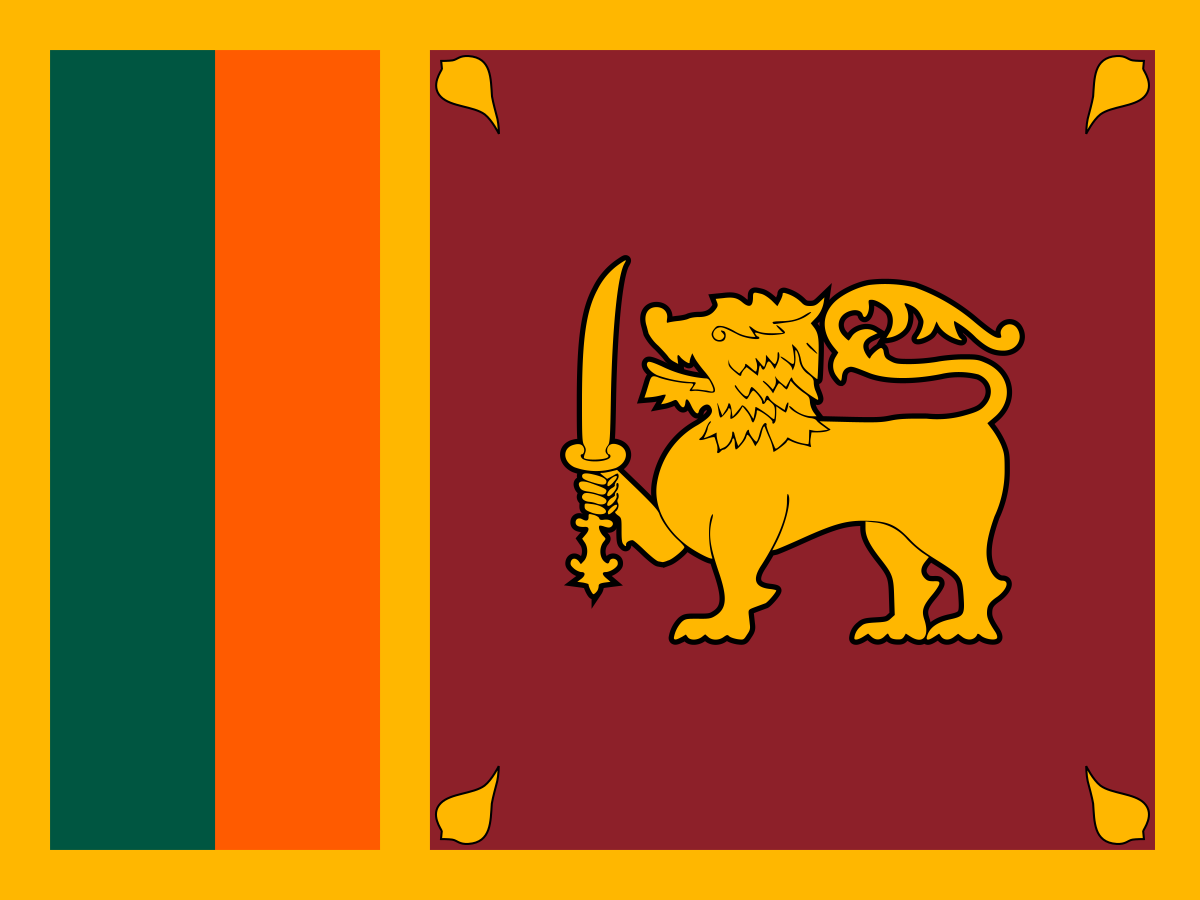
The lion with a sword represents the Sinhalese people and bravery. The sword represents authority. Green stands for Islam, orange for Hinduism, and the gold border for Buddhism.
Capital
Colombo
Continent
Asia
Population
22.0 million
Development indicators
GDP per capita
$3,800
USD per year (approx. 2023)
Human Development Index
0.780
High development
World Bank income classification
Lower-Middle Income (LMIC)
LMIC
🌡️ Climate: Tropical
Flag symbolism
The lion with a sword represents the Sinhalese people and bravery. The sword represents authority. Green stands for Islam, orange for Hinduism, and the gold border for Buddhism.
lion
Did you know?
Sri Lanka is the world's largest exporter of cinnamon.
Test your knowledge
Think you know your world flags? Try the FlagAtlas daily challenge, speed quiz, or explore all Asia flags.
📚 Revising for GCSE Geography? Visit our free revision page →
About Sri Lanka
Sri Lanka is an island nation in the Indian Ocean, just south of India. Its landscapes range from tropical beaches and lowland forests to misty central mountains and dry-zone plains.
The official capital is Sri Jayawardenepura Kotte, while Colombo is the largest city and main commercial centre.
CapitalSri Jayawardenepura Kotte
Largest cityColombo
CurrencySri Lankan rupee
LanguagesSinhala & Tamil
RegionSouth Asia
LocationIndian Ocean
The Sri Lanka flag
Sri Lanka's flag is known as the Lion Flag. It features a golden lion holding a sword on a crimson field, bordered by gold, alongside two vertical panels of green and orange. The design combines historic, religious and modern national symbolism.
The golden lion
The golden lion is the central symbol of the flag and is based on the traditional lion emblem associated with the Sinhalese people. It represents strength, courage and sovereignty.
The sword
The lion holds a sword, a symbol of authority, sovereignty and the defence of the nation.
The four bo leaves
Four bo leaves appear around the lion. They reflect Buddhism's deep historical importance in Sri Lanka and are traditionally associated with loving-kindness, compassion, sympathetic joy and equanimity.
Orange and green panels
The orange and green panels represent important communities within modern Sri Lanka. Orange is traditionally associated with the Tamil community and green with the Muslim community.
The maroon field and gold border
The large maroon/crimson field contains the lion and represents the historic Sinhala identity. The gold border frames the design and unifies the flag's symbols.
Why the flag is distinctive
Sri Lanka's flag is one of the world's most detailed national flags. Rather than relying on simple stripes, it combines a heraldic lion, sword, leaves, border and community colours.
A short history
Sri Lanka has a history stretching back thousands of years. Ancient kingdoms such as Anuradhapura and Polonnaruwa developed sophisticated irrigation systems and monumental Buddhist architecture. The island later came under Portuguese, Dutch and British control before independence in 1948. In 1972 it became the Republic of Sri Lanka.
History timeline
3rd century BCE — Buddhism arrivesSri Lankan tradition records the arrival of Buddhism during the reign of King Devanampiya Tissa.
3rd century BCE–10th century CE — AnuradhapuraAnuradhapura became a major political and religious centre, famous for stupas and sophisticated irrigation works.
11th–13th centuries — PolonnaruwaPolonnaruwa became a major royal capital with reservoirs, temples and monumental architecture.
1505 — Portuguese influencePortuguese forces established a growing presence on the coast.
1658 — Dutch ruleThe Dutch displaced the Portuguese from most coastal possessions.
1796 — British control expandsBritain took former Dutch territories during the Napoleonic Wars.
1815 — Kandyan Kingdom fallsBritain took control of the Kandyan Kingdom, bringing the island under British rule.
1948 — IndependenceCeylon became independent from Britain.
1972 — Republic of Sri LankaThe country became a republic and adopted the name Sri Lanka.
1983–2009 — Civil warA long armed conflict took place between the Sri Lankan government and the LTTE.
2004 — Indian Ocean tsunamiA devastating tsunami struck the island, causing enormous loss of life and destruction along the coast.
2022 — Economic crisisA severe economic and political crisis caused shortages, protests and a change of government.
TodaySri Lanka remains a diverse South Asian democracy with important tourism, agricultural and service industries.
Colombo
Colombo is Sri Lanka's largest city and principal commercial centre, with a busy port, colonial-era buildings, markets and modern development.
Sri Jayawardenepura Kotte
Sri Jayawardenepura Kotte is the official legislative capital of Sri Lanka. Parliament is located here, while Colombo remains the dominant commercial city.
Kandy
Kandy is a historic inland city surrounded by hills and home to the Temple of the Sacred Tooth Relic, one of the country's most important Buddhist sites.
Sigiriya
Sigiriya is an ancient rock fortress rising dramatically above the surrounding plains. Its ruins, gardens and frescoes make it one of Sri Lanka's most famous archaeological sites.
Climate
Sri Lanka has a tropical climate influenced by two monsoon systems. Different rainfall patterns create varied conditions across the island.
Central highlands
The central highlands contain cool, misty mountains, tea plantations and dramatic scenery. Pidurutalagala is the island's highest mountain.
Wildlife
Sri Lanka is exceptionally rich in wildlife, including Asian elephants, leopards, sloth bears, sambar deer, crocodiles and hundreds of bird species.
Sri Lankan elephant
The Sri Lankan elephant is a subspecies of Asian elephant and an important national symbol. Large herds can be seen in several national parks.
Sri Lankan leopard
The Sri Lankan leopard is the island's distinctive leopard subspecies and an apex predator in protected areas such as Yala National Park.
Yala National Park
Yala National Park is famous for leopards, elephants, sloth bears, crocodiles and a huge variety of birds.
Economy
Sri Lanka has a mixed economy with important sectors including tourism, tea, apparel, agriculture, manufacturing, services and overseas remittances.
Tea
Sri Lanka is famous worldwide for Ceylon tea. Tea plantations cover large areas of the central highlands.
Cinnamon
Sri Lanka is historically associated with Ceylon cinnamon, one of the island's best-known agricultural exports.
Tourism
Visitors come for beaches, wildlife, ancient cities, Buddhist temples, tea country, surfing and mountain scenery.
Food
Sri Lankan cuisine is known for bold flavours and extensive use of rice, coconut, chilli, curry leaves and spices. Popular dishes include rice and curry, hoppers, kottu roti and dhal.
Kottu roti
Kottu roti is a popular Sri Lankan street food made by chopping flatbread on a hot griddle and mixing it with vegetables, egg, meat or other ingredients.
Religion
Sri Lanka is religiously diverse. Buddhism is the largest religion, while Hinduism, Islam and Christianity are also practised.
Languages
Sri Lanka has two official languages: Sinhala and Tamil. English is widely used as a link language and remains important in business, education and tourism.
Music and dance
Sri Lankan traditions include distinctive drumming and dance forms. Kandyan dance is particularly famous and is associated with the island's central highlands.
Sport
Cricket is hugely popular in Sri Lanka. The national team won the 1996 Cricket World Cup.
Beaches
Sri Lanka has hundreds of kilometres of coastline with beaches popular for swimming, surfing, diving and whale watching.
The Indian Ocean
Sri Lanka's position near major Indian Ocean shipping routes has given it strategic importance for centuries and shaped its history of trade and cultural exchange.
Why is Sri Lanka's flag interesting?
Sri Lanka's flag is effectively a small piece of national history in visual form. The lion, sword, four bo leaves and community panels combine religious, historical and modern national symbolism in a highly distinctive design.
Explore Sri Lanka on FlagAtlas