Europe
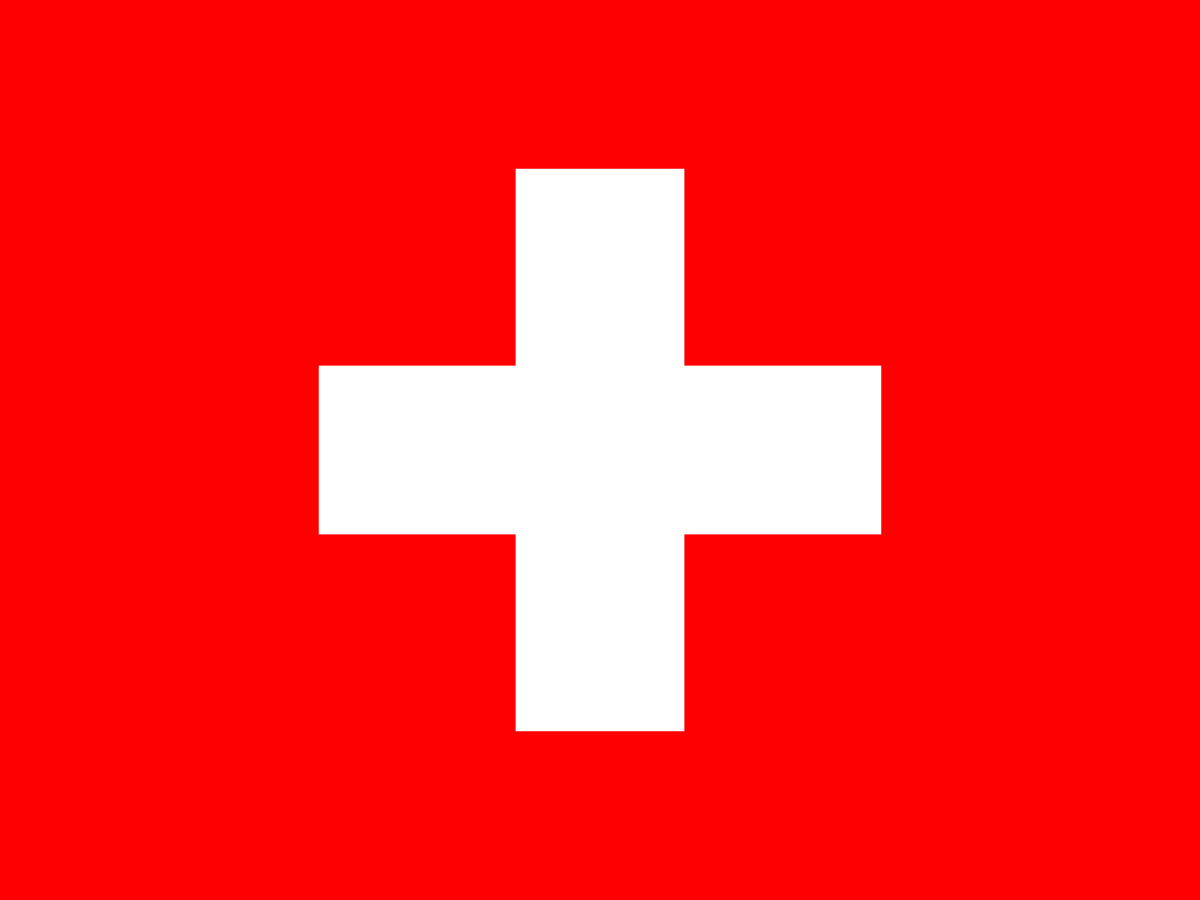
Switzerland Flag
One of only two square national flags in the world. The white cross on red has been used since the 14th century.
Capital
Bern
Continent
Europe
Population
8.7 million
Development indicators
GDP per capita
$98,800
USD per year (approx. 2023)
Human Development Index
0.962
Very High development
World Bank income classification
High Income (HIC)
HIC
🌡️ Climate: Alpine / Temperate
Flag symbolism
One of only two square national flags in the world. The white cross on red has been used since the 14th century.
crosssquare
Did you know?
Switzerland has four official languages: German, French, Italian, and Romansh.
Test your knowledge
Think you know your world flags? Try the FlagAtlas daily challenge, speed quiz, or explore all Europe flags.
📚 Revising for GCSE Geography? Visit our free revision page →
About Switzerland
Switzerland is a landlocked country in central Europe, famous for the Alps, lakes, precision engineering, finance, chocolate, watches and its distinctive system of direct democracy.
Federal cityBern
ContinentEurope
CurrencySwiss franc
Official languagesGerman, French, Italian, Romansh
PopulationAbout 9 million
EU memberNo
The Swiss flag
The Swiss flag is a white cross on a red square. It is one of only two square national flags in the world, the other being the flag of Vatican City. The modern Swiss cross developed from medieval military banners.
Red
The red field forms the background of the Swiss flag. The exact historical meaning of the colour is less certain than the symbolism of the cross itself.
The white cross
The white cross is one of Switzerland's oldest national symbols. A white cross was used by Swiss soldiers and appears in Swiss heraldic traditions dating back centuries.
The square flag
Switzerland is unusual because its national flag is normally square rather than rectangular. Swiss civil and merchant shipping use a rectangular version with the same design.
Why the flag is distinctive
The bold white cross against a red field is one of the world's most recognisable flag designs. It also inspired the Red Cross emblem, which reverses the colours.
A short history
Modern Switzerland developed from a loose confederation of Alpine communities into a federal state. The country built a tradition of neutrality and decentralised government, while industrialisation and finance helped make it one of the world's wealthiest economies.
History timeline
1291 — Federal CharterThe traditional founding date of the Swiss Confederation, associated with an alliance between the cantons of Uri, Schwyz and Unterwalden.
14th–15th centuries — Confederation expandsAdditional cantons and allied territories joined the growing Swiss Confederation.
1499 — Swiss independence recognisedThe Swabian War helped establish practical Swiss independence from the Holy Roman Empire.
1515 — Battle of MarignanoSwiss forces suffered a major defeat and the Confederation gradually adopted a policy of non-expansion.
1648 — Peace of WestphaliaEuropean powers formally recognised Swiss independence from the Holy Roman Empire.
1798 — French invasionNapoleon's forces invaded Switzerland and created the Helvetic Republic.
1815 — Permanent neutralityThe Congress of Vienna recognised Switzerland's permanent neutrality and restored the federal confederation.
1848 — Modern federal stateA new constitution transformed the loose confederation into a federal state with a strong national government.
1971 — Women gain federal voting rightsSwiss women gained the right to vote at federal level, although some cantons took longer to introduce equal voting rights.
2002 — United NationsSwitzerland joined the United Nations after a national referendum.
TodaySwitzerland remains a federal, multilingual and highly decentralised democracy known for neutrality, direct democracy and economic strength.
Bern
Bern is Switzerland's federal city and seat of the federal government. Its medieval old town is a UNESCO World Heritage site and is famous for arcades, fountains and the Zytglogge clock tower.
Zurich
Zurich is Switzerland's largest city and a major global financial and business centre. It sits at the northern end of Lake Zurich.
Geneva
Geneva is an international diplomatic centre and home to numerous international organisations, including major United Nations institutions and the European headquarters of the World Health Organization.
The Swiss Alps
The Swiss Alps dominate much of the southern and central landscape. Famous peaks include the Matterhorn, Eiger, Mönch and Jungfrau.
The Matterhorn
The Matterhorn near Zermatt is one of the world's most recognisable mountains. Its distinctive pyramidal shape has become an international symbol of the Swiss Alps.
Jungfrau region
The Jungfrau region is famous for dramatic Alpine scenery, glaciers, mountain railways and villages such as Grindelwald, Wengen and Mürren.
Climate
Switzerland has a varied Alpine and temperate climate. Higher elevations have cold snowy winters, while lower valleys and the Ticino region can experience much milder conditions.
Lakes and rivers
Switzerland contains many lakes, including Lake Geneva, Lake Zurich and Lake Lucerne. The Rhine, Rhône, Inn and Ticino all have important headwaters or stretches within the country.
Wildlife
Swiss mountain environments support ibex, chamois, marmots, golden eagles and red deer. Conservation programmes have helped several Alpine species recover.
Economy
Switzerland has a highly developed economy based on finance, pharmaceuticals, chemicals, precision engineering, machinery, tourism and high-value manufacturing.
Swiss banking and finance
Switzerland has a long-established international financial sector. Zurich and Geneva are major global centres for banking, insurance and wealth management.
Precision engineering
Swiss engineering is associated with precision, reliability and high-quality manufacturing. Machinery, instruments, pharmaceuticals and advanced industrial products are major exports.
Swiss watches
Switzerland is world-famous for luxury watchmaking. Brands such as Rolex, Omega, Patek Philippe and Swatch have helped make Swiss watches synonymous with precision and craftsmanship.
Chocolate
Swiss chocolate became internationally famous through innovations including milk chocolate and modern manufacturing techniques. Chocolate remains an important part of Swiss food culture and tourism.
Cheese
Swiss cheeses include Emmental, Gruyère and Appenzeller. Fondue and raclette are two of the country's best-known cheese-based dishes.
Fondue
Fondue is a classic Swiss dish in which bread is dipped into melted cheese, traditionally flavoured with wine and seasonings.
Raclette
Raclette involves melting a wheel or portion of cheese and scraping the melted layer over potatoes, vegetables and other accompaniments.
Direct democracy
Switzerland is famous for direct democracy. Citizens can vote in national referendums and use popular initiatives to propose constitutional changes.
Cantons
Switzerland is made up of 26 cantons, each with substantial powers. This federal structure is a major part of Swiss political identity.
Neutrality
Swiss neutrality has been a central feature of the country's foreign policy since the 19th century. Switzerland is not a member of NATO but cooperates with the alliance in various ways.
Languages
Switzerland has four national languages: German, French, Italian and Romansh. German is the most widely spoken, while French dominates in western Switzerland and Italian in Ticino.
Culture
Swiss culture varies significantly between regions, reflecting the country's languages and neighbouring countries. Alpine traditions, festivals, music, crafts and modern urban culture all contribute to national identity.
Sport
Skiing, ice hockey, football, tennis and cycling are popular sports. Switzerland has produced successful international athletes, including tennis stars Roger Federer and Martina Hingis.
Why is Switzerland's flag interesting?
The Swiss flag is unusually simple but historically rich: a white cross on red, normally displayed as a square. Its design has become so recognisable that the reversed colour arrangement inspired the international Red Cross emblem.
Explore Switzerland on FlagAtlas