Africa
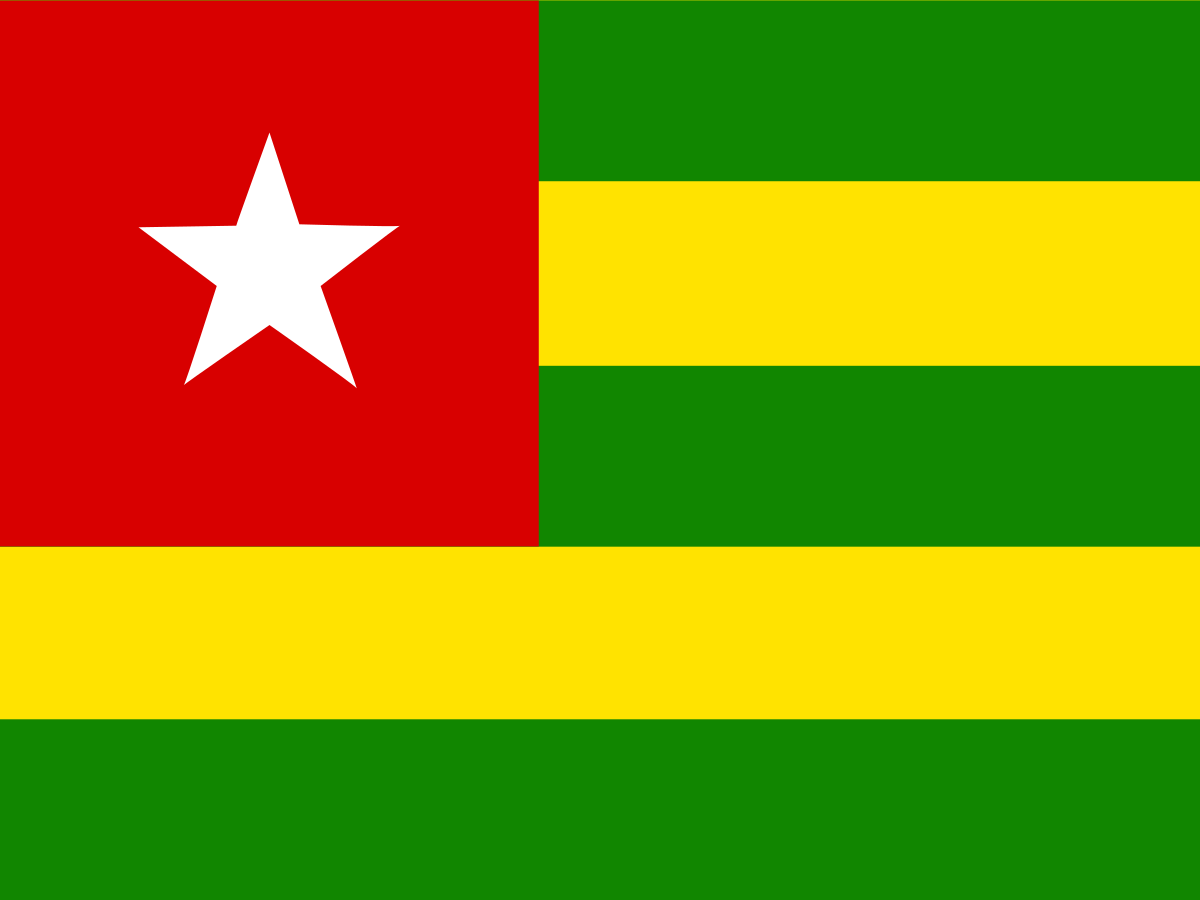
Togo Flag
Green represents hope and agriculture, yellow stands for faith and the country's mineral wealth, and red symbolises charity and the blood of those who died for independence. The star represents purity.
Capital
Lomé
Continent
Africa
Population
8.6 million
Development indicators
GDP per capita
$960
USD per year (approx. 2023)
Human Development Index
0.547
Low development
World Bank income classification
Low Income (LIC)
LIC
🌡️ Climate: Tropical / Savanna
Flag symbolism
Green represents hope and agriculture, yellow stands for faith and the country's mineral wealth, and red symbolises charity and the blood of those who died for independence. The star represents purity.
starpan-african
Did you know?
Togo is one of the world's largest producers of phosphate.
Test your knowledge
Think you know your world flags? Try the FlagAtlas daily challenge, speed quiz, or explore all Africa flags.
📚 Revising for GCSE Geography? Visit our free revision page →
About Togo
Togo is a narrow West African country on the Gulf of Guinea. It stretches from a short tropical coastline through forest and savanna to the hills and plateaus of the north.
CapitalLomé
RegionWest Africa
CurrencyWest African CFA franc
LanguageFrench
Independence27 April 1960
CoastlineGulf of Guinea
The Togo flag
The flag of Togo has five alternating green and yellow horizontal stripes, with a red square in the upper hoist containing a white five-pointed star. The design is one of the more distinctive flags in West Africa.
Flag colours and symbols
Green represents agriculture, nature and hope. Yellow represents the country's mineral wealth and natural resources. Red represents blood and sacrifice, while the white star represents peace and unity. The five stripes are also associated with the country's regions.
Flag history
Togo adopted its current national flag after gaining independence in 1960. The design was created by artist Paul Ahyi, one of Togo's best-known artists, and became an important symbol of national identity.
A short history
The area now known as Togo has long been home to diverse West African communities and trading networks. The coast became involved in European trade before the territory became a German colony. After the First World War it was divided into French and British-administered territories, with most of modern Togo administered by France before independence.
History timeline
Pre-colonial period — Regional kingdoms and communitiesPeoples including the Ewe, Mina, Kabiyè and others developed communities, trading networks and political structures across the region.
15th–19th centuries — Atlantic tradeThe coast became connected to European maritime trade, including the trade in enslaved people.
1884 — German TogolandGermany established a protectorate over the territory, which became known as Togoland.
1914–1919 — First World WarGerman rule ended during the First World War and the territory was divided between British and French administration.
1946 — UN Trust TerritoryThe French-administered part became a United Nations Trust Territory under French administration.
1956 — Internal autonomyTogo gained greater internal self-government as the independence movement developed.
1960 — IndependenceTogo became independent on 27 April 1960, with Sylvanus Olympio as its first president.
1963 — Political crisisPresident Olympio was assassinated in a military coup, beginning a long period of political instability.
1967 — Gnassingbé Eyadéma takes powerGnassingbé Eyadéma came to power following another military takeover and ruled for decades.
1990s — Political reformsMultiparty politics and constitutional reforms were introduced after a period of political unrest.
2005 — Change of leadershipFaure Gnassingbé became president following the death of his father, amid a highly controversial succession.
Lomé
Lomé is Togo's capital and largest city. Located on the Gulf of Guinea near the border with Ghana, it is the country's main commercial, administrative and port centre.
The coast
Togo has a relatively short coastline on the Gulf of Guinea. Beaches, lagoons and coastal settlements form an important part of the country's geography and tourism.
Geography
Togo is unusually narrow compared with many of its neighbours. It borders Ghana, Burkina Faso and Benin and extends north from the Gulf of Guinea through several ecological zones.
Climate
Togo has a tropical climate, with conditions varying from humid coastal areas to drier northern savanna. The south generally has more rainfall and the north experiences a longer dry season.
Mount Agou
Mount Agou is the highest point in Togo, rising to about 986 metres. It lies in the southwest near the Ghanaian border and is surrounded by fertile, forested landscapes.
Wildlife
Togo's wildlife includes elephants, buffalo, antelope, monkeys, hippos and many bird species. Protected areas such as Fazao-Malfakassa National Park and Kéran National Park are important for conservation.
National parks
Fazao-Malfakassa National Park is one of Togo's largest protected areas, with forests, savanna and rugged terrain. Kéran National Park in the north also provides important habitat for wildlife.
People and communities
Togo is culturally diverse, with many ethnic communities. The Ewe are particularly prominent in the south, while groups including the Kabiyè, Tem and others are important in central and northern regions.
Languages
French is the official language. Ewe, Mina, Kabiyè and numerous other African languages are widely spoken in everyday life.
Religion and belief
Togo is religiously diverse, with Christianity, Islam and traditional African religions all practised. Traditional beliefs and ceremonies continue to influence cultural life in many communities.
Vodun
Togo is one of the countries associated with the wider West African traditions of Vodun. In Togo and neighbouring Benin, Vodun traditions include ceremonies, music, dance and spiritual practices, and are an important part of the region's cultural heritage.
Culture and music
Togolese culture includes distinctive music, dance, textiles and craft traditions. Drumming and dance are important at ceremonies and festivals, while colourful woven fabrics are widely used in clothing.
Food
Togolese cuisine commonly features maize, cassava, yam, beans, rice, fish and meat. Dishes are often served with sauces and spicy condiments, while street food is an important part of urban life.
Economy
Togo's economy includes agriculture, phosphate mining, trade, transport, manufacturing and services. The port of Lomé is an important commercial gateway for Togo and neighbouring landlocked countries.
Phosphate mining
Phosphates have historically been one of Togo's most important mineral resources and exports. The mineral is widely used in fertiliser production.
Agriculture
Agriculture supports a large part of the population. Important crops include maize, cassava, yams, cotton, coffee and cocoa, with farming conditions varying between the coastal south and northern savanna.
Why is Togo's flag interesting?
Togo's flag combines five green and yellow stripes with a bold red canton and white star. The design was created by Paul Ahyi and its colours are closely tied to the country's natural resources, people and national aspirations.
Explore Togo on FlagAtlas