Africa
Uganda Flag
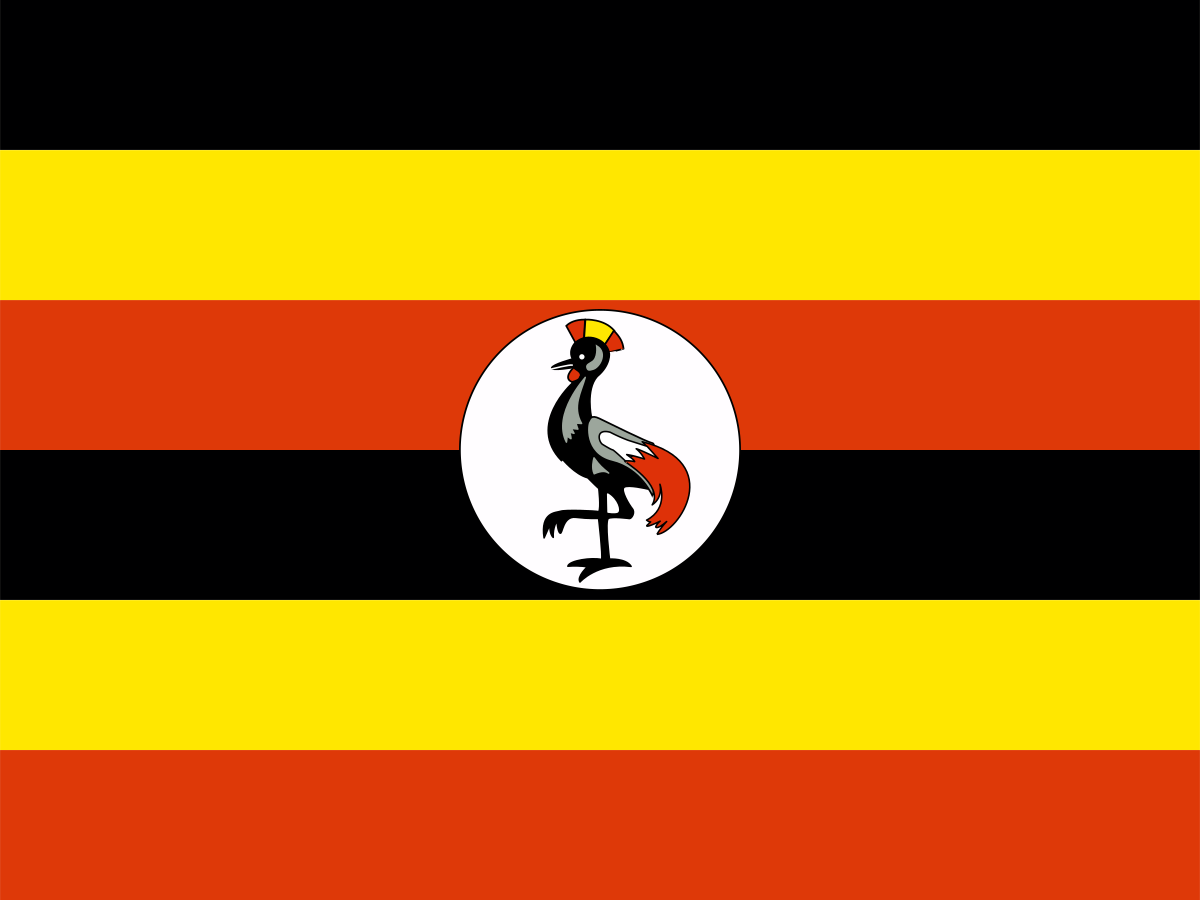
Black, yellow, and red are the colours of the Uganda People's Congress party that led independence. The grey crowned crane in the centre is Uganda's national bird, known for its gentle nature.
Capital
Kampala
Continent
Africa
Population
47.0 million
Development indicators
GDP per capita
$900
USD per year (approx. 2023)
Human Development Index
0.550
Medium development
World Bank income classification
Low Income (LIC)
LIC
🌡️ Climate: Tropical
Flag symbolism
Black, yellow, and red are the colours of the Uganda People's Congress party that led independence. The grey crowned crane in the centre is Uganda's national bird, known for its gentle nature.
bird
Did you know?
The source of the Nile — the world's longest river — is found in Uganda at Lake Victoria.
Test your knowledge
Think you know your world flags? Try the FlagAtlas daily challenge, speed quiz, or explore all Africa flags.
📚 Revising for GCSE Geography? Visit our free revision page →
About Uganda
Uganda is a landlocked country in East Africa, centred around the northern shores of Lake Victoria and the source region of the White Nile. It is known for fertile landscapes, tropical forests, mountain gorillas and the grey crowned crane shown on its flag.
CapitalKampala
RegionEast Africa
CurrencyUgandan shilling
Official languageEnglish
Independence1962
Largest lakeLake Victoria
The Uganda flag
The Uganda flag consists of six horizontal stripes of black, yellow and red, with a white disc in the centre containing a grey crowned crane facing the hoist. The design was adopted shortly before independence in 1962.
Flag colours and symbolism
The three colours have specific national meanings: black represents the people of Africa, yellow represents Africa's sunshine, and red represents African brotherhood and the blood through which Africans are connected. The grey crowned crane represents Uganda itself and is known for its gentle nature.
The grey crowned crane
The grey crowned crane is Uganda's national bird. Its raised leg is traditionally associated with the bird's characteristic stance and the idea of moving forward. Its inclusion makes the Uganda flag particularly distinctive among national flags.
Flag history
The present flag was designed by Uganda's Minister of Justice, Grace Ibingira, and adopted in 1962, shortly before Uganda became independent from Britain. The colours were associated with the Uganda People's Congress, but the final design gave them broader national symbolism.
A short history
Uganda's history includes powerful kingdoms such as Buganda, Bunyoro, Toro and Ankole, followed by British colonial rule and independence in 1962. The country experienced political upheaval under Idi Amin and later periods of civil conflict before a long period of relative stability.
History timeline
Early settlement — Bantu and Nilotic peoplesDifferent communities settled across the region, developing farming, cattle-keeping and trading societies.
14th–19th centuries — Great kingdomsKingdoms including Buganda and Bunyoro became important political and cultural powers in the Great Lakes region.
19th century — Arab and European contactTraders and explorers reached the interior, followed by increasing European political involvement.
1894 — British protectorateBritain declared Uganda a protectorate, bringing much of the region under colonial administration.
1900 — Buganda AgreementA major agreement reshaped the relationship between the British administration and the Kingdom of Buganda.
1962 — IndependenceUganda became independent from Britain on 9 October 1962.
1963 — RepublicUganda became a republic, with Milton Obote as its first executive president.
1971 — Idi Amin takes powerIdi Amin seized power in a military coup and ruled Uganda until 1979.
1972 — Expulsion of AsiansThe Amin government expelled large numbers of Ugandan Asians, causing severe economic and humanitarian consequences.
1979 — Amin overthrownTanzanian forces and Ugandan exiles helped remove Idi Amin from power.
1986 — Museveni takes powerYoweri Museveni became president after the National Resistance Army took Kampala.
1987–2006 — Lord's Resistance Army conflictNorthern Uganda suffered a prolonged insurgency and humanitarian crisis.
21st century — Development and population growthUganda has experienced rapid population growth alongside economic development, urbanisation and continuing environmental challenges.
Kampala
Kampala is Uganda's capital and largest city. It is a major centre for government, business, education and culture and has grown rapidly from its historic hills.
Lake Victoria
Lake Victoria is Africa's largest lake by area and one of the world's largest freshwater lakes. Uganda shares it with Kenya and Tanzania, and the lake is central to fishing, transport and tourism.
The Nile
The White Nile flows northwards from Lake Victoria through Uganda. The river passes through Murchison Falls National Park before continuing towards South Sudan.
Murchison Falls
At Murchison Falls, the Nile is forced through a narrow gorge before plunging over the falls. The surrounding national park is one of Uganda's best-known wildlife destinations.
Bwindi Impenetrable Forest
Bwindi Impenetrable National Park is famous for its population of endangered mountain gorillas. Gorilla trekking is one of Uganda's most important wildlife tourism experiences.
Rwenzori Mountains
The Rwenzori Mountains, sometimes called the Mountains of the Moon, rise along Uganda's western border. Their highest summit, Mount Stanley's Margherita Peak, is one of Africa's highest points.
Geography
Uganda is landlocked and borders Kenya, South Sudan, the Democratic Republic of the Congo, Rwanda and Tanzania. Its landscape includes lakes, savannah, wetlands, forests, mountains and fertile highlands.
Climate
Uganda has a generally tropical climate, moderated by altitude. Many areas have distinct wet and dry seasons, while conditions vary considerably between lowlands, highlands and the Lake Victoria region.
Wildlife
Uganda has exceptional biodiversity, including mountain gorillas, chimpanzees, lions, elephants, leopards, hippos, giraffes and numerous bird species. Its national parks are important for conservation and tourism.
Mountain gorillas
Uganda is one of only three countries where visitors can see mountain gorillas in the wild. Most of Uganda's gorilla population lives in the Bwindi and Mgahinga areas.
Languages
English is the official language and Swahili is also an official language. Uganda is highly multilingual, with Luganda and many other local languages widely spoken.
Religion
Uganda is predominantly Christian, with sizeable Muslim communities and followers of traditional beliefs. Religious institutions play an important role in education, healthcare and community life.
Food
Ugandan cuisine includes matoke, posho, beans, groundnut sauce, chapati, rolex and grilled meats. Bananas and plantains are especially important in many parts of the country.
Culture
Uganda has a rich cultural mix of kingdoms and ethnic communities. Traditional music, dance, storytelling, crafts and ceremonies remain important, while Kampala has a lively modern arts and music scene.
Economy
Uganda's economy includes agriculture, services, manufacturing, construction, mining and tourism. Coffee is a major export, while oil development has become an increasingly important economic issue.
Coffee
Coffee is Uganda's leading export crop and a major source of income for farmers and the wider economy. Uganda is particularly known for robusta coffee, although arabica is also produced.
Oil and energy
Commercial oil reserves have been identified in the Albertine region in western Uganda. Development of the sector has involved major infrastructure projects, while also raising environmental and community concerns.
Did you know?
Uganda is often called the Pearl of Africa, a name popularised by Winston Churchill after his travels in the region. The description reflects Uganda's fertile landscapes, lakes, mountains and wildlife.
Why is the flag interesting?
Uganda's flag combines a relatively simple stripe pattern with a highly distinctive central emblem. The grey crowned crane makes it immediately recognisable and links the national flag directly to Uganda's wildlife and identity.
Explore Uganda on FlagAtlas