๐Ÿ“œ Flag History Americas IndependencePost-colonial1965
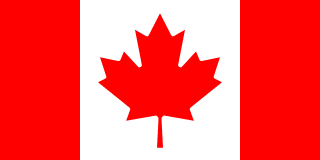
Canada flag today

The Great Flag Debate of 1964

How the Maple Leaf replaced the British Ensign after two years of argument

For most of its history, Canada had no official national flag. The British Red Ensign was used informally for decades, but no flag was ever officially designated. When Prime Minister Lester Pearson announced in 1964 that Canada would finally get its own flag, he triggered one of the most heated national debates in Canadian history โ€” one that nearly destroyed his government.

๐Ÿ“‹ 2 major flag changes
Timeline
1868โ€“1965
Canadian Red Ensign
The Red Ensign โ€” Unofficial but Beloved
The Canadian Red Ensign โ€” a British red ensign with the Canadian coat of arms in the fly โ€” was used as Canada's unofficial flag from 1868 onwards. It flew over government buildings by order-in-council during both World Wars, and Canadian soldiers fought and died under it. But it was never officially legislated as the national flag, partly because French Canadians objected to the prominent Union Jack in the canton, and partly because the Dominion of Canada had never formally separated its flag from Britain's. The question of what Canada's flag should look like was deeply tangled with questions of Canadian identity itself.
1964โ€“1965: The Great Flag Debate
Canada debate
The Great Flag Debate
In 1964, Prime Minister Lester Pearson โ€” who had won the Nobel Peace Prize for his role in resolving the Suez Crisis โ€” announced that Canada would finally have an officially adopted national flag. Pearson personally favoured a design with three maple leaves on a white background, flanked by blue bars representing the Atlantic and Pacific. His main opponent was Conservative leader John Diefenbaker, who argued fiercely for keeping the Union Jack or at least retaining a British connection in the flag. The parliamentary debate lasted for six months โ€” 270 speeches โ€” and threatened to destroy Pearson's minority government. A parliamentary committee eventually recommended the current single-maple-leaf design, which was adopted on 15 February 1965. February 15 is now celebrated as National Flag of Canada Day.
15 February 1965 โ€“ present
Canadian Maple Leaf flag 1965
The Maple Leaf โ€” Instantly Iconic
The current Canadian flag โ€” a red maple leaf on white, flanked by two red bars โ€” was designed by George Stanley, inspired by the flag of the Royal Military College of Canada. The maple leaf has been a Canadian symbol since the 18th century and was already on the Canadian coat of arms. The flag was first raised on Parliament Hill on 15 February 1965 in a ceremony attended by Queen Elizabeth II's representative. The design proved immediately popular despite the controversy that surrounded its adoption, and is now consistently ranked as one of the most recognised and admired national flags in the world.
๐Ÿ’ก
Did you know?
Canada used the Red Ensign informally for nearly 100 years before adopting an official flag. The 1964โ€“65 Flag Debate was so heated that the Speaker of the House had to frequently call for order. The debate lasted longer than the parliamentary debate over conscription during World War II.