πŸ“œ Flag History Europe World WarsNazi eraReunification
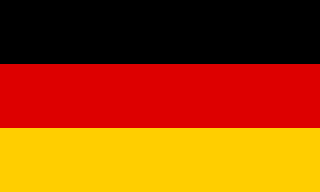
Germany flag today

Black, White, Red β€” and Back Again

Germany's flag has changed five times in 175 years

Germany's black, red and gold flag is a symbol of democracy hard won through revolution, suppression, dictatorship and defeat. The same colours that flew at the 1848 revolutionary barricades were banned under the Nazis, then restored in 1949 as West Germany rebuilt. The two colours that have competed for Germany's soul β€” democratic black-red-gold versus imperial black-white-red β€” tell the entire story of modern German history.

πŸ“‹ 5 major flag changes
Timeline
1848–1866
German Confederation flag 1848
Black, Red, Gold β€” Born in Revolution
The black, red and gold tricolour first appeared as a symbol of German unity and liberal values during the revolutionary Springtime of Nations in 1848. The Frankfurt Parliament β€” an attempt to create a unified, democratic German state β€” adopted these colours, believed to derive from the black uniform with red facings and gold buttons of the LΓΌtzow Free Corps, volunteers who had fought Napoleon. The colours represented the struggle for freedom, unity and equality. When the revolution was crushed and the Frankfurt Parliament dissolved in 1849, the tricolour went with it β€” but it was not forgotten.
1871–1919
German Empire flag 1871 to 1919
The Imperial Black, White and Red
When Prussia's Otto von Bismarck unified Germany in 1871 under Kaiser Wilhelm I, he chose a different tricolour: black, white and red, combining Prussia's black and white with the red and white of the Hanseatic League. This flag served the German Empire through the First World War and became associated with German nationalism and militarism. After Germany's defeat in 1918 and Kaiser Wilhelm II's abdication, the flag of the defeated empire was abandoned.
1919–1933
Weimar Republic flag 1919
Weimar Republic β€” Democracy's Flag Returns
The new Weimar Republic, Germany's first democratic government, restored the revolutionary black, red and gold on 11 August 1919 when the Weimar Constitution came into force. It was a deliberate choice, connecting the new republic to the democratic aspirations of 1848 rather than the militarist empire of 1871–1918. The choice was enormously controversial β€” monarchists, nationalists and the rising Nazi party all preferred the black, white and red of the empire. The Weimar flag became a symbol of the democratic values its opponents were determined to destroy.
1933–1945
Nazi Germany flag 1935 to 1945
The Swastika Flag
When Hitler became Chancellor on 30 January 1933, one of his first symbolic acts was to restore the black, white and red of the German Empire, displayed alongside the Nazi swastika flag. On 15 September 1935, the swastika flag was formally adopted as the sole national flag of Germany. The flag's design β€” a red field with a white disc containing a black swastika β€” had been the Nazi party flag since the early 1920s, deliberately chosen by Hitler for its stark visual impact. After Germany's defeat in May 1945, the Allied Control Council abolished all Nazi symbols as its first act. The swastika flag became illegal.
23 May 1949 – present
Federal Republic of Germany flag 1949
Democracy Restored β€” For Good
West Germany adopted the black, red and gold tricolour on 23 May 1949 with the coming into force of the Basic Law (the Federal Republic's constitution). East Germany initially used the same flag, adding the East German coat of arms in 1959 to distinguish it. The two flags flew on opposite sides of the Iron Curtain until German reunification on 3 October 1990, when the entire reunified nation adopted the West German tricolour. The choice of black, red and gold β€” the colours of revolution and democracy in 1848 β€” was deliberate: a statement that democratic Germany was the legitimate continuation of the Weimar Republic, not the Nazi state.
πŸ’‘
Did you know?
East Germany's flag (1959–1990) was identical to West Germany's except for the East German coat of arms in the centre. West Germany banned the East German flag until 1969, as it was seen as a symbol against reunification.