๐Ÿ“œ Flag History Africa Gaddafi eraRevolutionArab Spring
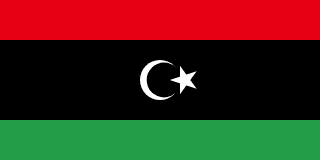
Libya flag today

The World's Only All-Green Flag

How Gaddafi gave Libya a blank green canvas โ€” and why it came back

From 1977 to 2011, Libya flew a flag unlike any other in the world: a single, plain, all-green rectangle with no markings, symbols, or design of any kind. It was the only national flag ever to have just one colour and nothing else. When Gaddafi's regime fell in 2011, the rebels immediately returned to the flag that had been banned for 42 years.

๐Ÿ“‹ 5 major flag changes
Timeline
24 December 1951 โ€“ 1969
Kingdom of Libya flag 1951
Independence โ€” The Kingdom's Flag
When Libya gained full independence on 24 December 1951 โ€” the first African country to gain independence through the United Nations โ€” the new Kingdom of Libya adopted a tricolour of red, black and green with a white crescent and star. The design was by Omar Faiek Shennib, approved by King Idris Al Senussi. The three colours represented Libya's three historic regions: Cyrenaica (black), Fezzan (red), and Tripolitania (green). This flag would be banned for 42 years but never forgotten.
7 September 1969 โ€“ 1 January 1972
Libya flag 1969 to 1972
The Coup โ€” Pan-Arab Colours
On 7 September 1969, 27-year-old army colonel Muammar Gaddafi led a bloodless coup, deposing King Idris while he was abroad for medical treatment. The Kingdom's flag was immediately replaced with the Pan-Arab tricolour of red, white and black โ€” the same colours as Egypt, where Gaddafi's hero Gamal Abdel Nasser had used them as a symbol of Arab nationalism. Libya was now the Libyan Arab Republic.
1 January 1972 โ€“ November 1977
Federation of Arab Republics flag Libya
Federation of Arab Republics
On 1 January 1972, Libya joined Egypt and Syria in the short-lived Federation of Arab Republics, an attempt to create a unified Arab state. The common federation flag was adopted โ€” the same red, white and black tricolour but with a golden Hawk of Quraish (the emblem linking the three nations to the Prophet Mohammed's tribe) in the centre. The federation collapsed when Egypt's President Sadat made peace with Israel, which Gaddafi regarded as a betrayal of Arab unity.
11 November 1977 โ€“ 3 August 2011
Libya all green flag 1977 to 2011
The Green Flag โ€” Alone in the World
In November 1977, furious at Sadat's visit to Jerusalem to meet Israeli Prime Minister Begin, Gaddafi broke from Egypt entirely and adopted a completely plain, all-green flag to represent his political philosophy, outlined in his "Green Book." Green symbolised Islam, the revolution and the natural world. The flag had no design, no symbols, no crescent โ€” nothing. It was the only national flag in history with just one colour and no design at all (briefly matched only by Afghanistan's all-white Taliban flag in 1996โ€“1997). For 34 years, this plain green flag flew over Libya.
3 August 2011 โ€“ present
Libya current flag restored 2011
The Restoration โ€” Rebels Bring Back 1951
When the Arab Spring reached Libya in February 2011 and rebels rose against Gaddafi, one of their first acts was to raise the Kingdom's 1951 flag โ€” banned since 1969 โ€” as the symbol of their movement. As the National Transitional Council took control of Tripoli in August 2011, the original flag was formally restored. On 3 August 2011, the NTC's Constitutional Declaration named the 1951 flag as Libya's national flag. France was the first country to recognise the new government, and the first to allow the restored flag to be raised over the Libyan embassy in Paris.
๐Ÿ’ก
Did you know?
The 1977โ€“2011 all-green Libyan flag was the simplest national flag in history โ€” a single solid colour with no symbols at all. Gaddafi's Green Book explained that green represented Islam, revolution and hope.