πŸ“œ Flag History Asia Ottoman eraAncient historyIslam
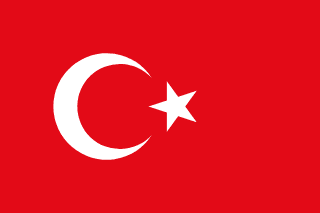
Turkey flag today

The Star and Crescent's Ancient Story

A symbol older than Islam itself

The crescent and star on Turkey's flag is one of the most recognised symbols in the world, widely associated with Islam. But its origins in Turkey predate Islam by over a thousand years β€” the symbol was used in ancient Byzantium before the Ottoman conquest, and the Ottomans adopted it from the city they had taken. The modern Turkish flag formalised the crescent and star in 1844, and it has remained essentially unchanged since.

πŸ“‹ 2 major flag changes
Timeline
Before 330 AD
Byzantine Empire flag
Byzantine Constantinople β€” Before Islam
The crescent moon as a symbol associated with the city of Byzantium β€” later Constantinople, now Istanbul β€” dates to long before the Ottoman conquest or even the rise of Islam. Ancient coins from Byzantium (founded in the 7th century BC) show a crescent, which the city used as its emblem. When Constantine made Byzantium his capital in 330 AD, the crescent continued as a symbol of the city. By the medieval period, the crescent and star together appeared on Byzantine banners and coins. The symbol represented the city, not a religion. When the Ottomans conquered Constantinople in 1453, they adopted β€” and transmitted globally β€” a symbol that was already over a thousand years old.
1299–1844
Ottoman Empire flag
The Ottoman Empire β€” Red and Crescent
The Ottoman Empire used red as its primary colour and various forms of the crescent throughout its long history from 1299 to 1922. The exact design of Ottoman flags varied considerably over the centuries. In 1844, Sultan Mahmud II standardised the Ottoman flag as a white crescent and star on red β€” essentially the design we know today. This was part of a broader administrative reform programme that standardised Ottoman institutions. The star on early versions of the Ottoman flag had eight points; this was later standardised to five.
29 October 1923 – present
Turkish Republic flag 1923
The Turkish Republic β€” A New Nation, The Same Flag
When Mustafa Kemal AtatΓΌrk proclaimed the Turkish Republic on 29 October 1923 following the collapse of the Ottoman Empire, the new republic adopted a version of the Ottoman flag with only minor adjustments β€” the proportions and exact positions of the crescent and star were standardised, but the red field and white crescent-star design remained. This was a deliberate continuity: AtatΓΌrk was radically modernising Turkish society (abolishing the Sultanate, the Caliphate, the Arabic script) but chose to retain the Ottoman flag as a symbol of continuity with Turkish national identity. The Turkish Flag Law of 1936 precisely defined the flag's dimensions and the positions of the crescent and star, and has been unchanged since.
πŸ’‘
Did you know?
A popular legend in Turkey claims that the crescent and star design appeared in a pool of blood after a battle β€” the Bloody Stream story. Historians regard this as a romantic legend rather than historical fact. The symbol's true origins lie in ancient Byzantium, centuries before Islam.