Caribbean
British Virgin Islands Flag
Explore the British Virgin Islands flag history, symbolism, geography and facts — the blue ensign with the Union Jack and the island coat of arms showing Saint Ursula and her lamps, in the north-eastern Caribbean.
Capital
Road Town
Region
Caribbean
Population
31,000
Status & key facts
Political status
Overseas Territory
Self-governing internally
Currency
US Dollar
USD ($)
Sovereign state
United Kingdom
British Overseas Territory
🌡️ Climate: Tropical — warm and humid year-round, cooled by trade winds, with a hurricane season from June to November
Flag symbolism
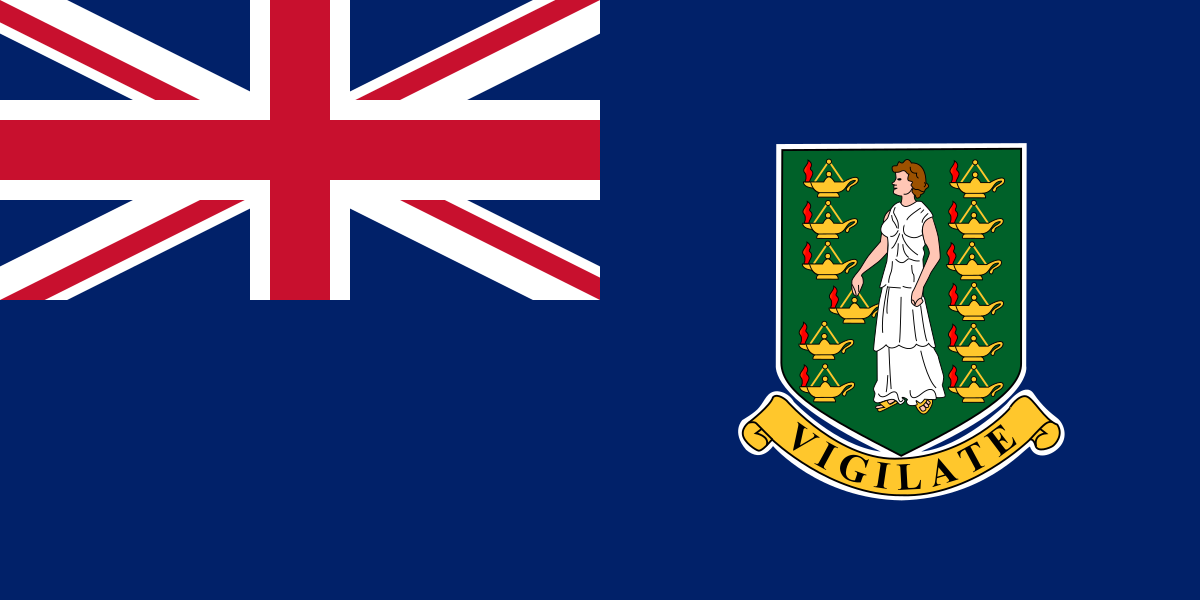
A dark blue "ensign" with the Union Jack in the upper hoist and the coat of arms of the islands in the fly. The arms show Saint Ursula in a green field, holding a golden lamp and surrounded by more lamps, above the motto Vigilate — Latin for "be watchful."
blue ensignSaint UrsulaVigilate
Did you know?
The Virgin Islands were named by Christopher Columbus after Saint Ursula and her legendary company of virgins — and although the territory is British, its everyday currency is the US dollar.
Test your knowledge
Think you know your world flags? Try the FlagAtlas daily challenge, speed quiz, or explore all the territory flags.
📚 Revising for GCSE Geography? Visit our free revision page →
About the British Virgin Islands
The British Virgin Islands (BVI) are a group of islands in the north-eastern Caribbean, part of the wider Virgin Islands archipelago at the edge of the Leeward Islands. The main islands are Tortola, Virgin Gorda, Anegada and Jost Van Dyke, along with many smaller islands and cays.
The BVI are a British Overseas Territory: self-governing in most internal matters, with the reigning British monarch as head of state represented by a Governor, while the United Kingdom is responsible for defence and foreign affairs. Road Town, on Tortola, is the capital. Unusually for a British territory, the local currency is the US dollar.
CapitalRoad Town
RegionCaribbean / Leeward Islands
PopulationAbout 31,000
Area151 km²
CurrencyUS Dollar (USD)
LanguageEnglish
The flag of the British Virgin Islands
The flag is a British Blue Ensign — a dark blue field with the Union Jack in the canton (the upper corner nearest the flagpole) — defaced in the fly with the territory's coat of arms.
What the arms show.
On a green shield stands Saint Ursula, robed in white, holding a golden oil lamp, with eleven further lamps arranged around her. Below runs a scroll bearing the motto Vigilate, "be watchful." The lamps recall the legend of Saint Ursula and her companions.
Like other British territories, the BVI uses the Blue Ensign form for its flag, with the local badge making it unmistakably that of the Virgin Islands.
Saint Ursula and the lamps
When Christopher Columbus reached these islands in 1493, he named them after Saint Ursula and the legend of her eleven thousand virgin companions — Santa Úrsula y las Once Mil Vírgenes — struck by the great number of small islands and cays scattered across the sea.
That legend is why the islands are called "Virgin" Islands, and why the coat of arms depicts Saint Ursula surrounded by lamps, each said to represent her followers. The motto Vigilate continues the theme of watchfulness associated with the saint.
A short history of the British Virgin Islands
The islands were originally settled by Amerindian peoples. Columbus named them in 1493, and over the following centuries they saw Dutch and then English settlement, becoming an English — later British — colony centred on the sugar plantation economy.
In the twentieth century the islands moved gradually toward self-government while remaining under British sovereignty. The BVI adopted the US dollar as its currency in 1959, reflecting close economic ties with the neighbouring US Virgin Islands and the wider dollar economy.
Today the British Virgin Islands are a self-governing British Overseas Territory with a modern economy built on tourism and financial services.
The flag's history
The flag follows the standard pattern used across Britain's overseas territories, personalised with the islands' own arms.
British colonial eraThe islands used British ensigns as part of the wider colonial flag tradition.
1960 — the territory's badgeThe Blue Ensign defaced with the Saint Ursula coat of arms came into use as the flag of the islands.
TodayThe blue ensign with the island arms represents the British Virgin Islands.
Geography of the British Virgin Islands
The British Virgin Islands lie in the north-eastern Caribbean, where the Atlantic Ocean meets the Caribbean Sea. Most of the islands are hilly and volcanic in origin — Tortola rises to Mount Sage — while low-lying Anegada is a flat coral-and-limestone island ringed by reefs.
The islands' neighbours
The US Virgin Islands lie immediately to the west and south-west, and Puerto Rico further west again. The many channels and sheltered bays between the islands have made the BVI one of the world's most popular sailing destinations.
People, language and culture
English is the official and everyday language. The islands' culture is largely Afro-Caribbean, shaped by the era of the plantations and by close links with the neighbouring islands, and expressed in music, festivals and cuisine.
The sea is central to island life: the BVI are famous for sailing and yachting, and the annual regattas and the sheltered waters around the islands draw visitors from around the world.
The British Virgin Islands today
The BVI are governed internally by their own House of Assembly and government, with a Governor representing the Crown. The economy rests mainly on tourism — especially sailing and luxury travel — and on financial services, as the territory is a significant offshore company registration centre.
As a British Overseas Territory, the BVI remain under UK sovereignty for defence and external affairs while running their own domestic affairs.
Explore the British Virgin Islands on FlagAtlas
Continue exploring the British Virgin Islands and the world's flags with these FlagAtlas resources.
Sources & further reading
This page combines the information already present on the FlagAtlas British Virgin Islands page with additional context. Statistics such as population and area are dated because they can change over time.
Encyclopaedia Britannica — British Virgin Islands