Home › Territories & Regions › Greenland
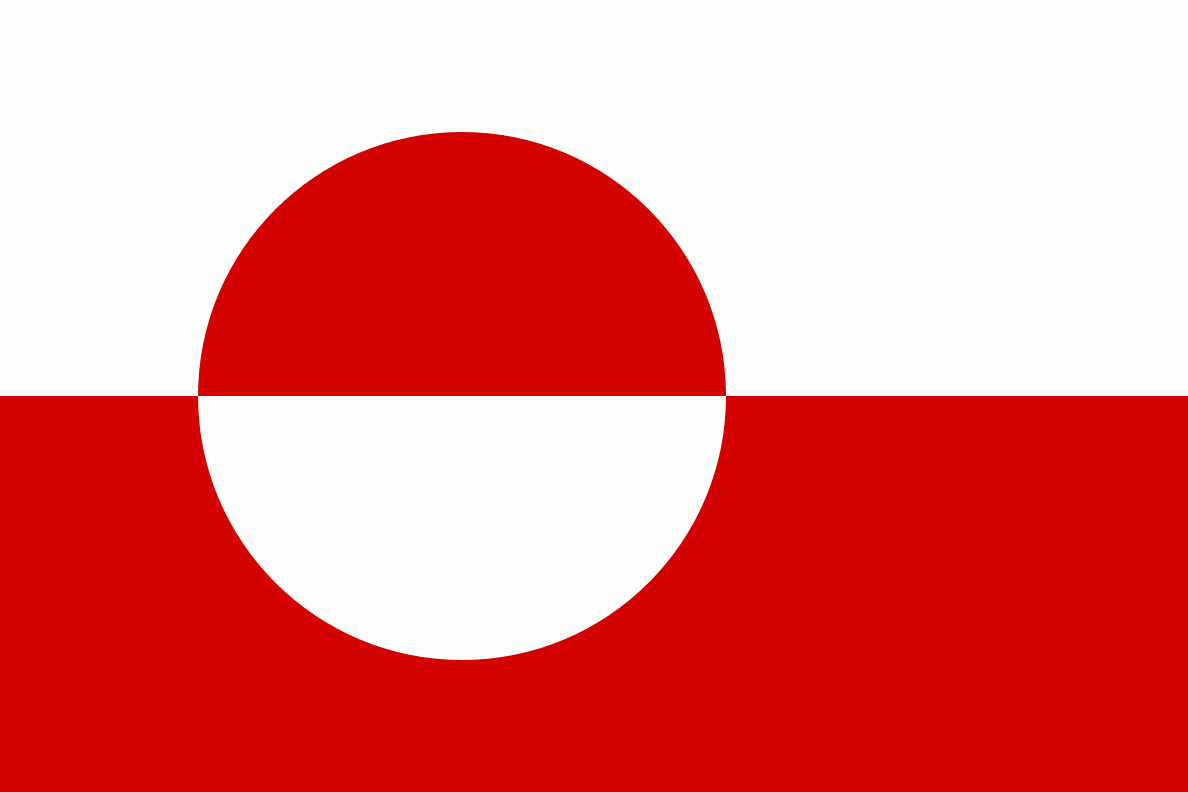
Flag of Greenland
A white-and-red field with an offset two-tone disc — Erfalasorput, the flag of Greenland.
The flag of Greenland, called Erfalasorput (“our flag”), is split horizontally — white on top and red below — with a large disc set towards the hoist. The disc’s colours are reversed against the bands: red in its upper half and white in its lower half. Greenland is a self-governing territory of Denmark and the world’s largest island, lying mostly within the Arctic Circle.
About the Greenland flag
Erfalasorput was designed by the Greenlandic artist and politician Thue Christiansen and was raised for the first time on 21 June 1985, following a public competition. Unlike its Nordic neighbours, Greenland chose a design without a cross. The white is usually read as the ice sheet that covers most of the island and the red as the sun and the ocean, while the two halves of the disc suggest the sun low over the sea and the pack ice — an image of the Arctic landscape.
Greenland flag colours
The Greenland flag uses just two colours — white and red. These are the approximate shades if you're recreating it:
Greenland flag facts
Frequently asked questions
What does the flag of Greenland look like?
A horizontal white-over-red field with a large disc set towards the hoist. The disc's colours are reversed — red on top, white below.
What does Erfalasorput mean?
Erfalasorput means "our flag" in Greenlandic. It was designed by Thue Christiansen and first raised on 21 June 1985.
Is Greenland part of Denmark?
It's a self-governing territory within the Kingdom of Denmark, with its own parliament, language and flag — not a separate UN country, which is why it sits here under Territories & Regions.
What do the colours mean?
White is usually linked to Greenland's ice sheet and red to the sun and sea; the two-tone disc suggests the sun low over the ocean and pack ice.