Africa
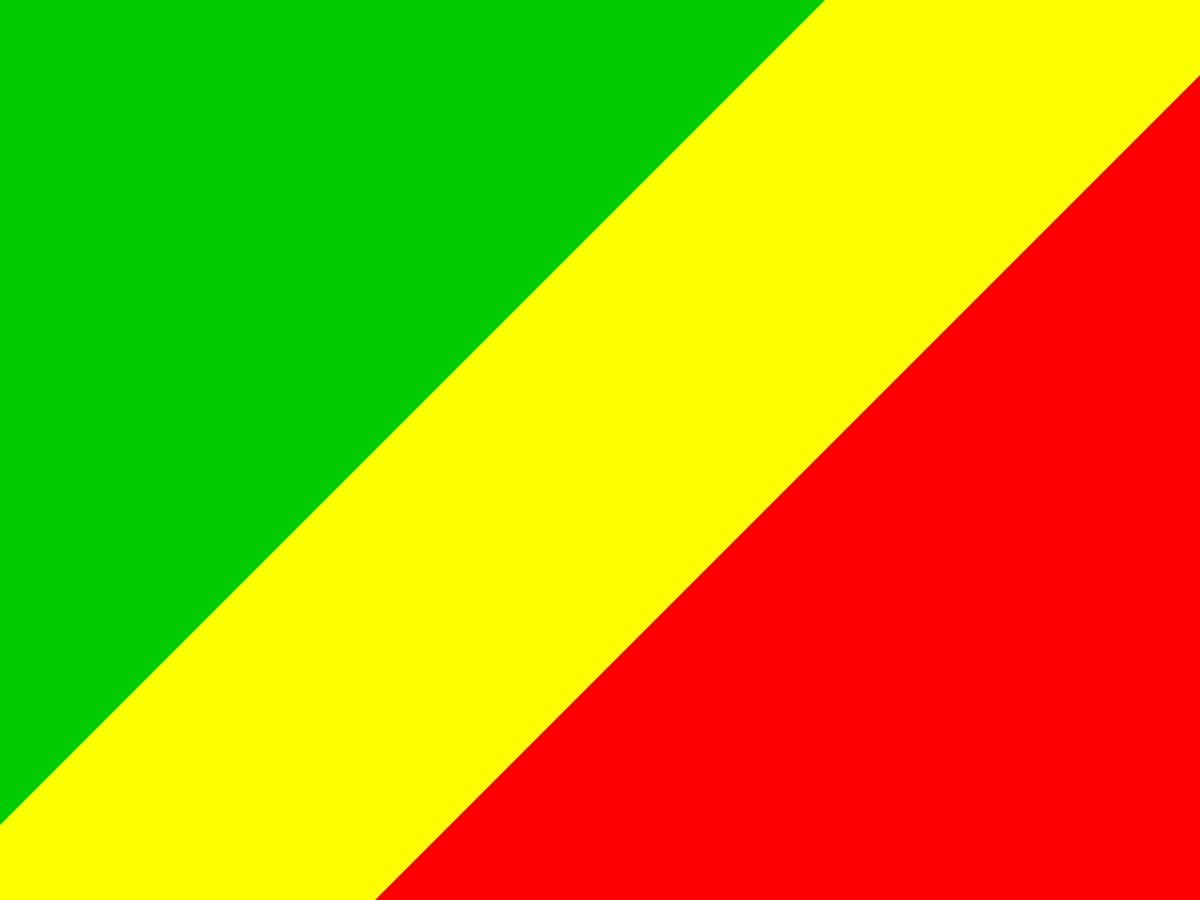
Republic of Congo Flag
Green represents the forests, yellow symbolises friendship and the country's wealth, and red stands for the sacrifice of the country's people.
Capital
Brazzaville
Continent
Africa
Population
5.7 million
Development indicators
GDP per capita
$2,500
USD per year (approx. 2023)
Human Development Index
0.590
Medium development
World Bank income classification
Lower-Middle Income (LMIC)
LMIC
🌡️ Climate: Tropical
Flag symbolism
Green represents the forests, yellow symbolises friendship and the country's wealth, and red stands for the sacrifice of the country's people.
diagonal
Did you know?
Brazzaville and Kinshasa (DR Congo) are the closest pair of capital cities in the world, facing each other across the Congo River.
Test your knowledge
Think you know your world flags? Try the FlagAtlas daily challenge, speed quiz, or explore all Africa flags.
📚 Revising for GCSE Geography? Visit our free revision page →
About the Republic of Congo
The Republic of Congo, often called Congo-Brazzaville to distinguish it from the Democratic Republic of the Congo, is a country in Central Africa. It has a short Atlantic coastline and extensive areas of tropical rainforest in the north.
Brazzaville is the capital. The country is known for its Congo Basin forests, oil industry, wildlife and the Congo River, which forms part of its boundary with the Democratic Republic of the Congo.
CapitalBrazzaville
RegionCentral Africa
PopulationAbout 6 million
CurrencyCFA franc
Official languageFrench
Independence1960
The flag of the Republic of Congo
The Republic of Congo's flag has three main colours arranged in a distinctive diagonal pattern: green at the upper hoist, yellow through the centre and red towards the lower fly.
The current flag was adopted at independence in 1960, although the country has had periods when a different flag was used during its political history.
Green
Green is commonly associated with the country's forests, agriculture and natural environment. The Republic of Congo contains a significant part of the Congo Basin rainforest, one of the world's most important tropical forest regions.
Yellow
The central yellow band is commonly associated with friendship, hope and the country's natural wealth. Its position between green and red gives the flag its characteristic diagonal design.
Red
The red section is traditionally associated with the sacrifices made by the people of Congo and the struggle for national independence.
The diagonal design
The diagonal arrangement makes the Republic of Congo's flag immediately recognisable. It also distinguishes it from the very different horizontal green, yellow and red flag of neighbouring Cameroon and from several other Central African designs.
A short history of Congo
The territory of modern Congo has been home to diverse peoples and kingdoms for centuries. The region later became part of the French colonial empire as French Congo and subsequently French Equatorial Africa.
Congo gained independence in 1960. Its post-independence history included periods of political instability, a one-party Marxist-Leninist state, civil conflict and later a return to multiparty politics.
History timeline
Pre-colonial period — Kingdoms and communitiesThe area was home to many communities and political systems, including the Kingdom of Kongo and other Central African states and societies.
15th–19th centuries — European contactPortuguese and later other European traders established contacts along the Atlantic coast. Trade networks connected the region with the wider Atlantic world.
1880 — French influence expandsFrench explorer Pierre Savorgnan de Brazza negotiated agreements with local rulers along the Congo River, establishing the basis of French control.
1885 — French CongoThe territory became part of the French colonial system in Central Africa.
1910 — French Equatorial AfricaFrench Congo became part of French Equatorial Africa, alongside territories including Gabon, Ubangi-Shari and Chad.
1940 — Free French supportBrazzaville became an important centre for the Free French movement during the Second World War and was later associated with Free France in Africa.
1944 — Brazzaville ConferenceThe Brazzaville Conference was held during the Second World War to discuss the future of French colonial administration in Africa.
1958 — Autonomous RepublicCongo became an autonomous republic within the French Community as the French colonial system began to change.
1960 — IndependenceThe Republic of Congo became independent from France on 15 August 1960.
1963 — Political changeMass demonstrations contributed to the fall of President Fulbert Youlou and the beginning of a new political period.
1969 — People's RepublicCongo became the People's Republic of the Congo under a Marxist-Leninist one-party system.
1977 — President Marien Ngouabi assassinatedNgouabi was assassinated during a period of severe political tension.
1990–1992 — Multiparty transitionThe one-party system was abandoned and a transition towards multiparty politics took place.
1992 — Democratic electionsPascal Lissouba won the country's first multiparty presidential election since the early post-independence period.
1997 — Civil warA major civil conflict broke out in Brazzaville and surrounding areas. Denis Sassou Nguesso returned to power.
2000s — ReconstructionThe country entered a period of reconstruction, supported in large part by oil revenues.
2010 — 50th anniversaryCongo marked 50 years of independence from France.
TodayThe Republic of Congo is a sovereign Central African republic whose economy depends heavily on oil while also containing extensive forest resources.
Brazzaville
Brazzaville is the capital and largest city of the Republic of Congo. It stands on the northern bank of the Congo River, directly opposite Kinshasa, the capital of the Democratic Republic of the Congo.
Brazzaville and Kinshasa
Brazzaville and Kinshasa are famous for being the world's closest pair of national capitals. They face each other across the Congo River, with the two cities forming a huge urban area on opposite banks.
The Congo River
The Congo River is one of Africa's great rivers and the second-largest river in the world by discharge after the Amazon. It is central to transport, fishing, ecosystems and the geography of the two Congos.
Geography
The Republic of Congo has a narrow Atlantic coastline, broad coastal plains, savanna areas and extensive rainforest. The northern part of the country lies within the Congo Basin, one of the world's largest tropical rainforest regions.
The Congo Basin rainforest
The Congo Basin rainforest is one of the planet's most important tropical forest ecosystems. It stores large quantities of carbon and supports exceptional biodiversity, including forest elephants, gorillas and chimpanzees.
Climate
The Republic of Congo has mainly a tropical climate. Much of the country experiences warm temperatures throughout the year, with rainfall patterns varying between the coastal, central and northern regions.
Wildlife
Congo's forests support remarkable wildlife including western lowland gorillas, chimpanzees, forest elephants, okapis in the wider Congo Basin, bongos and numerous bird and fish species.
Gorillas
The Republic of Congo is home to important populations of western lowland gorillas. Protected areas such as Odzala-Kokoua National Park are important for their conservation.
Odzala-Kokoua National Park
Odzala-Kokoua National Park is one of Africa's oldest national parks and covers a huge area of rainforest and savanna. It is particularly important for gorilla and elephant conservation.
Congo's culture
Congo has a rich cultural life shaped by its many ethnic communities, Central African traditions, French colonial history and Christianity. Music, dance, fashion, storytelling and football are particularly important parts of contemporary culture.
Congolese music
The Republic of Congo has played an important role in the development of African popular music. Brazzaville and neighbouring Kinshasa became major centres for rumba and soukous, musical traditions that spread widely across Africa.
Sapeur culture
The Sape, associated with the Société des Ambianceurs et des Personnes Élégantes, is a distinctive fashion culture strongly associated with Brazzaville and Kinshasa. Its followers are known for elaborate, carefully coordinated clothing and an emphasis on elegance.
Congolese food
Food in Congo commonly includes cassava, plantains, rice, fish, peanuts and vegetables. Regional dishes vary according to local ingredients and traditions.
Cassava
Cassava is one of the most important staple crops in the Republic of Congo. It can be processed into flour, fufu-like dishes and other foods and is widely cultivated across Central Africa.
The economy
The Republic of Congo's economy depends heavily on oil production. Other important activities include forestry, agriculture, fishing, mining and services. The country's extensive forests also have major environmental and economic importance.
Oil
Oil is the dominant source of export earnings and government revenue for the Republic of Congo. Production is concentrated largely around the coastal region and offshore fields.
Forestry
The country's large forests support an important timber industry, although sustainable forest management and conservation are major issues because the Congo Basin is globally important for biodiversity and climate regulation.
Congo and the wider world
The Republic of Congo is a member of organisations including the United Nations, African Union, Economic Community of Central African States and Organisation internationale de la Francophonie.
Why is the Republic of Congo flag interesting?
The Republic of Congo's flag is particularly distinctive because its green, yellow and red colours run diagonally rather than horizontally or vertically.
It also has an interesting historical connection to the country's independence in 1960 and the political changes that followed.
Explore the Republic of Congo on FlagAtlas
Continue exploring Congo and the world's flags with these FlagAtlas resources.