Americas
United States Flag
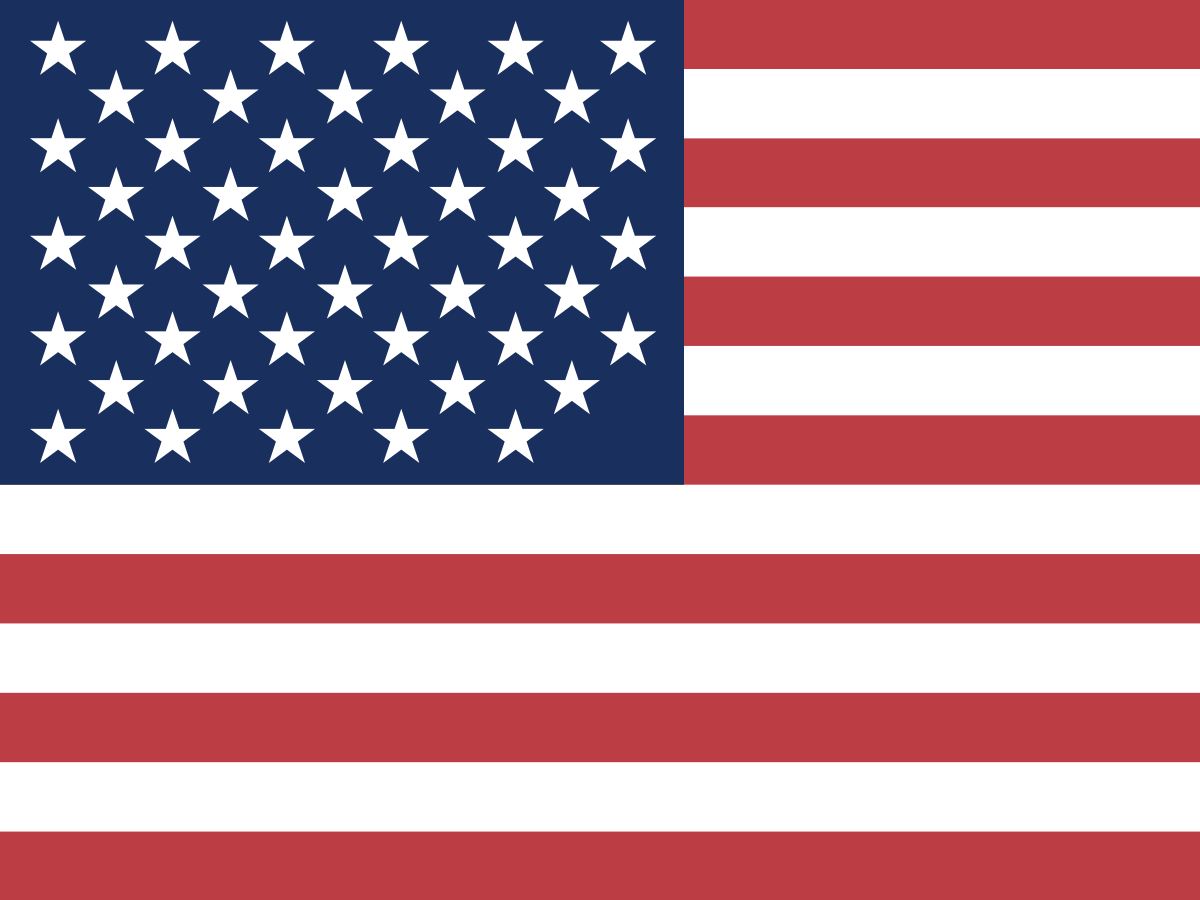
13 stripes represent the original 13 colonies. 50 stars represent the 50 states. Red symbolises hardiness and valour, white stands for purity, and blue represents vigilance and justice.
Capital
Washington D.C.
Continent
Americas
Population
333.0 million
Development indicators
GDP per capita
$76,400
USD per year (approx. 2023)
Human Development Index
0.927
Very High development
World Bank income classification
High Income (HIC)
HIC
🌡️ Climate: Varied — arctic to tropical
Flag symbolism
13 stripes represent the original 13 colonies. 50 stars represent the 50 states. Red symbolises hardiness and valour, white stands for purity, and blue represents vigilance and justice.
starsstripes
Did you know?
The US has the world's largest economy and invented the internet, the airplane, and the iPhone.
Test your knowledge
Think you know your world flags? Try the FlagAtlas daily challenge, speed quiz, or explore all Americas flags.
📚 Revising for GCSE Geography? Visit our free revision page →
About the United States
The United States of America is a federal republic in North America made up of 50 states, the federal district of Washington, D.C., and several territories. It stretches from the Atlantic Ocean to the Pacific Ocean and from the Arctic region of Alaska to the tropical islands of Hawaii.
The United States is one of the world's largest countries by area and population and has had an enormous influence on global politics, economics, science, technology, entertainment and popular culture.
United States at a glance
Capital: Washington, D.C. · Region: North America · Currency: United States dollar (USD) · Official federal language: No official language at federal level; English is predominant · Independence: 1776
The flag of the United States
The US flag consists of 13 alternating red and white stripes and a blue canton containing 50 white stars. The 13 stripes represent the original thirteen colonies that declared independence from Great Britain, while the 50 stars represent the current 50 states.
Flag symbolism
The colours have traditional meanings associated with the Great Seal of the United States: red represents hardiness and valour, white represents purity and innocence, and blue represents vigilance, perseverance and justice. The stars and stripes provide the clearest direct link to the country's history and political structure.
Why are there 50 stars?
There is one star for each state in the United States. The current 50-star flag was adopted in 1960, after Hawaii became the 50th state. The stars are arranged in nine alternating rows of five and six stars.
Why are there 13 stripes?
The 13 stripes represent the original thirteen colonies that declared independence from Britain in 1776. The number of stripes has remained at 13 even as the number of states increased.
Flag history
1777 — Stars and Stripes adoptedThe Continental Congress adopted a national flag with 13 stars and 13 stripes.
1795 — 15 stars and 15 stripesThe flag was changed to include Kentucky and Vermont, but further additions made a permanently increasing number of stripes impractical.
1818 — Return to 13 stripesCongress fixed the number of stripes at 13 while allowing a new star to be added for each new state.
1890 — 43 starsThe flag reflected the admission of several western states during a period of rapid expansion.
1912 — 48 starsThe flag was updated following the admission of New Mexico and Arizona.
1959 — 49 starsAlaska became the 49th state and a 49-star flag was briefly used.
1960 — 50 starsHawaii became the 50th state and the current 50-star flag was adopted.
TodayThe 50-star, 13-stripe flag remains the national flag of the United States.
A short history of the United States
The United States developed from thirteen British colonies on the Atlantic coast. Growing disputes over taxation, representation and imperial authority led to the American Revolution and the Declaration of Independence in 1776.
After independence, the new country expanded westward, developed a federal political system and experienced enormous immigration and industrial growth. The Civil War preserved the Union and ended legal slavery, while the twentieth century saw the United States become a major industrial, military and cultural power.
History timeline
1607 — Jamestown foundedEnglish colonists established Jamestown in Virginia, one of the first permanent English settlements in North America.
1620 — Mayflower and PlymouthEnglish settlers known as the Pilgrims established Plymouth Colony in present-day Massachusetts.
1775 — American Revolution beginsArmed conflict broke out between the colonies and Great Britain.
4 July 1776 — Declaration of IndependenceThe thirteen colonies declared themselves independent from Great Britain.
1781 — British defeat at YorktownThe American victory at Yorktown became a decisive moment in the Revolutionary War.
1787 — US ConstitutionThe Constitutional Convention produced the framework for the federal government.
1789 — George Washington becomes presidentWashington became the first president under the new Constitution.
1803 — Louisiana PurchaseThe United States acquired a huge territory from France, greatly expanding its area.
1846–1848 — Mexican-American WarThe United States gained large areas of territory in the southwest and west.
1861–1865 — Civil WarThe Union defeated the Confederacy and slavery was abolished through the Thirteenth Amendment.
1869 — Transcontinental railroadThe first transcontinental railroad was completed, linking the eastern and western rail networks.
1898 — Spanish-American WarThe United States emerged as an increasingly influential power beyond North America.
1917 — US enters First World WarThe United States joined the Allied powers in the First World War.
1929 — Wall Street CrashThe stock market crash helped trigger the Great Depression.
1941 — Pearl HarborThe Japanese attack on Pearl Harbor brought the United States into the Second World War.
1945 — End of Second World WarThe United States emerged from the war as one of the world's two dominant superpowers.
1961 — First American in spaceAlan Shepard became the first American to travel into space.
1969 — Moon landingApollo 11 astronauts landed on the Moon, with Neil Armstrong becoming the first person to walk on its surface.
2001 — 11 September attacksTerrorist attacks in New York, Washington and Pennsylvania had profound effects on US foreign and domestic policy.
2008 — Financial crisisA major financial crisis began in the United States and developed into a global economic downturn.
2020 — COVID-19 pandemicThe pandemic had major health, economic and social consequences across the country.
Today — United StatesThe US remains a major global power and one of the world's largest economies.
The 50 states
The United States contains 50 states, ranging from Alaska and Hawaii outside the contiguous mainland to the 48 contiguous states between Canada and Mexico. Each state has its own government, constitution and distinctive history and culture.
Washington, D.C.
Washington, D.C. is the national capital and is not part of any state. It contains the White House, Capitol, Supreme Court and many federal government departments and institutions.
New York City
New York City is the largest city in the United States by population and one of the world's leading centres for finance, media, culture and international business. Its landmarks include the Statue of Liberty, Empire State Building and Times Square.
California
California is the most populous US state and has one of the world's largest state economies. It is famous for Hollywood, Silicon Valley, the Pacific coast, agriculture and national parks including Yosemite.
Alaska and Hawaii
Alaska is the largest US state by area and contains some of North America's highest mountains. Hawaii is an island state in the Pacific Ocean and the only US state outside North America geographically.
Geography
The United States contains an extraordinary variety of landscapes, including mountains, deserts, forests, prairies, wetlands, glaciers and coastlines. Major mountain systems include the Rockies and Appalachians, while the Great Plains occupy a vast area of the interior.
Rivers and lakes
The Mississippi and Missouri river systems are among the most important in North America. The Great Lakes form one of the world's largest freshwater systems and border the United States and Canada.
Climate
The US has an exceptionally varied climate, ranging from Arctic conditions in Alaska to tropical conditions in Hawaii and Florida. Tornadoes, hurricanes, droughts, blizzards and wildfires affect different regions during the year.
Wildlife
The country supports a huge range of wildlife including bald eagles, bison, grizzly bears, black bears, wolves, moose, alligators and many marine species. National parks and protected areas play an important role in conservation.
People and culture
The United States has been shaped by centuries of Indigenous cultures, immigration and migration. American culture has had a major global influence through music, cinema, television, literature, fashion, food and sport.
Indigenous peoples
Indigenous peoples lived across North America for thousands of years before European colonisation. Hundreds of distinct nations and communities have their own languages, traditions and histories, and many federally recognised tribes continue to maintain their cultural identities today.
Language
The United States has no official language at the federal level. English is overwhelmingly the most widely spoken language, while Spanish is also spoken by a very large population. Many other languages are used in American communities across the country.
Economy
The US has one of the world's largest economies, with major industries including technology, finance, manufacturing, energy, healthcare, aerospace, entertainment, agriculture and professional services.
Science and technology
The United States has been a major centre for scientific research and technological innovation. American institutions and companies have played important roles in computing, aviation, space exploration, medicine, telecommunications and the internet.
Space exploration
NASA's Apollo programme achieved the first crewed Moon landing in 1969. The US has continued human and robotic space exploration through programmes including the Space Shuttle, the International Space Station and Artemis.
Sport
Popular American sports include American football, baseball, basketball and ice hockey. The National Football League, Major League Baseball, NBA and NHL are major professional sporting organisations, while the US also has a huge tradition in athletics, golf and tennis.
Why is the US flag interesting?
The US flag has evolved alongside the country itself. Its 13 stripes have remained fixed since 1818 while the stars have increased from 13 to 50 as new states joined the Union. It is therefore both a historical symbol and a visual record of the growth of the United States.
Explore the United States on FlagAtlas
Continue exploring the United States and the world's flags with these FlagAtlas resources.