Countries change flags when what the flag stands for changes — a new government, a new nation, or a new sense of identity. Some changes are dramatic (revolutions, independence), some are a return to the past, and some are quiet updates written into law. But because a flag is such a powerful symbol, changing one is rarely simple.
Why change a flag at all?
A national flag is far more than a piece of coloured cloth. It stands in for a government, a political system, a shared history and an idea of who a nation is. When one of those things changes — sometimes overnight, sometimes over decades — a country often decides its flag should change too, so that the symbol on the pole matches the reality on the ground. That's why the great waves of flag changes tend to line up with the great turning points of history: revolutions, the end of empires, and the birth of new states.
Revolution and political change
Revolutions are the clearest trigger of all. A new government usually wants to sweep away the symbols of the old regime and raise something that represents the new order. The colours, emblems and even the meaning of the flag can be rewritten overnight.
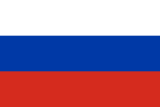
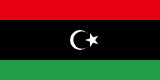
When the Soviet Union collapsed in 1991, Russia dropped the communist red banner with its hammer and sickle and restored the white-blue-red tricolour. After the 1979 revolution, Iran added the stylised emblem and the repeated takbir script to its flag. Iraq's flag was altered repeatedly as power changed hands — the words "Allahu Akbar" were added in 1991 and the script redrawn in 2008. Few countries show this better than Libya: under Gaddafi it flew a plain green flag with no design at all, and when his rule ended in 2011 the country restored the older red-black-green flag of the 1951 kingdom. You can see that whole sequence on our Libyan flag history page.
Independence and decolonisation
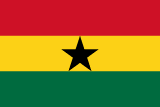
The single biggest source of new flags in modern history was decolonisation. As dozens of countries across Africa, Asia and the Caribbean gained independence — especially in the years around 1960 — nearly every one adopted a new flag to mark the moment and set itself apart from its former ruler. The new designs celebrated local history, culture, geography and hard-won freedom, and many used the pan-African colours of red, gold and green, following Ghana's lead in 1957.
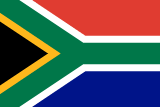
Some kept a link to the past: Australia, New Zealand and Fiji, for example, still carry the Union Jack in the corner (see flags with the Union Jack). Others made a clean break — South Africa unveiled an entirely new flag in 1994 to symbolise the end of apartheid and a new, inclusive nation. We look at this in more depth in flags that changed after independence.
Restoring an older flag
Sometimes a country does the opposite of inventing something new — it reaches back and revives a flag from its past. This usually happens when a particular era is rejected and an earlier national tradition is deliberately brought back to life. Russia's return to the pre-Soviet tricolour in 1991 is one example; Libya's return to its 1951 flag is another. When they broke free of the Soviet Union, the Baltic states — Estonia, Latvia and Lithuania — all restored the flags they had flown during their independence between the world wars. Reviving an old flag is a powerful statement: it says the intervening period was an interruption, and the "real" nation is being restored.
Flags can change without a revolution
Not every change is dramatic. Plenty of flags are altered peacefully, by choice or by paperwork. Canada is the classic case: in 1965, after a long and heated national debate, it retired the old Red Ensign and adopted the now-iconic Maple Leaf — no revolution, just a decision to look more distinctly Canadian. Other changes are smaller still: a new constitution may specify a fresh design (as in Myanmar in 2010), a coat of arms may be simplified, or a country may quietly standardise the exact shades and proportions of a flag it already flies. Malawi even changed its flag in 2010 and then changed it back in 2012 — a reminder that not every redesign sticks.

How a flag change actually happens
There's no single rulebook. Some countries put the decision directly to the people: New Zealand held two referendums in 2015–16 on replacing its flag with a silver fern design, and in the end voters chose to keep what they had. Others change the flag by an act of parliament, a clause in a new constitution, or a government decree. What almost every case has in common is that the flag is decided deliberately and formally — precisely because it matters so much.
A flag can become part of political debate
Because a flag carries so much meaning, changing one is often controversial. Supporters may see a new design as a fresh start and a truer reflection of the nation today; opponents may feel a redesign erases history and heritage. New Zealand's referendums split the country; Fiji announced plans to remove the Union Jack from its flag in 2015 and then quietly shelved the idea. Even successful changes, like Canada's Maple Leaf, were fiercely argued over at the time before becoming beloved national symbols. The debate itself is a sign of how much a flag means — nobody argues that passionately over a logo.
Frequently asked questions
Which country has changed its flag the most?
Afghanistan is the usual answer, with well over a dozen different flags across the 20th and 21st centuries as regimes changed. See our guide to the most changed flags in history.
Has a country ever changed its flag and then changed back?
Yes — Malawi changed its flag in 2010 and reverted in 2012. Russia and the Baltic states also restored much older flags after the Soviet era.
Did New Zealand change its flag?
No. It held referendums in 2015 and 2016 but voted to keep the existing flag, by roughly 57% to 43%.
Why did Canada change its flag?
To have a distinctive national symbol of its own. The 1965 Maple Leaf replaced the Red Ensign, which still carried the Union Jack.
Do countries need a referendum to change their flag?
Not always. Some hold a referendum, others change the flag by parliament, constitution or decree — it depends on each country's laws.