A country can have different official flags for different purposes: a civil flag for citizens, a state flag for the government (often with a coat of arms), naval ensigns for ships, and royal or presidential standards for the head of state. They're not mistakes or variations — each is an official flag with its own specific use.
The three main types: civil, state and war
Vexillologists (flag experts) often sort a country's flags into three families by who uses them: the civil flag flown by ordinary people, the state flag used by government bodies, and the war flag used by the military. Many countries make all three identical — one flag for everyone. But some give each a distinct design, which is how a single nation ends up with several official flags at once.
Civil flags vs state flags
The most common split is between a plain civil flag and a more elaborate state flag. The state version typically adds a coat of arms or emblem to mark government authority, while the civil version leaves it off. Spain is the textbook example:
plain red-yellow-red
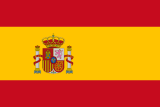
with the coat of arms
Citizens can fly the simple red-yellow-red, while the version with the national arms is the one you'll see on government buildings and official documents. Peru, Bolivia, Venezuela and several other countries make the same distinction — plain for the public, arms-bearing for the state.
Naval flags and ensigns
Ships have their own flag traditions, and ensigns — the flags flown at a vessel's stern — are often different from the national flag on land. The United Kingdom has a famous set of three:
Japan shows the same idea in a different way. Its national flag is the plain Hinomaru sun disc, but its maritime self-defence force flies a separate naval ensign — the Rising Sun, with red rays added around the disc:

the Hinomaru
the Rising Sun
Royal and presidential standards
Many countries also have a flag for the person at the top. A royal standard is the monarch's personal flag — in the United Kingdom it shows the royal arms (the lions of England, the lion of Scotland and the harp of Ireland) rather than the Union Jack, and is flown wherever the sovereign is present. Notably, it is never lowered to half-mast, because the monarchy itself continues even between reigns. Republics often have an equivalent presidential standard that marks the presence of the head of state. These flags identify an office or person, not the country as a whole.
One country, several flags: the UK
Sometimes "more than one flag" simply means a country is itself made up of nations. The United Kingdom flies the Union Jack, but England (St George's Cross), Scotland (the Saltire), Wales (the Red Dragon) and Northern Ireland each have their own flags too — which is why you'll see different flags at, say, different sporting events. We unpack how those combine in the history of the Union Flag's colours.
Why the distinction matters
All of this means that when you spot a flag that looks almost like a country's familiar national flag — but with an emblem added, or a different background — it's usually not an error. It's a specific official flag doing a specific job: telling you whether you're looking at a citizen, a government, a warship or a head of state. On FlagAtlas we generally show each country's main national flag, with these variants noted where they're especially notable in the Flag Explorer.
Frequently asked questions
What is the difference between a civil flag and a state flag?
A civil flag is for citizens (often plainer); a state flag is for the government and usually adds a coat of arms. Spain's plain vs arms-bearing flags are the classic example.
What are the Red, White and Blue Ensigns?
The UK's naval ensigns: red for merchant ships, white for the Royal Navy, blue for government and reserve vessels — each with the Union Jack in the corner.
Why does Japan have two flags?
The Hinomaru is the national flag; the Rising Sun, with added rays, is the naval ensign used by its maritime force.
What is a royal standard?
The monarch's personal flag, showing the royal arms and flown where the sovereign is present. It's never flown at half-mast.
Does the United Kingdom have more than one flag?
Yes — the Union Jack, the four constituent-country flags, shipping and military ensigns, and the royal standard.