A new flag is often the very first act of a newly independent country — a visible break from colonial rule and a symbol built from its own history, culture and hopes. Some nations design something entirely new; some keep a link to the past; and some go on to change their flag again as the years pass.
A flag as the first act of sovereignty

For a new nation, few moments are as charged as the one when the old flag comes down and the new one goes up — often at the stroke of midnight on independence day. When India became independent in 1947, it raised its saffron, white and green tricolour with the navy Ashoka Chakra at its heart, replacing both the British flag and the spinning-wheel emblem of the earlier independence movement. A flag is the most immediate, visible expression of sovereignty a country has: instantly, unmistakably, this land now rules itself.
Colours from local history and pre-colonial roots
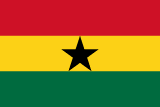
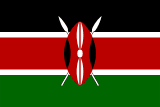
Freed from colonial rule, new nations reached for colours and symbols that were truly their own. The most influential choice was the set of pan-African colours — red, gold and green — inspired by Ethiopia, the one African country never colonised. Ghana adopted them in 1957 as the first sub-Saharan colony to win independence, adding a black star as a symbol of African freedom. Dozens of countries followed. Others reached further back, drawing on pre-colonial cultures and local emblems: Kenya's flag centres a traditional Maasai shield and spears, Sri Lanka's a golden lion, India's the ancient Ashoka wheel. The message was the same — our heritage, not the coloniser's.
The great wave: the "Year of Africa"
The single biggest burst of new flags came in a rush around 1960, remembered as the "Year of Africa", when 17 African nations gained independence in a single twelve-month span. Across the continent, colonial ensigns were retired and replaced with fresh designs in the space of just a few years. It was the largest wave of new national flags in history, and it's why so many of the world's flags date from the late 1950s and 1960s. Many of these newly independent states are also among the world's more recent countries.
Keeping parts of the past

Independence didn't always mean erasing every trace of the old order. Some countries deliberately kept a link to their shared history. Australia, New Zealand, Fiji and Tuvalu all retained the Union Jack in the corner of their flags, choosing continuity over a clean break — a decision we explore in flags with the Union Jack. Others kept a former ruler's colours or an ensign-style layout, at least for a time. Whether to break completely or keep a thread of the past is one of the first big choices a new nation makes.
Flags can change again
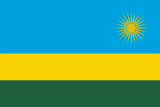
The flag raised on independence day isn't always the final word. As governments change and national ideas develop, many countries redesign their flag again years later. Rwanda adopted an entirely new flag in 2001 to break from a previous design that had become associated with the era of the 1994 genocide; South Africa unveiled its famous multicoloured flag in 1994 to mark the end of apartheid; and countries such as Myanmar have changed their flags well into the 21st century. For the fuller picture of why flags change at all, see why do countries change their flags?
Frequently asked questions
Why do countries change their flag after independence?
To assert sovereignty and make a visible break from colonial rule, with a design reflecting their own history and people.
What are the pan-African colours?
Red, gold and green, inspired by Ethiopia. Ghana adopted them first in 1957 and many newly independent African nations followed.
Which countries kept the Union Jack after independence?
Australia, New Zealand, Fiji and Tuvalu all kept it in the corner of their flags.
Did India change its flag at independence?
Yes — in 1947 it adopted the saffron-white-green tricolour with the Ashoka Chakra, replacing the British flag and the earlier spinning-wheel design.
Why did Rwanda change its flag in 2001?
To break from the previous flag associated with the era of the 1994 genocide, adopting a new design symbolising unity and a fresh start.