Countries change their official names for politics, language, or identity — to break from a colonial-era name, to resolve a dispute with a neighbour, or to have the world adopt their own spelling. The name usually stays even when the flag doesn't, and vice versa.
Türkiye (from Turkey, 2022)
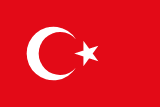
One of the most recent changes: in 2022 the Turkish government formally asked the United Nations and other countries to use Türkiye — the country's own spelling — instead of the English "Turkey". The UN adopted it almost immediately. The government wanted a name that better reflected the nation's identity and heritage, and pointedly avoided the English word's overlap with the bird and its other everyday meanings.
Eswatini (from Swaziland, 2018)
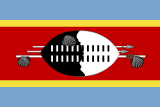
In 2018, King Mswati III announced that Swaziland would henceforth be the Kingdom of Eswatini — timed to the 50th anniversary of independence. Eswatini means "land of the Swazis" in the Swazi language, so the change both shed a half-colonial hybrid name and restored the nation's own word for itself. A happy side effect: it ended decades of confusion between Swaziland and Switzerland.
North Macedonia (from Macedonia, 2019)
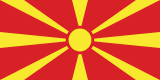
This change settled a dispute nearly three decades old. After independence, the country was known internationally by the awkward title "the former Yugoslav Republic of Macedonia," because Greece objected to the plain name Macedonia — the name of a northern Greek region with its own proud history. The 2018 Prespa Agreement resolved it: in 2019 the country became the Republic of North Macedonia, and in return Greece dropped its objections to its neighbour joining international organisations.
Shedding a colonial name
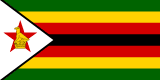
For many nations, renaming was a key act of independence — throwing off a name imposed by a coloniser. Zimbabwe took its name in 1980 from the ancient stone city of Great Zimbabwe, replacing "Rhodesia," which had been named after the British colonialist Cecil Rhodes. It was far from alone:
- Ceylon → Sri Lanka 1972
- Gold Coast → Ghana 1957
- Upper Volta → Burkina Faso 1984
- Dahomey → Benin 1975
- Rhodesia → Zimbabwe 1980
Many of these countries also adopted brand-new flags at the same moment — a double break with the past, which we cover in flags that changed after independence.
Asking the world to use the local name
Some changes are less about a new identity than about getting the rest of the world to use the right name — the one the country already uses at home. Persia asked to be known internationally as Iran in 1935; Siam became Thailand in 1939; Ivory Coast asked that its French name Côte d'Ivoire be used untranslated in 1986. More recently the Czech Republic adopted the shorter Czechia as its official one-word name in 2016, and the Netherlands quietly retired "Holland" as an official nickname in 2020 (Holland is really only two of its twelve provinces).
Politically charged renamings
Not every change is universally accepted. When Burma's military government renamed the country Myanmar in 1989, many governments and citizens continued to use "Burma" as a stance against the regime, and both names are still heard today. And the vast central-African nation has swung back and forth: it was the Republic of the Congo, became Zaire under Mobutu in 1971, then reverted to the Democratic Republic of the Congo in 1997. A name, like a flag, can be a political statement in its own right.
Why a country's name matters
A name carries history, language and self-image every bit as much as a flag does. Shedding a coloniser's label, choosing your own spelling, or compromising on a name to keep the peace with a neighbour are all ways a nation tells the world who it is. That's why these changes so often happen alongside a change of flag — and why they're rarely just administrative. On FlagAtlas you'll usually find countries under their current names, with former names noted in their Flag Explorer pages.
Frequently asked questions
Why did Turkey change its name to Türkiye?
In 2022 it asked the UN and others to use Türkiye, its own spelling, to better reflect its identity and avoid the English word's other meanings.
Why did Swaziland change its name to Eswatini?
In 2018, to use its own Swazi-language name ("land of the Swazis"), shed a colonial-era name, and reduce confusion with Switzerland.
Why did Macedonia become North Macedonia?
The 2019 Prespa Agreement with Greece resolved a long dispute over the name Macedonia, which is also a Greek region.
What was Zimbabwe called before?
Rhodesia, named after Cecil Rhodes. It became Zimbabwe at independence in 1980.
Which countries have changed their names?
Recent: Türkiye, Eswatini, North Macedonia. Historic: Ceylon→Sri Lanka, Persia→Iran, Siam→Thailand, Burma→Myanmar, Upper Volta→Burkina Faso, Rhodesia→Zimbabwe.