HomeGuides › Most Changed Flags

📚 Flag History

The Most Changed National Flags in History

Some countries keep the same flag for centuries. Others redraw it again and again — after every revolution, coup, constitution or change of identity. These are the nations whose flags have changed the most, and the upheavals behind each redesign.

1. Afghanistan Most in the world

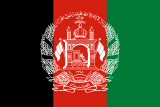
Flag of Afghanistan
Today

No country has changed its flag more often. By most counts Afghanistan has flown around twenty different national flags in little more than a century — including seven changes in just four years (1926–1930), some lasting only months.

Monarchy, republic, a Soviet-backed socialist state, mujahideen factions, the Taliban and the republic again have each raised their own banner. A black-red-green tricolour recurs through many of the designs; the internationally recognised Republic flag still uses it, while the Taliban's white flag bearing the shahada has flown inside the country since 2021.

Read more: Why has Afghanistan had so many different flags? →
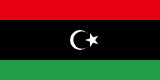
2. Libya Only solid-colour flag

1977–2011
Flag of Libya
Today

Home to the most extreme design in flag history. In 1977, Muammar Gaddafi introduced a plain green flag — the only national flag ever to be a single solid colour, with no emblem, star or stripe at all.

Before that came the monarchy's flag and Arab-nationalist designs. When Gaddafi fell in 2011, Libya restored its 1951 independence-era flag — red, black and green with a white crescent and star.

3. Iraq Regime by regime

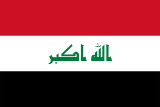
Flag of Iraq
Today

Iraq's flag has tracked its politics almost step for step — from the monarchy through Ba'athist Arab-nationalist designs to post-2003 revisions, the red-white-black tricolour has repeatedly gained and lost stars and script.

The Arabic Takbir (“God is great”) was added in 1991 — reportedly in Saddam Hussein's own handwriting — then redrawn in green Kufic script in 2008, the version used today.

4. Russia Three eras

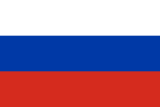
Flag of Russia
Today

Three flags for three eras. The imperial white-blue-red tricolour gave way to the Soviet red banner — with its gold hammer, sickle and star — after the 1917 revolution.

When the USSR dissolved in 1991, Russia returned to the pre-revolutionary tricolour it flies today.

5. Germany Five+ flags

Flag of Germany
Today

Few flags mirror a nation's upheavals so closely: the imperial black-white-red, the black-red-gold of the Weimar Republic, the Nazi swastika banner, the separate flags of East and West Germany, and — since reunification in 1990 — the black-red-gold once more.

6. South Africa 1994 redesign

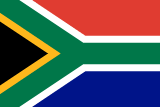
Flag of South Africa
Today

In 1994, at the end of apartheid, South Africa adopted an entirely new flag — the distinctive “Y” design in six colours — replacing the orange-white-blue that had flown since 1928. It remains one of the very few national flags with six colours.

7. Iran 1979 revolution

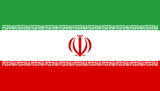
Flag of Iran
Today

The 1979 Islamic Revolution transformed Iran's flag. The green-white-red tricolour stayed, but a stylised emblem representing the word “Allah” replaced the old Lion and Sun, and the Takbir was repeated 22 times in Kufic script along the edges of the central band.

8. Myanmar New flag, 2010

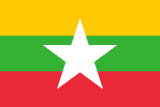
Flag of Myanmar
Today

Formerly Burma, Myanmar replaced its socialist-era flag in 2010 with a completely new yellow-green-red tricolour bearing a large white star — part of a wider break from decades of overt military symbolism.

9. Egypt Ever-changing emblem

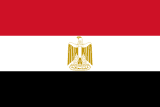
Flag of Egypt
Today

Egypt has revised its flag repeatedly — especially the emblem at its centre. The 1952 revolution swept away the monarchy's green flag; the red-white-black Arab Liberation colours followed, carrying in turn two green stars (as the United Arab Republic), the Hawk of Quraish, and finally the golden Eagle of Saladin used today.

10. Venezuela Stars added

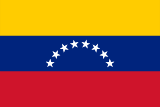
Flag of Venezuela
Today

Venezuela's yellow-blue-red tricolour has stayed constant, but the details keep changing: stars have been added over the years — reaching eight in 2006 — and the coat of arms has been repeatedly redrawn.

11. Rwanda Rebranded in 2001

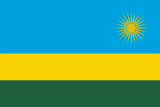
Flag of Rwanda
Today

Rwanda changed its flag in 2001 to make a deliberate break with the past. The earlier red-yellow-green flag had become associated with the 1994 genocide, so a new blue-yellow-green design with a golden sun replaced it.

Why do flags change so often?

Almost every change on this page follows the same trigger: a shift in who holds power, or in how a nation sees itself. Revolutions, independence, new constitutions, unions and break-ups all tend to bring a new flag, because a flag is the quickest way for a new order to announce itself. Countries that stay politically stable — like Denmark, or the United States with its single evolving design — barely change their flags at all.

Frequently asked questions

Which country has changed its flag the most?

Afghanistan — more than any other country, with around twenty different national flags in little more than a century, including seven changes between 1926 and 1930.

What is the only national flag that was a single solid colour?

Libya's flag from 1977 to 2011, under Gaddafi, was plain green with no design at all — the only all-one-colour national flag in history.

Why do countries change their flags?

Usually after major political change — revolutions, independence, new governments or constitutional reform. See our guide on why countries change their flags.

When did South Africa change its flag?

In 1994, at the end of apartheid, replacing the 1928 orange-white-blue design with the current six-colour flag.

Which countries have changed their flags most recently?

Recent major changes include Afghanistan (2021), Iraq (2008), Myanmar (2010) and Rwanda (2001).

Related guides

Flag images via flagcdn.com. Figures reflect widely cited flag histories; sources vary slightly on exact counts.