The American Flag
From thirteen revolutionary colonies to fifty stars — the story of the Stars and Stripes.
Before the Stars and Stripes
Before independence, the American colonies used a variety of British and colonial flags. One important early design was the British Union Flag, while colonial communities also used their own local symbols.
During the growing dispute with Britain, flags became increasingly important as political symbols. The colonies needed a design that could represent their growing sense of unity and, eventually, their independence.
The American Revolution
The American Revolution transformed the meaning of flags in the thirteen colonies. As resistance to British rule developed into a war for independence, flags became a way of showing support for the revolutionary cause.
There was no single design used by everyone at first. Different flags appeared during the early years of the conflict, reflecting the fact that the United States was still being formed. The eventual Stars and Stripes emerged from this period of experimentation and political change.
The thirteen stripes
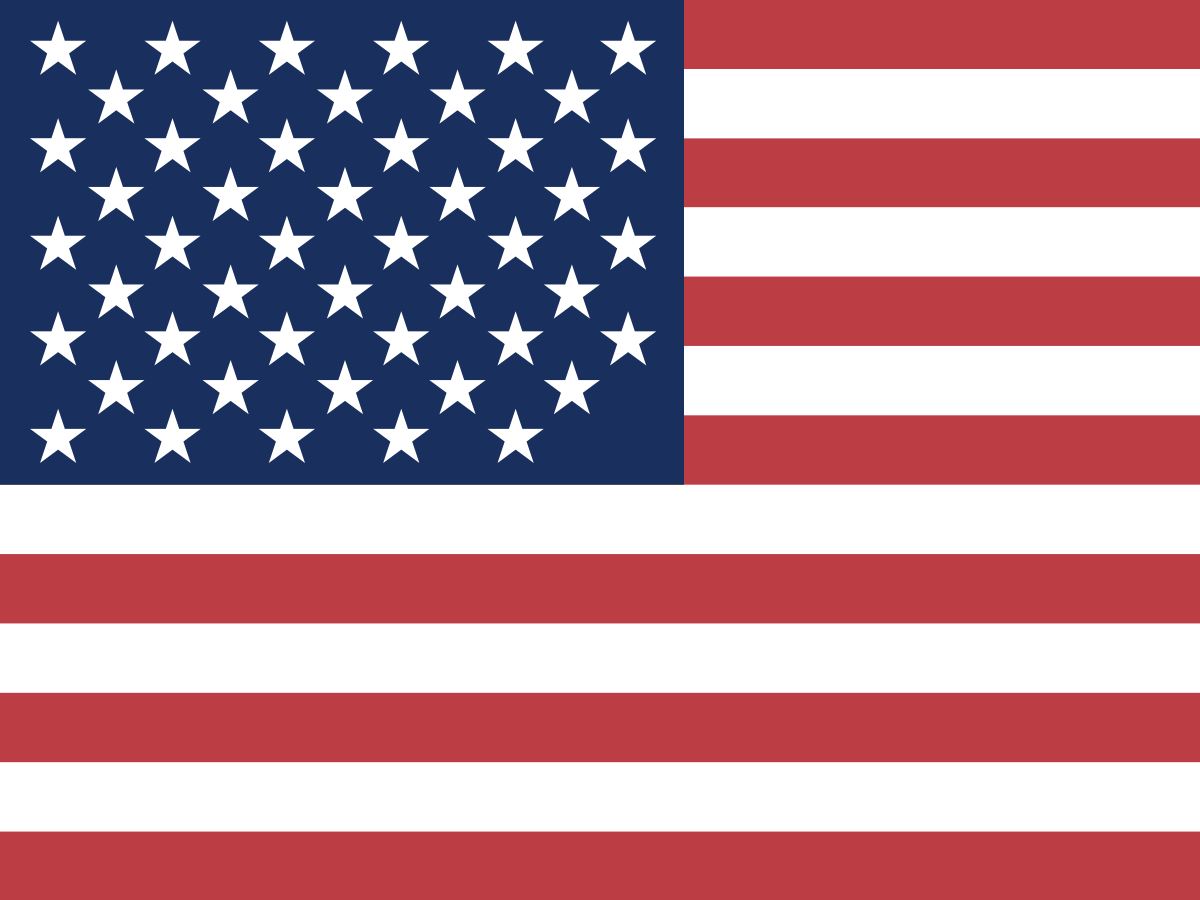
The thirteen stripes represent the original thirteen colonies that became the first United States. The stripes alternate red and white and remain unchanged in number on today's flag.
This is an important part of the flag's design because the United States now has fifty states, but the thirteen stripes continue to preserve a visual connection with the country's beginnings.
1777 — the first Stars and Stripes
On 14 June 1777, the Continental Congress adopted the first official national flag. It specified thirteen alternating red and white stripes and thirteen white stars on a blue field, representing a new constellation.
The resolution did not specify exactly how the thirteen stars should be arranged. As a result, early American flags appeared with different star patterns. A circular arrangement became one of the best-known early designs.
14 June is now remembered as Flag Day in the United States.
Why the stars changed
The stars changed as new states joined the Union. In 1795, Vermont and Kentucky were represented by two additional stars, and the flag also temporarily had fifteen stripes.
In 1818, Congress established the basic system used today: thirteen stripes for the original colonies and one star for each state. A new star would be added on the following 4 July after a new state joined the Union.
From that point onwards, the stars became a particularly clear visual record of the growth of the United States.
The 50-star flag
Alaska became the 49th state in 1959, followed by Hawaii as the 50th. President Dwight D. Eisenhower issued the orders establishing the arrangements for the 49- and 50-star flags.
The 50-star design was officially adopted on 4 July 1960. It remains the official flag of the United States today.
What do the colours mean?
Red, white and blue later acquired traditional symbolic meanings in descriptions of the American flag. Red is commonly associated with courage or valour, white with purity or innocence, and blue with vigilance, perseverance and justice.
However, the original 1777 resolution did not assign these detailed meanings to the colours. The historical record is clearer about what the thirteen stripes and thirteen stars represented than about a formal symbolic meaning for each colour.
The flag and American identity
The Stars and Stripes has become a powerful symbol of the United States. It appears at government buildings, schools, military ceremonies, sporting events and national celebrations.
Its importance has also grown through historic events. The large fifteen-star flag flown over Fort McHenry during the Battle of Baltimore in 1814 inspired Francis Scott Key to write the poem that later became the national anthem, The Star-Spangled Banner.
Today the flag combines continuity and change: the thirteen stripes look back to the original colonies, while the fifty stars represent the modern states.
American Flag Timeline
During the early Revolutionary War, the Continental Army used the Grand Union Flag. It combined thirteen red and white stripes with the British Union in the canton and was an important step toward the later Stars and Stripes.
The Continental Congress adopted a national flag of thirteen alternating red and white stripes and thirteen white stars on a blue field.
Vermont and Kentucky joined the Union, and the flag was changed to fifteen stars and fifteen stripes. This was the design later carried by the famous Star-Spangled Banner.
The fifteen-star, fifteen-stripe flag flew over Fort McHenry during the Battle of Baltimore. Seeing it still flying inspired Francis Scott Key to write his famous poem.
Congress returned the flag to thirteen stripes and established the principle of adding one star for every new state. This created the basic system that continues today.
An executive order established official proportions and a standard arrangement of the stars in six horizontal rows of eight. Before this, star arrangements and flag proportions could vary.
Alaska became the 49th state and Hawaii the 50th. The final two changes to the number of stars led directly to the modern 50-star flag.
The current 50-star design officially came into use. It has remained the national flag of the United States ever since.