Good flag design aims for something simple, meaningful and instantly recognisable. The best flags start from a country's identity, use just two or three colours and a bold shape, avoid words and fiddly detail, and work at any size — from a giant stadium banner to a tiny phone emoji.
It starts with identity
Every flag begins not with a shape but with a story. Designers start from what a country wants to say about itself: its history, geography, political tradition, faith, culture or national symbols. A rising sun for a new dawn, a colour for a founding movement, a star for each region — the meaning comes first, and the visual design is built to carry it. This is why two flags can look similar yet mean completely different things, as we explore in what the colours on flags mean.
Keep it simple
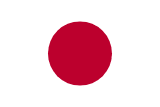
The single most important rule of flag design is simplicity: a flag should be simple enough that a child can draw it from memory. A flag is usually seen at a distance, moving in the wind, or shrunk to a tiny icon, and a clean design survives all of that. Japan's single red disc, or a bold pair of stripes, reads instantly; a busy design turns to mush. The world's clearest flags are almost always its simplest — the subject of our guide to the world's simplest flags.
Use two or three colours
Strong flags stick to a small palette — usually two or three colours — drawn from a meaningful source: historical banners, a political movement, natural features, religious tradition or heraldry. A limited palette keeps the flag bold and reproducible, and high contrast between the colours makes the design easy to pick out from far away. Add too many colours and the flag becomes harder to make consistently and less striking on the pole.
Avoid lettering and seals

Designers are strongly advised to avoid words and detailed seals or coats of arms. Lettering can't be read at a distance or on a flapping flag, can't be mirrored so it reads correctly on both sides, and doesn't translate across languages. A finely detailed seal blurs into an unreadable smudge at small sizes. Flags that break this rule tend to be the hardest to recognise and draw — as the world's most complicated flags show, and as our look at flags with writing explains.
Be distinctive — or deliberately related
A flag should be distinctive enough not to be confused with another country's — or, if it borrows a shared palette, it should do so on purpose to signal a real connection. The pan-African, pan-Arab and pan-Slavic colour families are deliberate: they announce a shared history. Accidental lookalikes, on the other hand, are a design pitfall, which is how we end up with near-twins like Chad and Romania (see why some flags are almost identical).
The five principles of good flag design
These ideas are often boiled down to five short rules, popularised by the vexillologist Ted Kaye in the booklet Good Flag, Bad Flag:
- Keep it simple — a child should be able to draw it from memory.
- Use meaningful symbolism — the images and colours should relate to what they stand for.
- Use two or three basic colours — from a limited, contrasting palette.
- No lettering or seals — never use writing or a detailed coat of arms.
- Be distinctive or be related — avoid copying, but use similarities to show connections.
Proportions and shape
Beyond the design itself, every flag has official proportions that affect how it looks on the pole. The most common ratio is 2:3 (height to length), though many flags use 1:2 and other ratios. A few countries make their shape part of their identity: Switzerland and Vatican City are square, Qatar has an unusually long 11:28 ratio, and Nepal is famously the only non-rectangular national flag. Those exceptions feature in our guide to the most unusual flags.
How a new flag actually gets chosen
So who decides? A new national flag is typically settled in one of three ways: a public design competition, a government or expert commission, or a national referendum. Canada ran a famous public process — the "Great Flag Debate" — before adopting the Maple Leaf in 1965. South Africa's 1994 flag was designed quickly by the state herald for a nation in transition. And New Zealand put alternative designs to the public in referendums in 2015 and 2016 (voters chose to keep the existing flag). However it's done, the choice is always deliberate and formal, because a flag is meant to last for generations.
Frequently asked questions
What makes a good flag design?
Simplicity above all, plus meaningful symbolism, two or three colours, no lettering or seals, and a distinctive look.
What are the five principles of flag design?
Keep it simple; use meaningful symbolism; use two or three basic colours; no lettering or seals; be distinctive or be related. They were popularised by Ted Kaye's "Good Flag, Bad Flag".
Why shouldn't flags have words on them?
Words can't be read at a distance, can't be mirrored to read correctly on both sides, don't translate, and can't be drawn from memory.
How is a new national flag chosen?
Usually by a public competition, an expert commission, or a referendum — as with Canada's 1965 contest and New Zealand's 2015–16 referendums.
What is the most common flag proportion?
2:3 is the most common; others use 1:2, Switzerland and the Vatican are square, and Nepal isn't even rectangular.