Denmark's Dannebrog is the flag most often called the world's oldest, and Guinness World Records agrees it's the oldest continuously used national flag. But Scotland, Austria and Latvia all have ancient claims of their own — and the "right" answer depends entirely on how you define "oldest".
Denmark's Dannebrog — the usual champion
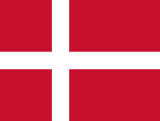
Denmark's red flag with its white, off-centre cross is the one that usually takes the title. Legend says the Dannebrog fell from the sky during a battle in Estonia on 15 June 1219, rallying the Danes to victory — a date still marked as Flag Day. Legend aside, the flag appears in reliable written and painted records from the 14th century onwards, which is why Guinness World Records lists it as the oldest continuously used national flag in the world. Its distinctive offset cross went on to become the model for every Nordic flag, as we cover in why flags have crosses.
Scotland's Saltire

Scotland's white diagonal cross on blue has an even older legend: it's said that in the year 832, before a battle at Athelstaneford, white clouds formed the shape of St Andrew's cross across the blue sky, and the Scots duly won. That would make it centuries older than the Dannebrog — but as an actual, documented national flag the Saltire appears later, so it's best described as one of the oldest national symbols rather than the oldest continuously flown flag. Either way, few flags can claim a longer heritage.
Austria

Austria's simple red-white-red has one of the most vivid origin stories of all. According to tradition, Duke Leopold V fought so fiercely at the Siege of Acre in 1191 that his white surcoat was soaked entirely in blood — except for a clean white band left under his belt. The red-white-red he revealed became his emblem, and the design is documented as a coat of arms from the 13th century, making it one of Europe's oldest flag traditions still in use today.
Latvia

Latvia's deep carmine-red flag with a narrow white band is mentioned in a chronicle from around 1280, according to which a mortally wounded Latvian chieftain was wrapped in a white sheet — the edges stained red with his blood, the centre where he lay left white. That legend makes it one of the oldest flag designs in the world. Its continuity was broken, however: the flag was banned during the Soviet era and only restored in 1990, which is exactly the kind of interruption that complicates the word "oldest".
Other ancient contenders
Several more flags carry deep history. Albania's black double-headed eagle descends from the 15th-century hero Skanderbeg; England's St George's Cross has been used since the medieval period; Switzerland's white cross dates to the same era; and the Dutch "Prince's Flag" of the 1570s — orange, white and blue — is one of the oldest tricolours anywhere, the ancestor of today's red-white-blue Netherlands flag and an influence on many others. Even the unusual double-pennant shape of Nepal's flag has been flown for centuries.
Why "oldest" is so hard to pin down
The reason there's no single tidy answer is that "oldest" can mean four different things:
The oldest legend (Scotland's 832, Austria's 1191) — colourful, but not the same as evidence. The oldest documented flag — where the Dannebrog leads. The oldest design still in use — which rewards simple, unchanging flags. And the oldest in continuous use — the strictest test, which rules out flags like Latvia's that were suppressed and later revived. Depending on which you pick, the crown goes to a different country. It's also worth remembering that a flag can pair an ancient symbol with a very modern legal definition — the emblem may be 800 years old while the exact shades and proportions were fixed only last century.
Frequently asked questions
What is the oldest national flag still in use?
Denmark's Dannebrog — generally recognised, and listed by Guinness World Records, as the oldest continuously used national flag.
How old is the Danish flag?
Its legend dates to 1219, and it's in documented use from the 14th century — roughly 700 years as a recorded flag.
Is Scotland's flag older than Denmark's?
Scotland's origin legend (832) is older, but its use as an actual national flag is documented later, so Denmark usually keeps the "continuously used" title.
What is the oldest flag legend?
Austria's blood-stained-tunic story (1191), Denmark's flag falling from the sky (1219), and Scotland's cloud-cross (832) are among the most famous.
Why is it hard to say which flag is oldest?
Because "oldest" can mean the oldest legend, the oldest documented flag, the oldest design still used, or the oldest in unbroken use — and each gives a different answer.