What is the Nordic Cross?
The Nordic Cross, also called the Scandinavian Cross, is a cross design used on the national flags of all five independent Nordic countries: Denmark, Sweden, Norway, Finland and Iceland.
The defining feature is that the cross is shifted towards the hoist — the side attached to the flagpole — rather than being centred in the flag.
The five flags use different colours and have their own histories, but their shared layout immediately connects them visually.
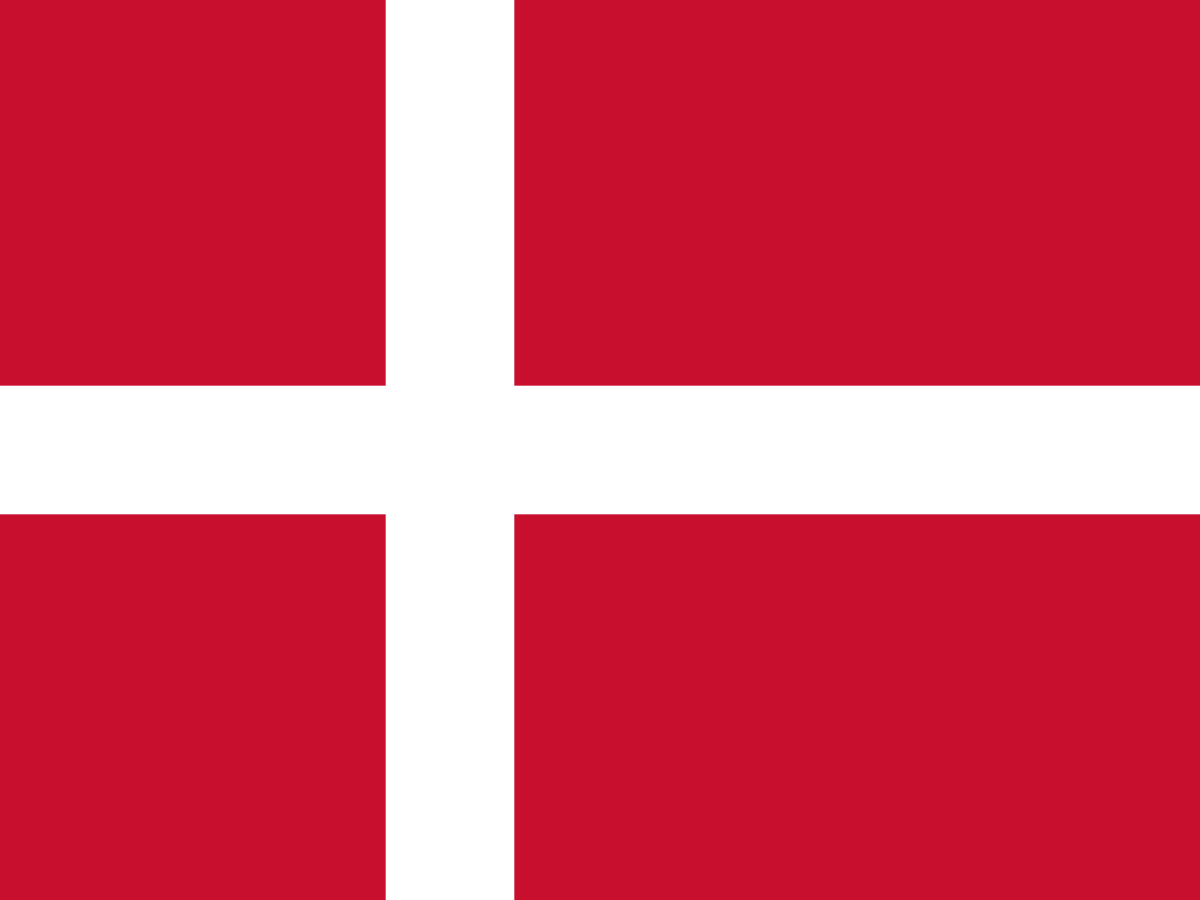 Denmarkred & white
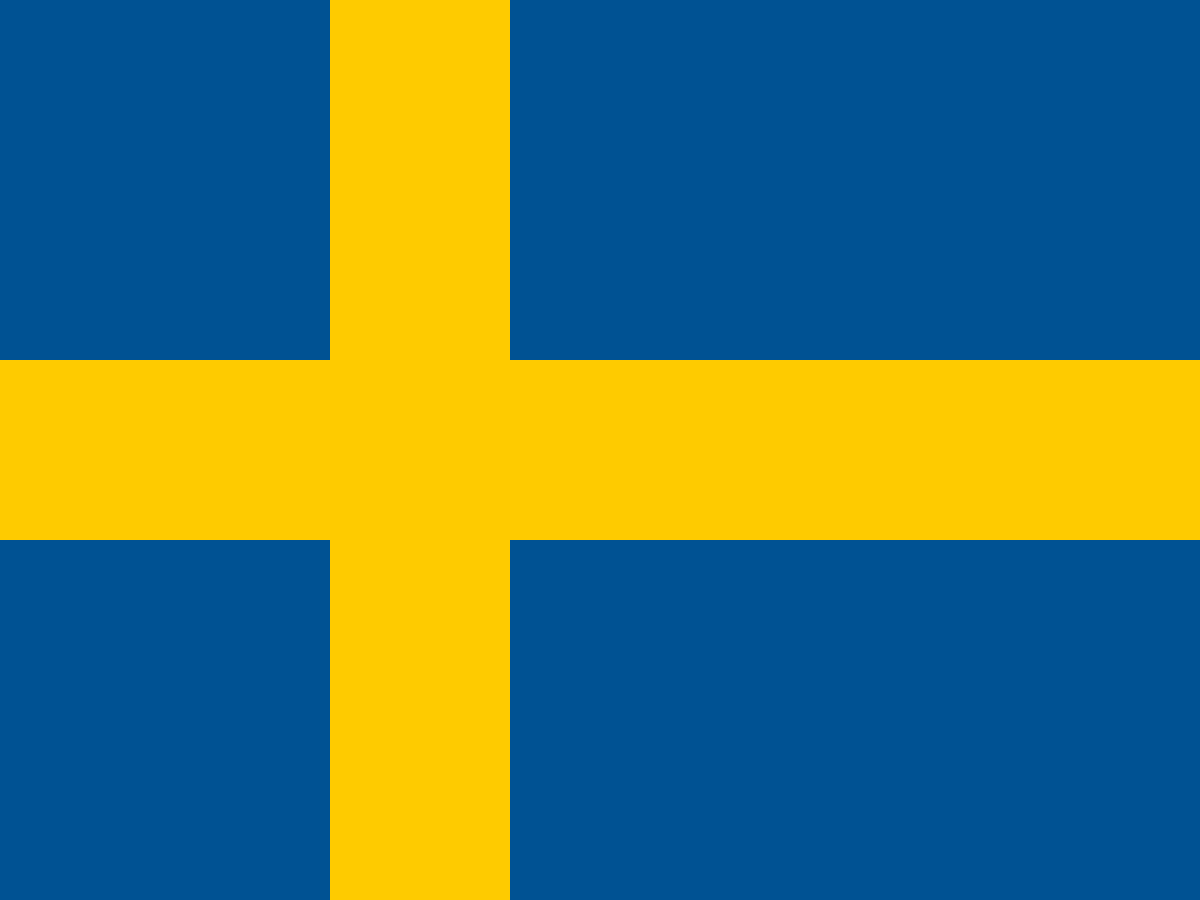 Swedenblue & yellow
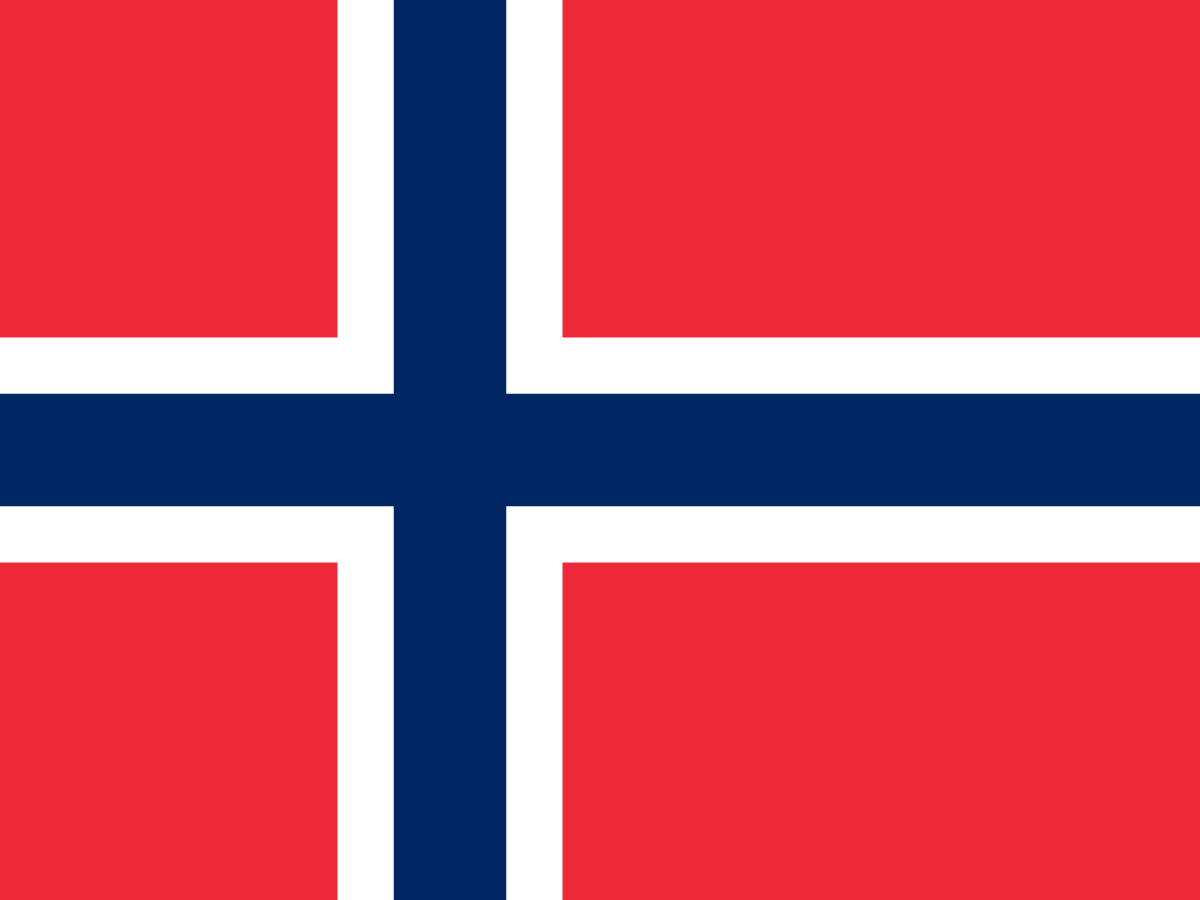 Norwayred, white & blue
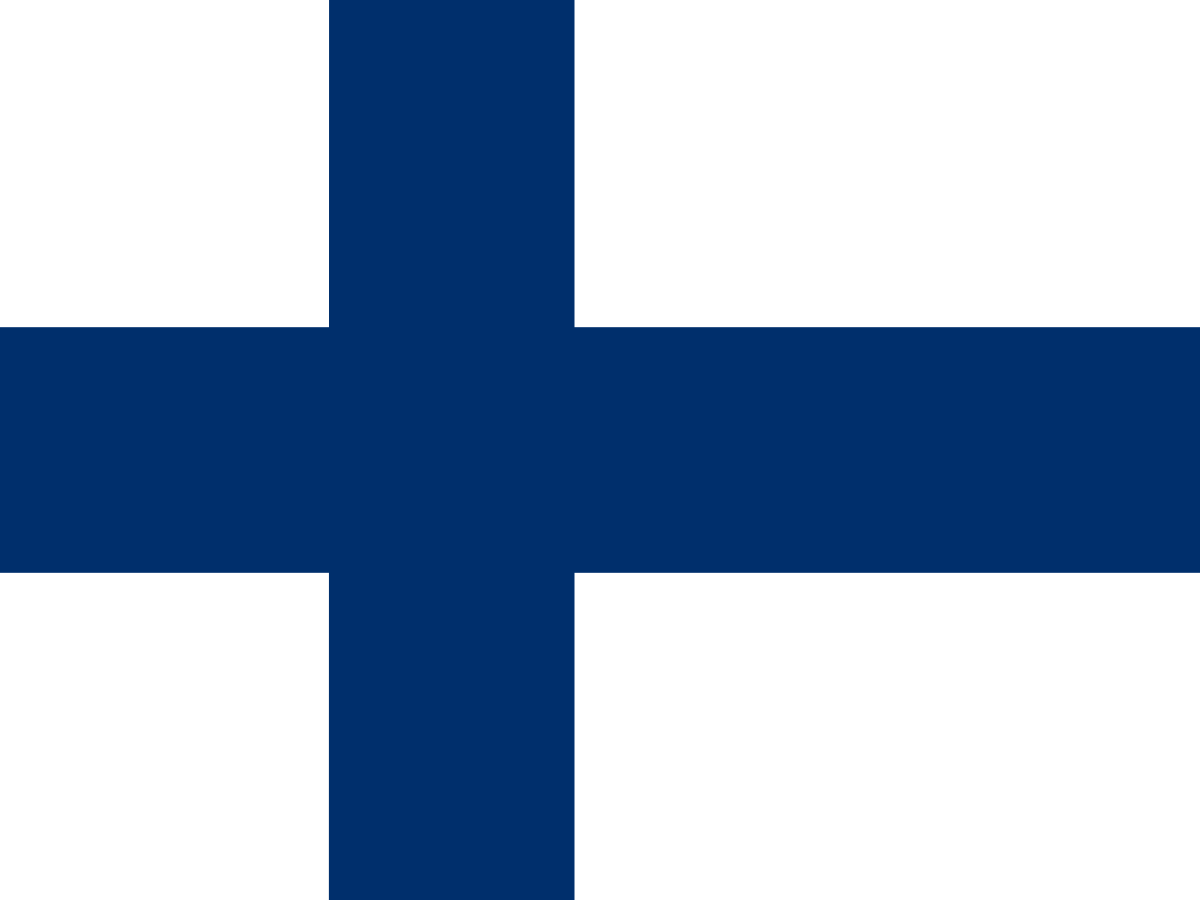 Finlandwhite & blue
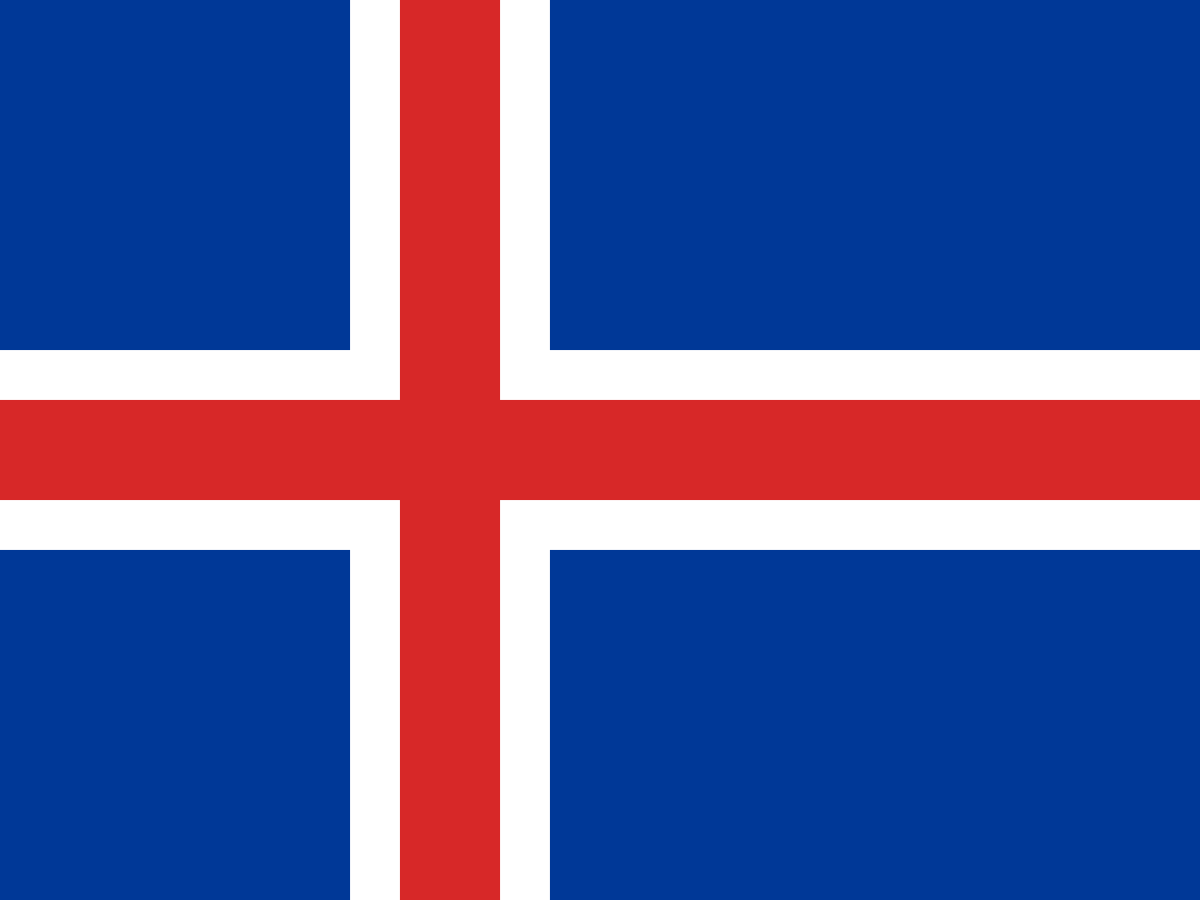 Icelandblue, white & red
Where did the Nordic Cross come from?
The design is generally traced back to Denmark's Dannebrog, the red flag with a white cross. The exact early history of the Danish flag is mixed with legend, but documentary evidence places the design in medieval Denmark.
The famous Danish tradition says that the Dannebrog fell from the sky during the Battle of Lyndanisse in 1219. This story is an important part of Danish culture, but the miraculous event itself should be treated as a legend rather than established historical fact.
The Nordic countries subsequently developed their own cross flags at different times, often drawing on political relationships, heraldry and the idea of shared Nordic or Scandinavian heritage.
The Dannebrog — Denmark's flag
Denmark's Dannebrog is the starting point for the modern Nordic Cross tradition. It is a red field with a white cross extending to the edges, with the vertical part shifted towards the hoist.
The Danish flag is traditionally associated with the Battle of Lyndanisse in Estonia in 1219. The legend says the banner appeared in the sky at a moment when Danish forces were struggling.
Whatever the truth of the legend, the cross design became firmly established in Denmark and provided a visual template that later Nordic flags could adapt.
Sweden's blue and yellow cross
Sweden's flag uses a yellow cross on a blue field. Its precise origins are less certain than the Danish tradition.
The Swedish colours have deep heraldic roots. Blue and gold appear in Swedish royal and national heraldry, including the three crowns of Sweden.
There is also a traditional story linking the Swedish cross with King Eric IX and a vision of a golden cross in the sky. Like the Athelstaneford story for Scotland, this is best treated as a historical legend rather than proven fact.
The oldest recorded images of the blue-and-yellow cross date from the early sixteenth century, while a royal warrant of 1562 described the flag's colours and cross arrangement.
Norway creates a three-colour Nordic Cross
Norway's flag is particularly interesting because it shows how the Nordic Cross could be adapted to express a new national identity.
Designed by Fredrik Meltzer and adopted in 1821, the Norwegian flag uses a blue cross outlined in white on a red field.
The design retained a visual connection with Denmark through the red-and-white cross, while the blue cross added a distinctive Norwegian element and linked the flag to the wider European tradition of red, white and blue flags.
The Flag Institute describes Norway's design as one that helped inspire or relate to several other flags, illustrating how powerful the Nordic Cross template became.
Finland's white and blue cross
Finland adopted its Nordic Cross flag after becoming independent from Russia in 1917. The present national flag was officially adopted in 1918.
The Finnish design has a blue cross on a white field. The colours are strongly associated with Finland's landscape: blue with its skies and waters and white with snow and winter.
The choice of a Nordic Cross also visually connected Finland with the other Nordic countries at a time when the new state was establishing its national identity.
The Nordic Council confirms Finland among the five Nordic countries whose national flags use the Nordic Cross design.
Iceland's blue, white and red cross
Iceland's flag uses a red cross outlined in white on a blue field. The design was first flown in 1915 and became the national flag as Iceland's constitutional and political status developed, before full independence in 1944.
The colours are commonly associated with Iceland's natural environment: blue with the sea and sky, white with ice and snow, and red with volcanic fire.
The Icelandic design also demonstrates how the Nordic Cross could be adapted while retaining a strong connection with the region's older flag tradition.
Why is the cross off-centre?
The defining feature of the Nordic Cross is that its vertical arm is shifted towards the hoist.
This arrangement is inherited from the Danish flag and was retained by the other Nordic countries. It creates a distinctive visual balance when the flag is flying from a pole and became the standard geometry for the Nordic flag family.
It also makes the flags immediately recognisable as members of the same design tradition, even when their colours are completely different.
Is the Nordic Cross a Christian symbol?
The cross is a Christian symbol, and the historical Nordic flags developed in societies where Christianity had become deeply established.
However, the modern national meaning of each flag is broader than religion alone. The flags represent countries, peoples and national identities, and their historical meanings have changed over time.
It is therefore better to describe the Nordic Cross as having Christian historical roots while recognising that today's national flags carry political and cultural meanings beyond their original religious symbolism.
The Kalmar Union
Another important part of Nordic flag history is the Kalmar Union, which united Denmark, Norway and Sweden under a single monarch from 1397 to 1523.
Historical accounts and later reconstructions associate the union with a cross design, although the exact appearance of its flag is not securely established by surviving contemporary pictorial evidence.
The union demonstrates that the Nordic countries have shared political history for centuries, long before their modern national flags were adopted.
Nordic Cross flags beyond the five countries
The design is not limited to the five independent Nordic states.
The Faroe Islands use the Merkið, a white field with a red-bordered blue cross. The flag emerged from a Faroese national movement and became official in 1948.
Åland, an autonomous region of Finland with a strong Swedish-speaking identity, uses a blue field with a red cross outlined in yellow. Its colours reflect the region's historical connections with both Sweden and Finland.
Greenland is the notable Nordic exception. Its 1985 national flag does not use a Nordic Cross, instead using a distinctive red-and-white circular design created by Greenlandic artist Thue Christiansen.
The Nordic Cross and the British Isles
The Nordic Cross has also influenced flags outside the Nordic countries, particularly in places with historic Scandinavian connections.
In Scotland, some local and island flags use Nordic Cross designs to reflect Norse heritage. Shetland and Orkney are especially strong examples of places where Scandinavian history remains part of local identity.
This is one reason the Nordic Cross is useful for understanding flag history: a flag can preserve a memory of historical connections even when political control has changed completely.
A short history timeline
13th century — Denmark
The Dannebrog tradition establishes the red-and-white Nordic Cross as a major Danish symbol. The famous 1219 sky legend belongs to Danish tradition rather than proven contemporary history.
1397–1523 — Kalmar Union
Denmark, Norway and Sweden are united under one monarchy, creating a shared chapter in Nordic political history.
16th century — Sweden
Recorded Swedish blue-and-yellow cross designs appear, building on Swedish heraldic colours.
1821 — Norway
Fredrik Meltzer's red, white and blue Nordic Cross is adopted.
1915 — Iceland
The Icelandic blue, white and red Nordic Cross begins its official national development.
1918 — Finland
Finland officially adopts its white flag with blue Nordic Cross after independence.
20th century — Nordic territories
The Faroe Islands and Åland adopt their own Nordic Cross designs, while Greenland chooses a different design in 1985.
Today
The Nordic Cross remains one of the world's clearest examples of a shared regional flag tradition.
Why do all the Nordic flags look alike?
The answer is a mixture of history, geography, politics and identity.
Denmark established the earliest enduring national example. Sweden developed its own colours while retaining the cross. Norway adapted the Danish pattern into a distinctive red, white and blue design. Finland and Iceland later chose the same basic format while creating new national identities.
The result is a remarkable family of flags: similar enough to show a shared tradition, but different enough to identify five separate nations instantly.
Nordic Cross vs Scandinavian Cross
The terms are often used interchangeably, but Nordic Cross is generally the broader term.
"Scandinavian" can refer specifically to Denmark, Norway and Sweden, while "Nordic" normally includes those three countries plus Finland and Iceland, as well as associated territories and the wider Nordic region.
For FlagAtlas, we use Nordic Cross because the design is used by all five independent Nordic countries.
Explore the Nordic flags on FlagAtlas
Sources & further reading
This article combines historical flag information with the broader development of Nordic national identity. The country flag images in the comparison are the standard FlagAtlas PNG flag assets. Where historical origins are uncertain, traditional legends are identified as legends rather than presented as established fact.
Useful further reading includes Nordic cooperation — The Nordic flags, the Flag Institute — Norway, and the historical material on Scandinavian flag traditions collected by the Flag Institute.