Pan-Arab Colours
The history behind red, white, black and green — colours closely associated with Arab nationalism and several modern Arab states.
What are the Pan-Arab colours?
The Pan-Arab colours are red, white, black and green. They appear in different combinations on the flags of many Arab countries and have become closely associated with Arab nationalism, independence and the idea of a shared Arab identity.
There is no single Pan-Arab flag used by every Arab country. Instead, the four colours form a visual tradition that countries have adapted into their own national designs. Some flags use all four colours, while others use only some of them.
The history of these colours is particularly interesting because the modern combination developed from several different historical traditions rather than being an ancient flag design that existed unchanged for centuries.
The Arab Revolt
The modern Pan-Arab colour tradition is closely connected with the Arab Revolt against the Ottoman Empire during the First World War. The revolt began in 1916 and was associated with the Hashemite leadership in the Hejaz.
The movement sought greater Arab independence from Ottoman rule. Its flag brought together colours that had important historical associations and became an influential model for later Arab nationalist movements.
The importance of the Arab Revolt flag goes beyond the revolt itself. Its design helped establish a colour combination that would appear repeatedly on the flags of Arab states during the twentieth century.
The Arab Revolt flag
The Arab Revolt flag combined black, green and white horizontal bands with a red triangle at the hoist. Its basic design became one of the most influential templates in modern Arab flag history.
Several later national flags can be understood as variations on this general arrangement. Countries changed the proportions, added stars or other emblems, or rearranged the colours to create their own national identities.
The flag therefore provides a useful link between the history of the First World War, the decline of Ottoman rule and the later development of independent Arab states.
Earlier colour traditions
Red, white, black and green had appeared separately in different Islamic dynastic and political contexts long before 1916. These historical associations are one reason the colours were available to later Arab nationalist movements as a shared visual language.
It is tempting to describe the four colours as a simple code in which each colour represents one particular dynasty. The historical reality is more complicated. The colours were used in different contexts and their meanings changed over time.
The important development was the way these colours were brought together in a modern political symbol associated with Arab unity and independence.
Arab nationalism
During the twentieth century, Arab nationalist movements adopted the colours to express ideas of Arab unity, independence and self-determination. The colours could therefore communicate a wider identity that extended beyond the borders of an individual country.
As European colonial rule and the old imperial order changed, new Arab states needed national symbols. The Pan-Arab colours provided a way of connecting those new states with a broader shared history while still allowing each country to create its own distinctive flag.
The result is a family resemblance between many Arab flags. Their designs are different, but the repeated use of red, white, black and green makes their historical and political connections immediately visible.
Egypt
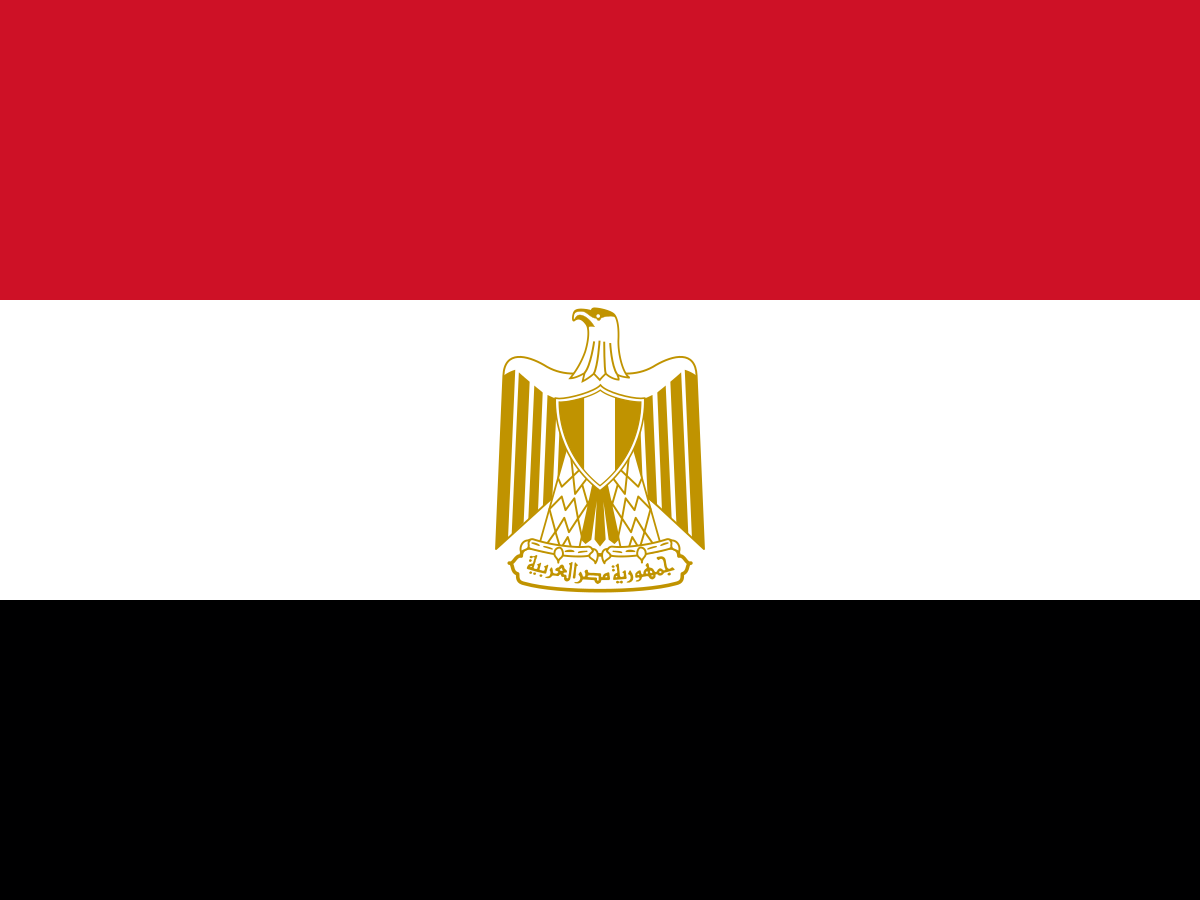
Egypt's modern flag uses horizontal bands of red, white and black with the Eagle of Saladin in the centre. The design is part of the wider family of Arab flags influenced by the Pan-Arab colour tradition.
Egypt played an especially important role in twentieth-century Arab politics and Arab nationalism. Its flag therefore provides a useful example of how a country can use the shared colour tradition while adding a distinctive national emblem.
Jordan and Palestine
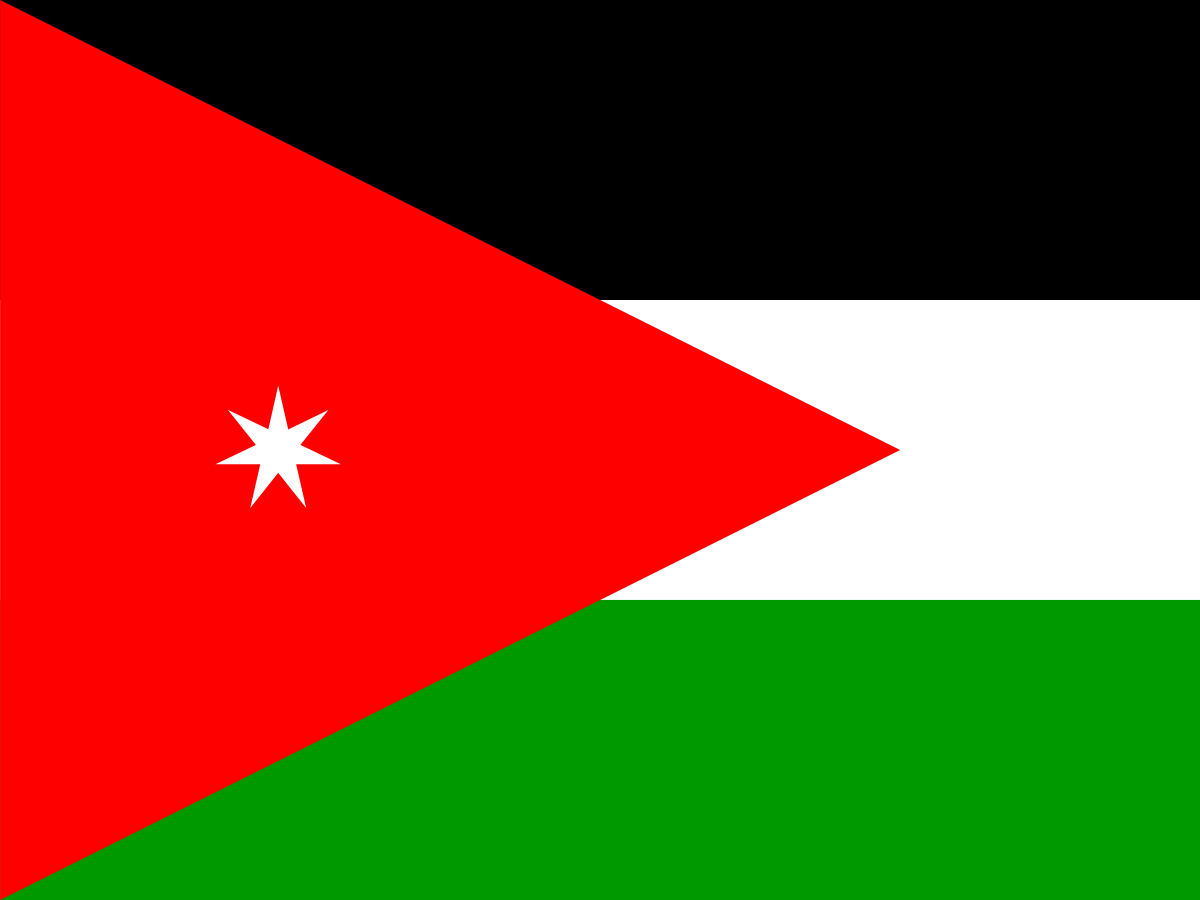
Jordan combines black, white and green horizontal bands with a red triangle at the hoist and a white seven-pointed star. Its design has clear connections with the Arab Revolt flag and the Hashemite history of the region.
The Palestinian flag uses the same basic colour family and a closely related arrangement: black, white and green bands with a red triangle at the hoist. It has become one of the most recognisable symbols of Palestinian national identity.
These two flags show how a shared historical design can be adapted by different peoples and states while retaining the same broad visual language.
Kuwait and the Gulf
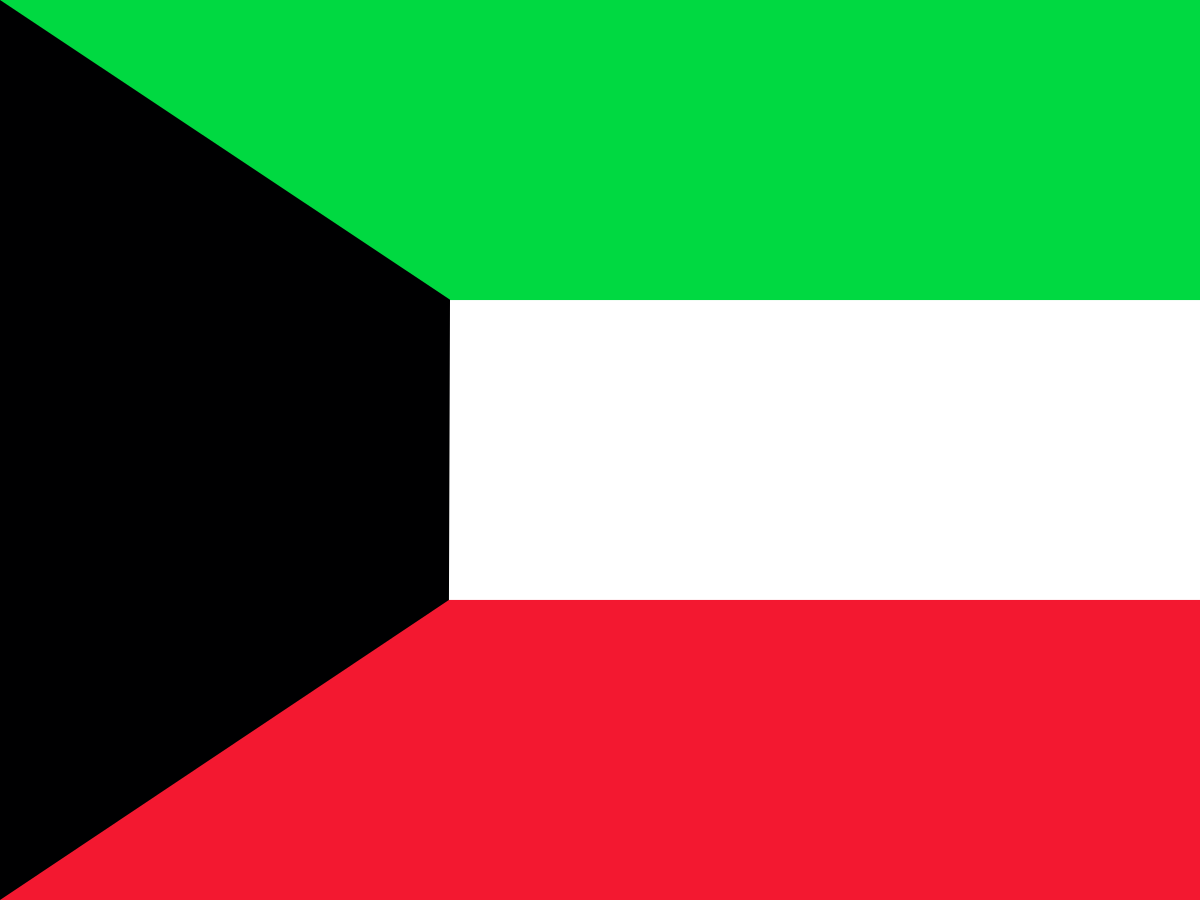
Kuwait's flag uses green, white and red horizontal bands together with a black trapezoid at the hoist. It is another clear example of the Pan-Arab colour tradition being adapted into a distinctive national design.
The Gulf states demonstrate that the four colours do not have to be arranged in exactly the same way. National flags can use the shared colour family while introducing their own geometric patterns and historical symbolism.
What do the colours mean?
Traditional explanations often connect the four colours with historical Arab dynasties and periods. However, the relationship is more complicated than a simple one-colour-equals-one-dynasty formula.
Black has historical associations with the Abbasid period, while white has been associated with the Umayyads. Green has long-standing associations with Islam and has also been linked with the Fatimid period. Red has been associated with the Hashemite tradition and other Arab political movements.
These associations are useful when studying the history of the colours, but they should not be treated as a universal official meaning for every modern flag. Individual countries have their own explanations and traditions.
Pan-Arab colours versus Islamic colours
The four-colour combination has its own political history. Although green has long-standing associations with Islam, Pan-Arab symbolism developed as a distinct modern political tradition centred on Arab identity and nationalism.
This distinction matters because not every flag using green is a Pan-Arab flag, and not every use of red, white, black or green has the same historical meaning. Flag colours can have several layers of symbolism depending on the country and period.
Pan-Arab colours today
The colours remain common across the Arab world, with each country giving the shared tradition its own national design. They can be seen on the flags of countries including Jordan, Egypt, Kuwait, Palestine, Iraq, Syria, the United Arab Emirates and Yemen.
The continuing use of the colours shows how a visual language that became particularly powerful during the twentieth century can survive political changes and become part of everyday national identity.
For students of flag history, the Pan-Arab colours are a useful example of how flags can share a historical tradition without being identical.
Pan-Arab Colours Timeline
Red, white, black and green had appeared separately in different Islamic dynastic and political contexts.
The Arab Revolt against the Ottoman Empire began, and its flag combined black, green and white with a red triangle.
The end of Ottoman rule and the changing political map of the Middle East created new opportunities for Arab national flags based on the shared colour tradition.
Arab nationalist movements made increasing use of the colours as symbols of unity, independence and opposition to colonial influence.
Countries adapted the four colours into their own designs, sometimes adding stars, emblems or distinctive geometric arrangements.
Red, white, black and green remain prominent across the flags of the Arab world, while each country retains its own national identity and symbolism.